Measure outcomes, not just activity: In remote teams, productivity should be gauged by results delivered (projects completed, quality outputs) rather than hours online or “looking busy”. Focusing on outcome-based metrics ensures you’re tracking real value instead of vanity indicators.
Define clear metrics and goals: Establish specific KPIs like task completion rate, on-time delivery, quality of work, and customer satisfaction. These key metrics reflect whether remote work is producing the desired outcomes on schedule and to standards.
Avoid surveillance traps: Trust is essential for remote productivity. While 80% of companies now monitor remote workers, excessive tracking can backfire – nearly half of employees say they’d consider quitting if surveillance increased. Instead of spying on keystrokes, use transparent, aggregate data to inform decisions.
Leverage collaboration insights: Productivity in distributed teams depends on communication and collaboration. Metrics like responsiveness, participation in shared tools, and effective meeting practices help identify bottlenecks and keep the team aligned. A cooperative team culture drives higher discretionary effort and productivity.
Continuously improve with analytics: Modern tools (e.g. Worklytics) provide real-time, privacy-friendly analytics on work patterns – from meeting loads to focus time – helping leaders pinpoint obstacles and support their teams. Worklytics, for example, measures remote work effectiveness via behavioral and outcome-based analytics without resorting to individual surveillance. This enables data-driven improvements in a way that employees and managers can trust.
Introduction: The Need to Measure Remote Team Productivity
Remote and hybrid work are now mainstream in organizations worldwide. In early 2025, about 79% of employees whose jobs allow remote work were working at least partially remote. With teams distributed across homes and hubs, managers can no longer rely on a quick glance around the office to gauge who’s productive. Instead, leaders and HR professionals must measure productivity through new lenses, focusing on results and behaviors that drive performance in a virtual setting.
Importantly, remote work doesn’t inherently harm productivity – in many cases it can improve it. Research by Gartner found that 55% of employees with flexible (remote/hybrid) work options are high performers, compared with 36% in traditional 9-to-5 office setups.
Measuring productivity in remote teams matters because it provides the feedback loops needed to manage and improve. Without objective metrics, leaders lose the ability to distinguish productive work from mere activity.
Outcomes Over Hours: Focusing on What Matters
Experts note that equating presence or time spent with productivity is a mistake. This “input bias” assumes that more hours or keystrokes lead to better results, which isn’t necessarily true.
To measure productivity accurately, shift the focus to outcomes rather than hours. What counts is the work delivered – projects completed, features built, content written, sales closed – not just the time spent. In practice, this means defining clear performance indicators such as:
Task or deliverable completion rate: Are remote team members completing their assigned tasks or projects on schedule? This metric reveals execution reliability – if commitments are being met consistently. A high completion rate with few delays indicates the team is productive and well-coordinated, whereas slippages might flag issues like unclear ownership or roadblocks.
Quality of output: Are the deliverables meeting quality standards? Remote teams can sometimes “look” productive while silently accumulating defects or rework, so it’s important to track quality metrics (bug rates, client satisfaction, error-free deliverables). High productivity isn’t just about speed, but also about maintaining quality results.
Timeliness and predictability: Do remote teams deliver work on time and without constant last-minute emergencies? Delivery predictability – hitting deadlines and respecting estimates – is a key productivity indicator for distributed teams. If a team reliably meets its commitments sprint after sprint, you can trust their productivity; unpredictable delays may signal coordination problems or overcommitment.
Key Metrics for Remote Team Productivity
So, what should you measure? Beyond the high-level outcome areas above, effective remote team productivity metrics tend to fall into a few categories:
1. Output and Delivery Metrics
These gauge the tangible results of work. We’ve touched on a few already:
Completion rate – e.g. projects or tasks finished on time vs. planned. This reveals if the team can convert plans into delivered work consistently. It prevents mistaking “busy work” for real progress.
Quality metrics – such as customer satisfaction scores, error rates, or peer review feedback on deliverables. This ensures speed isn’t coming at the expense of quality. Consistent quality indicates the team isn’t just rushing through work but maintaining standards.
Throughput or output volume – amount of work completed in a given period (e.g. features released per quarter, tickets resolved per week). This should be interpreted in context (more output is only good if quality holds steady), but it helps set a baseline of team capacity.
Predictability – percentage of commitments met or milestones achieved as planned. For instance, if a remote software team consistently delivers 95% of sprint story points as scheduled, that high predictability is a sign of strong productivity and coordination.
2. Collaboration and Communication Metrics
In remote teams, productivity is tightly linked to how well team members coordinate and share information. Breakdowns in communication can slow everything down. Useful metrics include:
Participation in shared tools: Track whether the team is actively using agreed collaboration systems (project boards, documentation, shared drives, chat channels). If only a few people update tasks or documentation while others work in silos, that’s a red flag. Strong participation improves visibility and prevents knowledge from being trapped in private messages or personal notes.
Communication responsiveness and completeness: Measure how quickly team members respond and whether messages include enough context to avoid confusion. If communication regularly requires follow-up clarification, information flow is weak. In productive remote teams, important discussions happen in documented channels so others can catch up asynchronously.
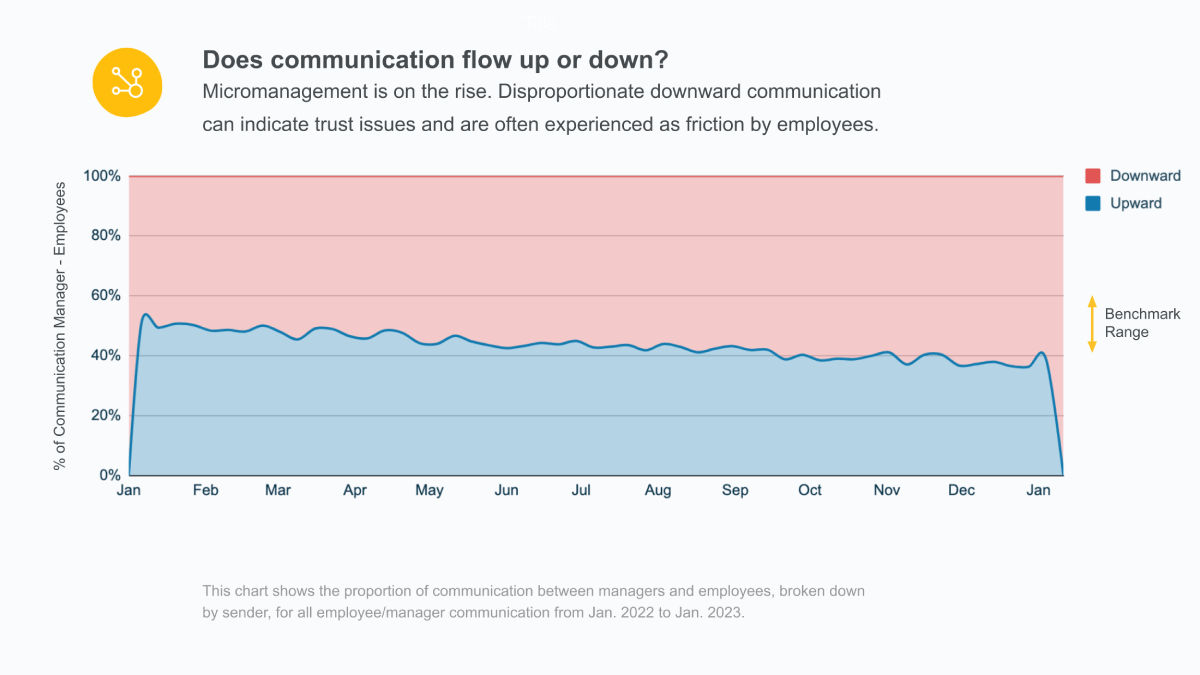
Sample Report of Worklytics in Communication flow
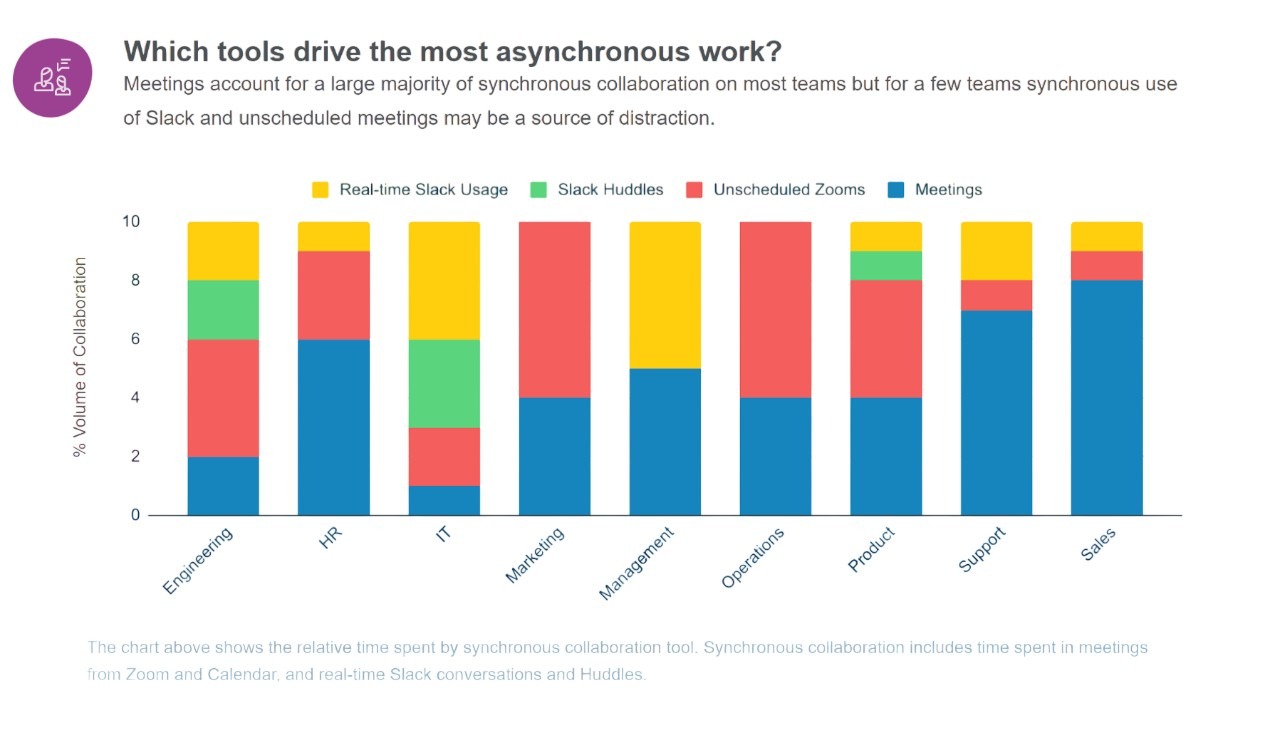
Asynchronous work efficiency: Remote teams need to progress without requiring everyone to be online at the same time. Watch for signs of over-reliance on meetings, such as work stalling until calls happen or heavy after-hours messaging to get quick answers. A healthy pattern is progress through documented updates and recorded decisions, with meetings used sparingly.
Sample Report of Worklytics in Asynchronous work
Collaboration metrics may not look like productivity metrics at first, but they are leading indicators. When communication is slow or work is fragmented, productivity eventually declines. Teams that communicate clearly and document decisions reduce delays and keep work moving.
3. Engagement and Well-Being Metrics
Productivity isn’t only about short-term output — it’s also about sustaining performance. Remote work can hide burnout or disengagement until performance drops suddenly. Consider tracking:
Employee engagement levels: Use pulse surveys or engagement scores. Declining engagement often signals future productivity issues as motivation and connection weaken.
Work-life balance indicators: Monitor after-hours work, weekend emails, and consistently long workdays. These trends can indicate overwork and rising burnout risk. Burnout signals (overtime patterns, unused time off, well-being survey responses) are critical because exhausted teams cannot sustain productivity.
Including engagement and well-being in productivity dashboards reinforces that consistent output depends on a healthy team. Leaders should manage performance alongside workload boundaries and support systems.
Avoiding the Pitfalls of Surveillance and Vanity Metrics
When addressing remote productivity, some organizations rely on heavy monitoring or superficial metrics to regain control. This often backfires. The goal is to focus on meaningful signals, not easy-to-track noise.
Avoid vanity metrics
Vanity metrics may look impressive but don’t reflect real impact. Examples include email volume, hours logged, lines of code, or “online” status. These measures reward activity rather than outcomes and can encourage employees to game the system to appear productive. Instead of clarifying performance, they often distort behavior and distract from real goals.
Avoid intrusive surveillance
Tracking clicks, keystrokes, or screenshots may seem like accountability, but it typically reduces trust and morale. Excessive monitoring increases stress, accelerates burnout, and can raise attrition risk. More importantly, surveillance shifts attention from doing meaningful work to merely looking busy.
Why it fails
Productivity can’t be forced through constant observation. When employees feel watched, they prioritize performative activity over outcomes, and creativity and motivation decline. Surveillance also signals a lack of trust, which weakens culture and reduces discretionary effort.
Best Practices for Measuring Productivity in Remote Teams
An effective productivity strategy combines the right metrics with the right management behaviors. Best practices for HR leaders and managers include:
Set clear, outcome-based goals: Ensure every role has measurable goals or OKRs tied to business outcomes. When expectations are explicit, employees can focus on delivering results rather than proving they’re working, and productivity becomes easier to evaluate.
Use data-driven insights (not personal surveillance): Use tools that analyze aggregated work patterns at the team or org level (e.g., meeting load, response times, cycle times). This enables visibility into bottlenecks and inefficiencies without tracking individuals’ activity or violating privacy.
Sample Report of Worklytics in Data-Driven Insights
Build transparency and feedback into measurement: Metrics are only useful if teams understand and trust them. Share insights openly, use them to start constructive conversations, and invite employees to explain blockers or process issues. This positions measurement as improvement-focused, not punitive.
Prioritize outcomes and autonomy over activity quotas: Remote work depends on flexibility. Evaluate people on results, not rigid schedules or constant status proof. Managers should focus on progress check-ins and accountability for deliverables, while allowing individuals freedom in execution.
Monitor workload and well-being: Track signals of burnout or disengagement and intervene early by rebalancing workload, clarifying priorities, and reinforcing boundaries. Sustainable productivity requires protecting focus time and preventing chronic overwork.
By applying these practices, productivity measurement becomes a system for continuous improvement, strengthening efficiency, employee experience, and business outcomes, rather than a culture of suspicion.
Worklytics: A Practical Solution for Measuring Productivity in Remote Teams
1. Turn “remote team productivity” into measurable signals without surveillance
Worklytics measures productivity using collaboration and work-pattern metadata from tools teams already use. It avoids intrusive tracking like screenshots or keystroke logging. This keeps measurement credible for leaders and tolerable for employees, which protects trust and adoption.
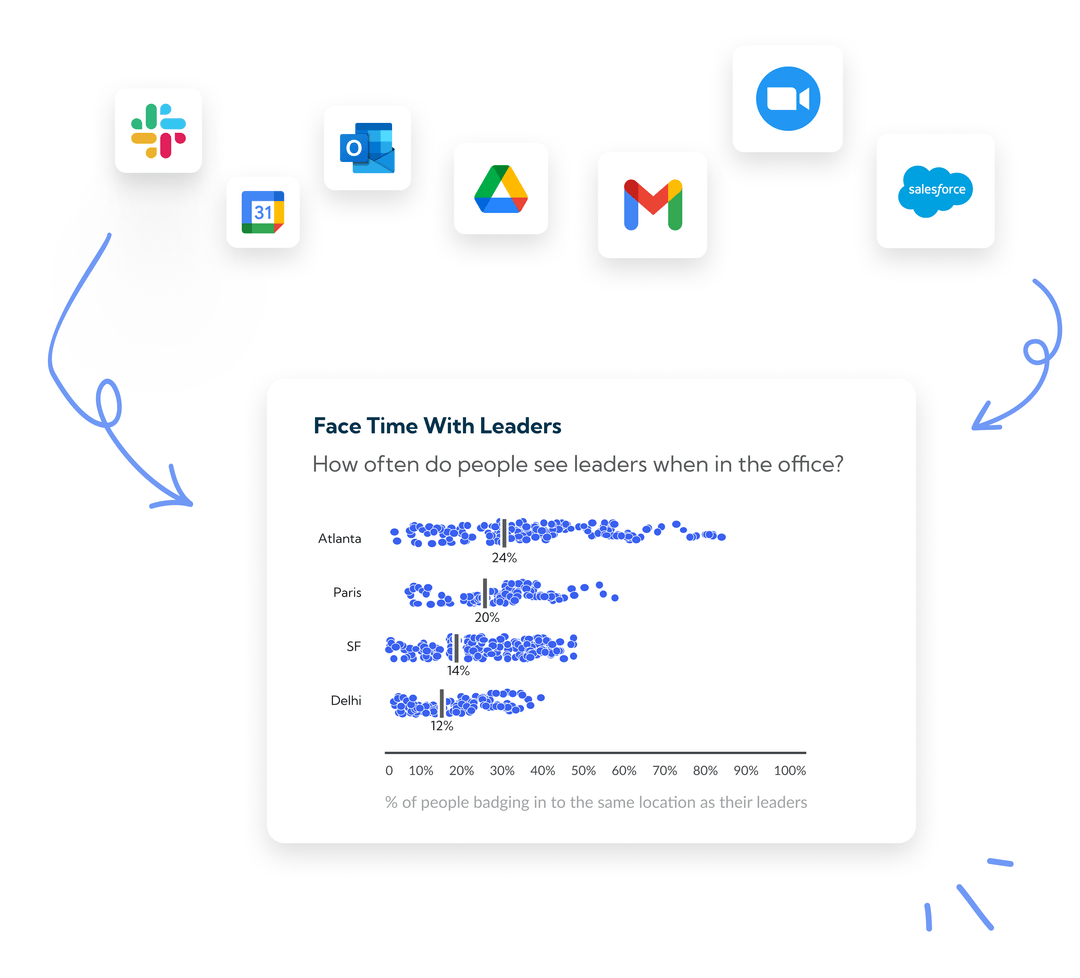
Sample Report of Worklytics in Synchronous Collaboration Time
2. Quantify output flow by connecting productivity to delivery systems
Worklytics integrates with common work systems so leaders can connect collaboration patterns to delivery outcomes. This supports productivity conversations that start with delivery reality: cycle time, throughput, completion pace, and predictability, instead of time online.
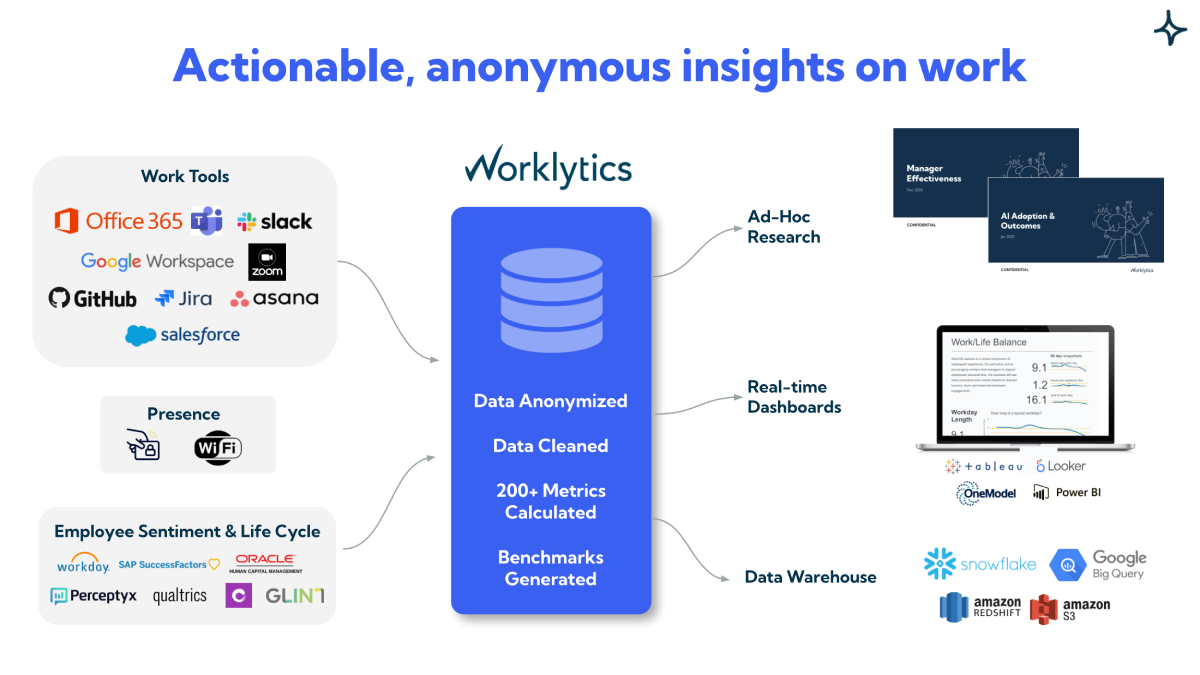
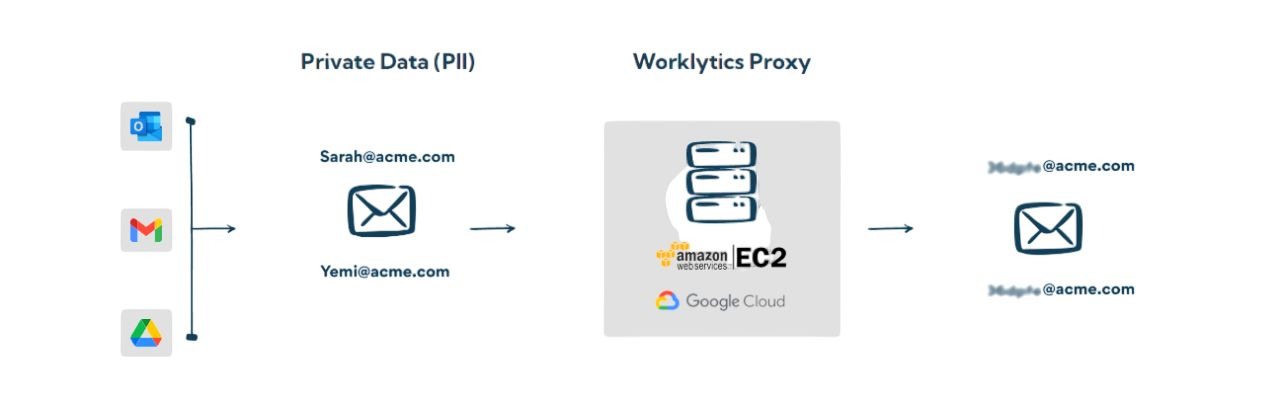
Data anonymized process of Worklytics
3. Expose meeting load and focus-time pressure that reduce execution time
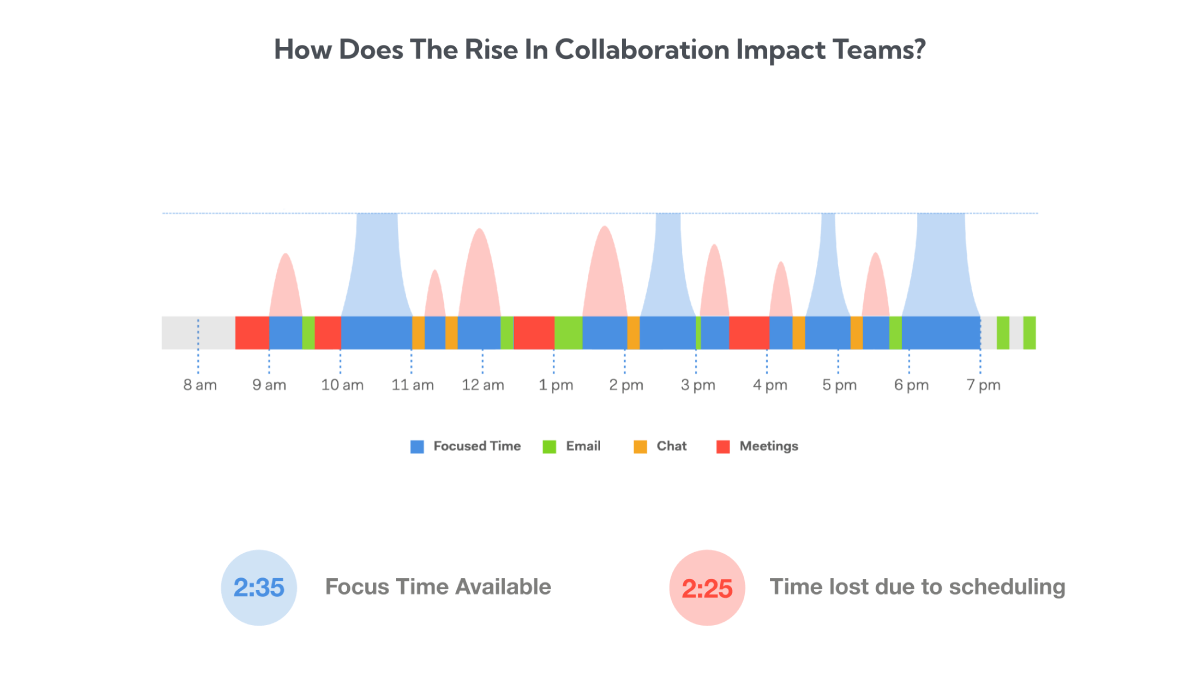
Remote teams often lose productivity through fragmented calendars. Worklytics surfaces meeting volume, meeting overlap, and focus-time erosion so leaders can take specific action: reduce recurring meetings, protect deep work blocks, and rebalance team rituals.
Sample Report of Worklytics in Collaboration Impact
4. Reveal collaboration bottlenecks that slow distributed execution
When work is remote, handoffs and response delays become invisible. Worklytics highlights collaboration friction signals such as response-time trends, collaboration load concentration, and cross-team interaction gaps, so leaders can address the real cause of stalled work.
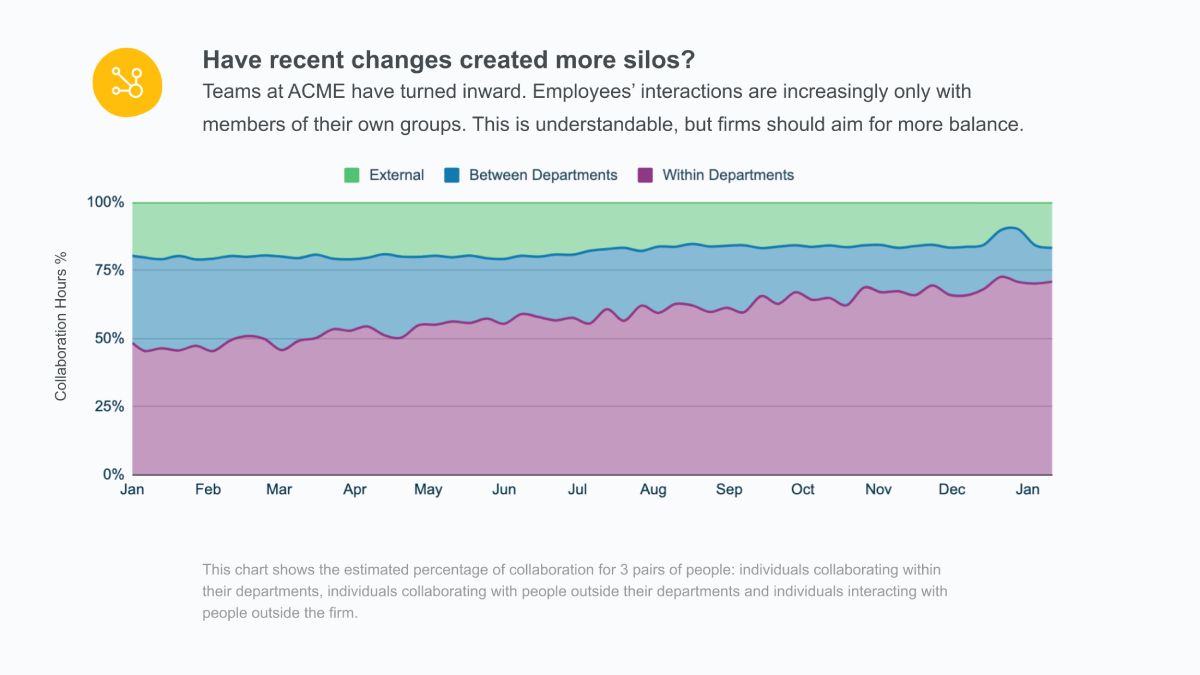
Sample Report of Worklytics in Silos
5. Identify after-hours patterns tied to burnout risk
Sustained after-hours work is a productivity risk, not a badge of commitment. Worklytics helps HR and team leaders spot patterns like late-night messaging and extended workdays, enabling workload adjustments before performance and retention decline.
Sample Report of Worklytics in After-Hours work
6. Provide privacy-first people analytics that HR can stand behind
Worklytics is designed for responsible measurement. It supports aggregated insights and privacy controls so leaders can improve systems and team conditions, while avoiding individual-level surveillance dynamics that typically damage morale.
Privacy design of Worklytics
7. Make productivity improvement repeatable with dashboards and trends
Worklytics makes it easier to run a consistent operating rhythm: baseline, change one lever (meetings, handoffs, tool adoption), then monitor the trend impact. This is how you boost remote team productivity with measurable changes, not guesswork.
FAQs
1) How can I measure my remote team’s productivity effectively?
Measure results, not online time. Set clear goals (OKRs/KPIs), track delivery against deadlines, and review trends consistently. Use aggregated work-pattern data to spot blockers, then fix the system, not the person.
2) What are the most important metrics to track for remote team productivity?
Track a balanced set: completion rate, on-time delivery, quality, cycle time/throughput, meeting load, and collaboration responsiveness. Add a simple engagement pulse to catch productivity decline early.
3) Should I use employee monitoring software to make sure remote employees are working?
Avoid invasive monitoring (screenshots/keystrokes). It reduces trust, increases “looking busy” behavior, and can raise attrition risk. Instead, use outcome metrics and privacy-first analytics.
4) Are remote employees really as productive as in-office employees?
Often yes, and sometimes more productive, when goals are clear and collaboration is structured. Productivity improves with autonomy, fewer interruptions, and better focus, but declines if communication and workload management are weak.
Share this post
Request a demo
Schedule a demo with our team to learn how Worklytics can help your organization.