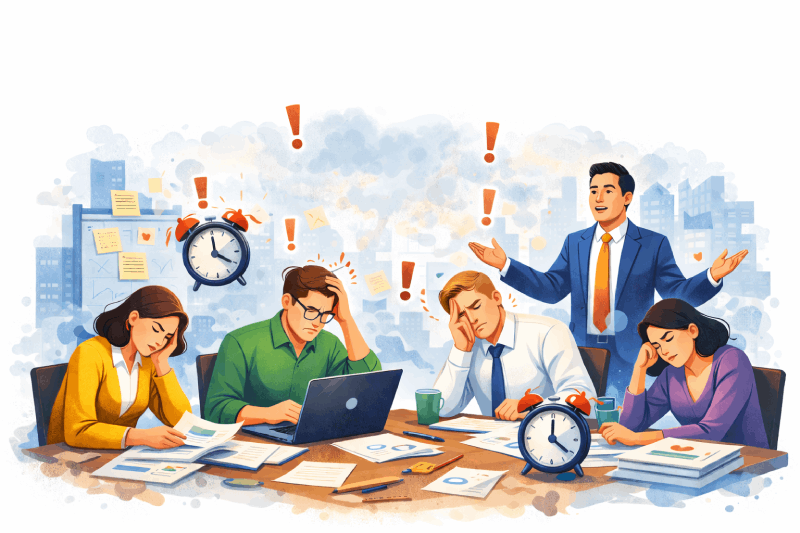
Nothing kills productivity like a meeting-driven culture. Meetings are not inherently bad. They exist because teams need a reliable way to coordinate work that depends on others, align on priorities, resolve ambiguity fast, and reduce the risk of two groups solving the same problem in different ways.
When meetings are used for those purposes, they prevent rework and help teams move in the same direction.
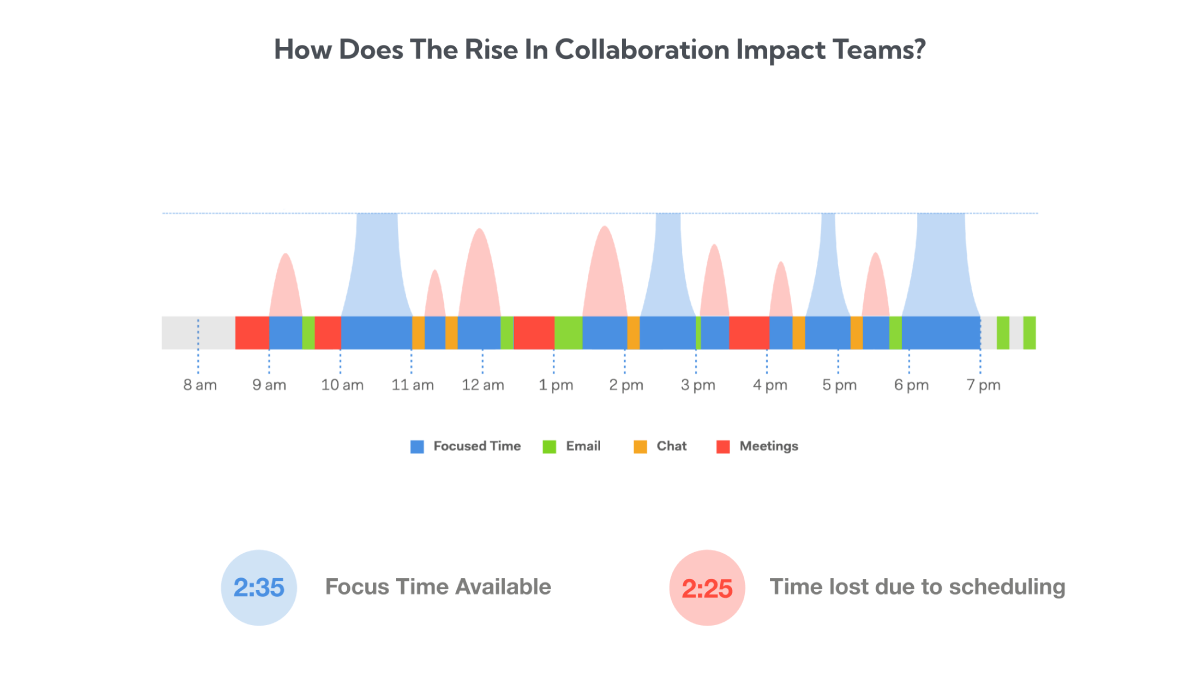
The issue starts when meetings become the default response to every question, update, or decision. As the company grows, calendars fill with weekly catch-ups, recurring status calls, standups, planning sessions, cross-functional syncs, stakeholder reviews, and all-hands meetings. Individually, each meeting can sound reasonable. Collectively, they fragment the workday into short blocks that are too small for meaningful progress on complex tasks.
Meeting-heavy days often work well for managers and executives because a large part of their role is coordinating people, removing blockers, sharing information, and ensuring alignment across teams.
Meetings give them quick visibility into work and let them influence decisions in real time. For individual contributors, especially those doing deep knowledge work like engineering, design, data analysis, and writing, the same meeting load becomes a direct tax on output. Their work depends on sustained concentration, and frequent interruptions break the mental thread that makes complex work possible.
There is no single number that fits every team, because meeting needs depend on role, work type, and how interdependent the work is. A support team handling real-time incidents may need more live coordination than a team doing long-cycle research. Still, you can define “too many” using practical thresholds tied to how knowledge work actually happens.
Meetings become “too many” when any of these are consistently true:
A useful internal benchmark is to aim for a meeting time that leaves enough room for actual production. If a person’s calendar leaves them with only scattered 30 to 60-minute gaps, the day will feel full, while real progress stays limited.
Too many meetings waste time because they consume hours directly and also damage the quality of the hours that remain.
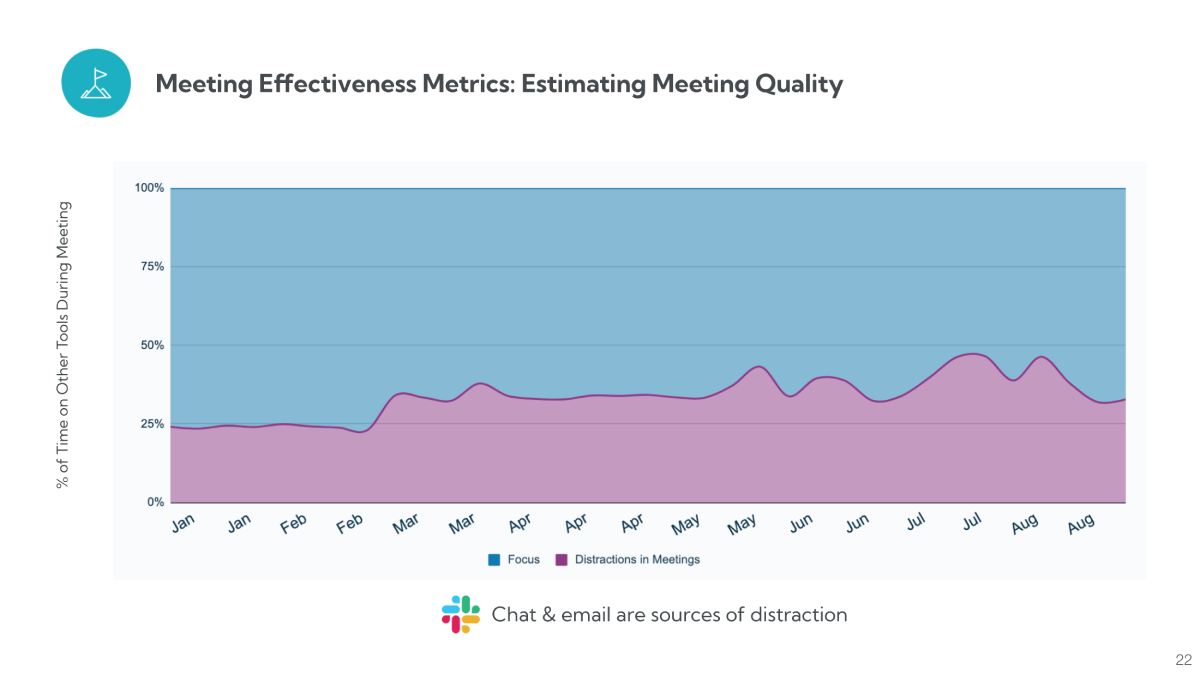
When someone joins a meeting, they stop a task mid-stream. Their mental model of the problem decays quickly, especially for work that involves multiple constraints, partial solutions, and open decisions.
After the meeting, the person has to reconstruct where they were, what they already tried, and what still needs to be done. That re-entry is not instant because the brain has to reload the details that were previously active. The result is that a 30-minute meeting often destroys more than 30 minutes of productive capacity.
Context switching also changes behavior before the meeting starts. If someone knows they have a meeting in 15 minutes, they will avoid starting anything substantial because the task will be interrupted. This is rational because starting a deep task and stopping mid-way is inefficient and frustrating. So a one-hour gap between two meetings often produces far less than one hour of real output.
A meeting is not just one person’s time. It is the sum of everyone’s time. A 60-minute meeting with 8 attendees is 8 hours of labor consumed in a single hour of clock time. If the meeting outcome could have been produced with 3 people and a written update to everyone else, the company has effectively overpaid for the same decision.
Many recurring meetings are created to solve a real coordination need at a specific moment. The issue is that recurring meetings tend to continue by default even after the underlying need changes. Without periodic review, a meeting becomes a habit. Habits are not evaluated for ROI, so they stay on calendars even when there is nothing important to discuss.
Meetings become wasteful when work lacks clear ownership, goals, or a process. In those cases, the meeting does not solve the underlying issue. It is acting like a temporary patch that provides comfort through discussion without producing a decision, a plan, or accountability. The same problems then reappear at the next meeting.
When the meeting load crosses the line, the damage becomes visible in both output and culture.
Too many meetings can create the illusion that decisions are being made because issues are discussed repeatedly. In reality, decisions slow down because they require scheduling, aligning stakeholders, and repeating context for different groups. When decisions require a meeting, work becomes hostage to calendar availability.
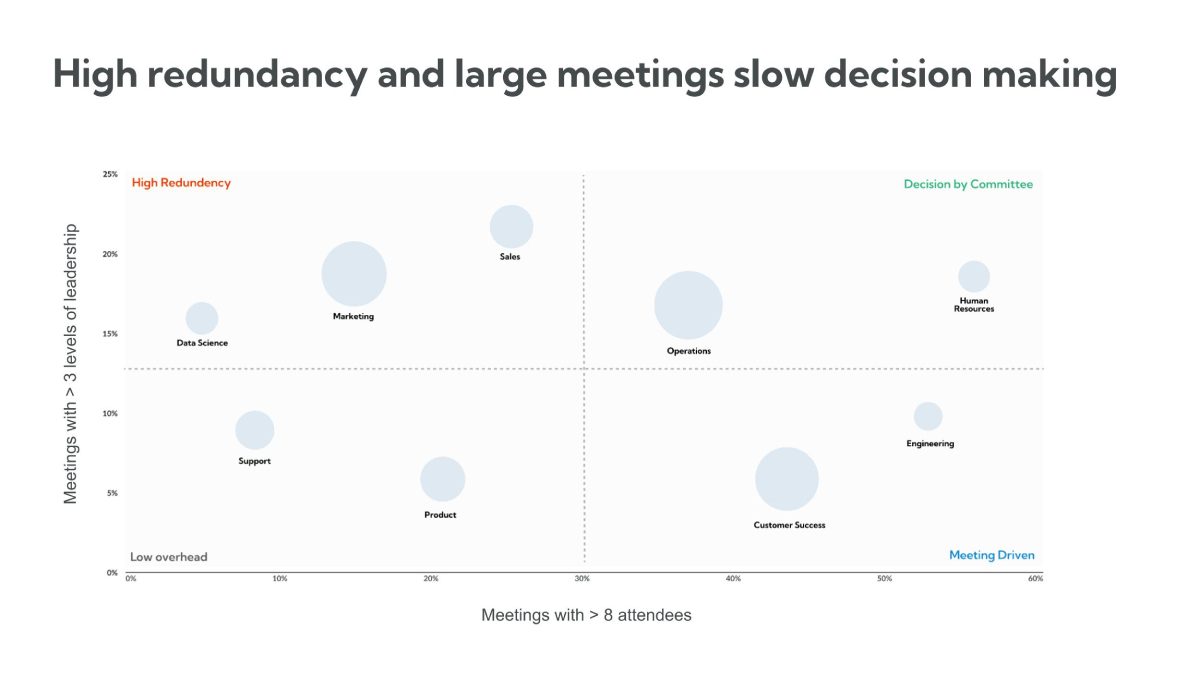
When everything is discussed in groups, responsibility becomes diluted. People start to assume someone else will handle follow-through. This is not a character flaw. It is a predictable outcome when outcomes are not assigned explicitly, and the meeting itself feels like the work.
When people cannot protect uninterrupted time, they rush tasks, skip validation, and take shortcuts. Bugs, rework, and miscommunication increase. The team ends up spending more time later fixing issues that were caused by insufficient attention earlier.
Meeting overload creates a constant state of reactivity. People feel they are always “on” because meetings require social performance, attention, and fast responses. When the day ends, real work may still be undone, so people extend work into evenings to catch up. This pattern is a common path to exhaustion and disengagement.
Too many meetings harm productivity through a few consistent mechanisms:
Managing meeting overload requires changing both scheduling habits and the underlying reasons meetings are used.
Meetings consume labor, so treat them like a budget. Review calendars and classify meetings into categories: decision-making, coordination, information sharing, training, and culture. Then ask what the cheapest effective method is for each category. Information sharing is often cheaper asynchronously. Decisions are cheaper when ownership is clear and input is collected before the meeting.
Practical rules that force discipline:
Shorter meetings create pressure to prepare and focus. This works because time constraints force prioritization. If you consistently schedule 60 minutes for topics that need 20, the meeting will expand to fill the time. If you schedule 25 minutes, people will naturally compress discussion and get to decisions faster.
Meeting size should be determined by who is required to produce the outcome, not by who might be interested. A smaller group makes decisions faster because fewer people need to be heard and aligned. Others can be informed afterward with a written summary that captures the decision and reasoning.
Status updates are often the biggest driver of recurring meetings. Written updates work better because they let people consume information on their schedule, ask targeted questions, and keep a permanent record of what was said. This reduces repeated explanation, which is a major hidden cost of meetings.
Individual focus time is hard to protect if the culture does not support it. Set explicit norms such as “no meetings before 11am,” or “no meetings on Wednesdays,” or “meeting windows only at the start and end of the day.” This works because it removes negotiation from every calendar invite and creates predictable deep work time.
A meeting should exist to reach a decision or unblock execution. To make that possible, gather input before the meeting, propose a default option, and use the meeting to resolve the remaining disagreements. This reduces endless debate and ensures the meeting produces an output that changes what people do next.
Saying no becomes easier when you use clear, rational criteria. The goal is not to be difficult. The goal is to protect time for the work the meeting is supposed to enable.
Here are scripts that are polite and firm:
To make “no” culturally acceptable, leaders must model it. If managers attend everything, everyone else learns that attendance equals commitment. If managers decline meetings that lack clarity and request asynchronous updates, the organization learns that outcomes matter more than calendar density.
Long-term reduction is about changing incentives and measuring the right things.
Many meetings exist because people want assurance that work is happening. That is a visibility problem. Solve it by making progress visible through written updates, dashboards, and clear milestones. When outcomes are visible, meetings are no longer needed as proof of work.
Meeting hygiene is a set of norms that prevent drift:
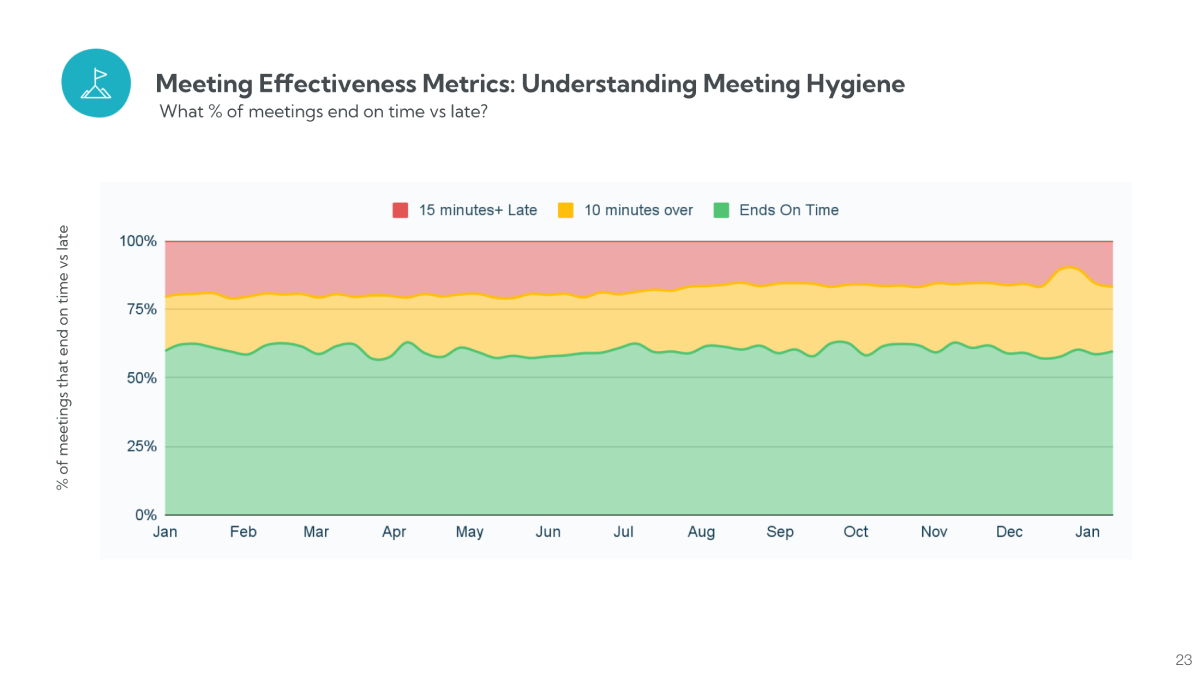
Reducing meetings is much easier when you can quantify what is actually happening across teams. Without measurement, meeting overload stays subjective. Some teams will claim meetings are necessary, others will feel overwhelmed, and leadership will have no clear way to pinpoint where the problem is worst, what is causing it, and whether changes are working.
Worklytics turns calendar and collaboration patterns into measurable organizational signals, so you can diagnose meeting overload and improve it with evidence.
Worklytics measures meeting time per person and how it differs by team and role. This matters because meeting overload is rarely evenly distributed.
With Worklytics, you can:
Meeting hours alone do not show the real cost. What hurts productivity most is when meetings are scattered across the day, creating unusable gaps.
Worklytics helps quantify:
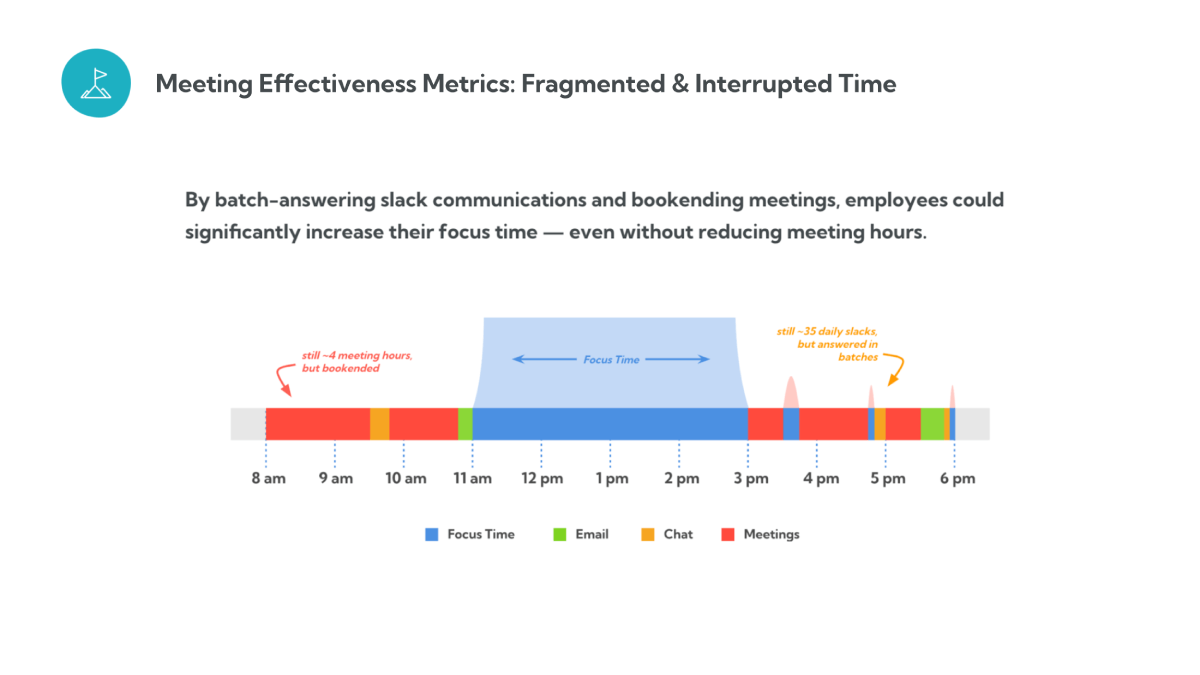
Worklytics tracks whether employees have enough uninterrupted time to do real work, and whether focus time improves after meeting reductions.
You can measure:
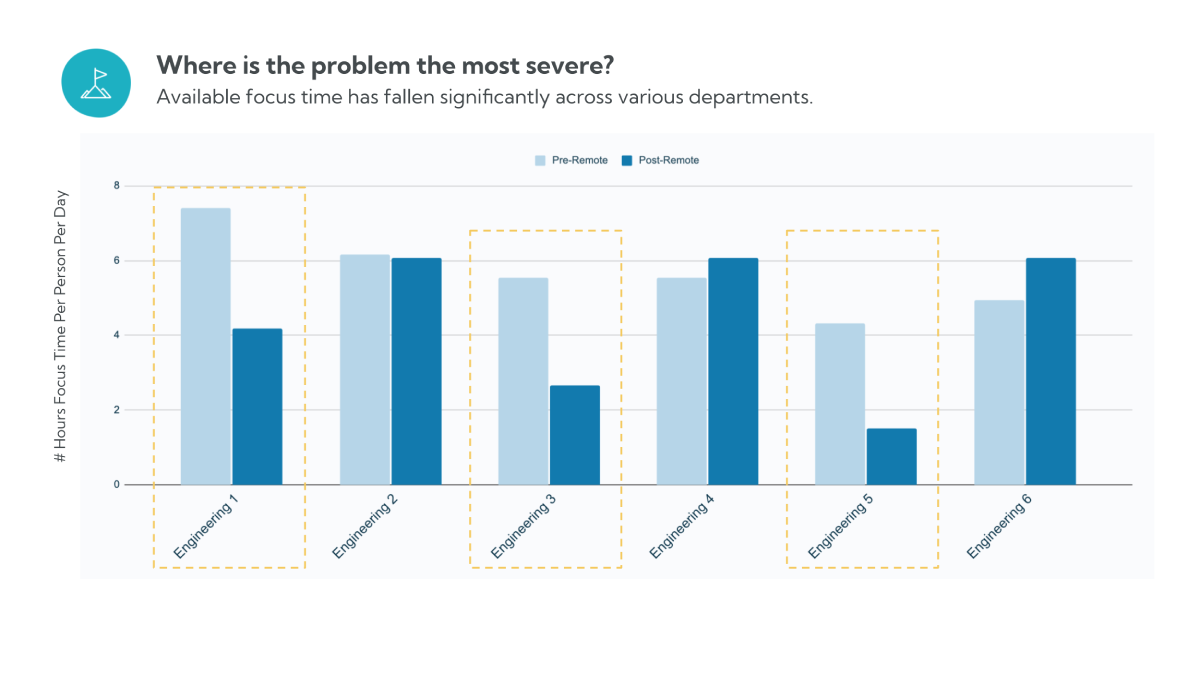
Meeting overload becomes risky when it combines high coordination demand with reduced recovery and execution time.
Worklytics helps detect patterns like:
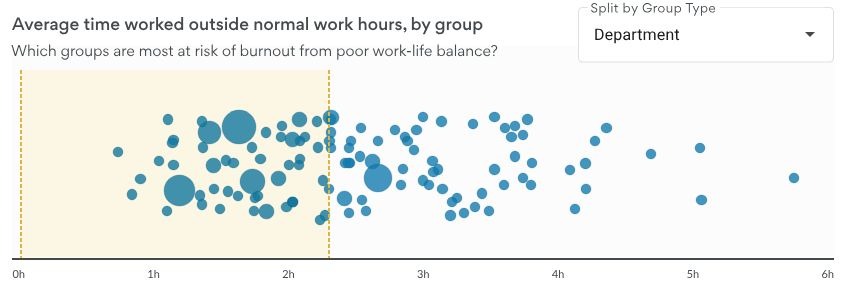
Effectiveness is hard to measure directly, but patterns can reveal which meetings are likely wasting time.
Worklytics can surface:
There are too many when meetings prevent consistent focus blocks and force meaningful work into leftover scraps of time. If most days are packed with back-to-back meetings or scattered interruptions, the schedule is no longer compatible with deep work. At that point, the meeting count is already too high, regardless of the exact number.
Meetings produce visible activity. People talk, align, and contribute verbally, which creates a sense of progress. But progress in knowledge work requires building and shipping actual artifacts such as code, designs, decisions, and documents. When meetings consume the time needed to create those artifacts, activity increases while output decreases.
Start with recurring meetings because they silently consume the largest fixed portion of the calendar. Remove or reduce frequency, shorten default durations, and limit attendee lists. These changes produce immediate calendar relief and create space for greater cultural improvements.
Written updates, shared dashboards, short recorded videos, and decision memos replace many status meetings effectively. They work because they allow asynchronous consumption, create a permanent record, and reduce the need to repeat context.
Meetings are essential when they prevent misalignment, accelerate decisions, and unblock execution. They become harmful when they replace ownership, documentation, and deep work. Too many meetings fragment attention, slow decisions, and increase burnout risk, even when everyone appears busy.
If your company wants to reduce meeting overload sustainably, you need two things: strong meeting norms and measurement. Tools like Worklytics help you quantify meeting load, protect focus time, and connect meeting culture to productivity and wellbeing outcomes so you can improve with evidence rather than guesswork.