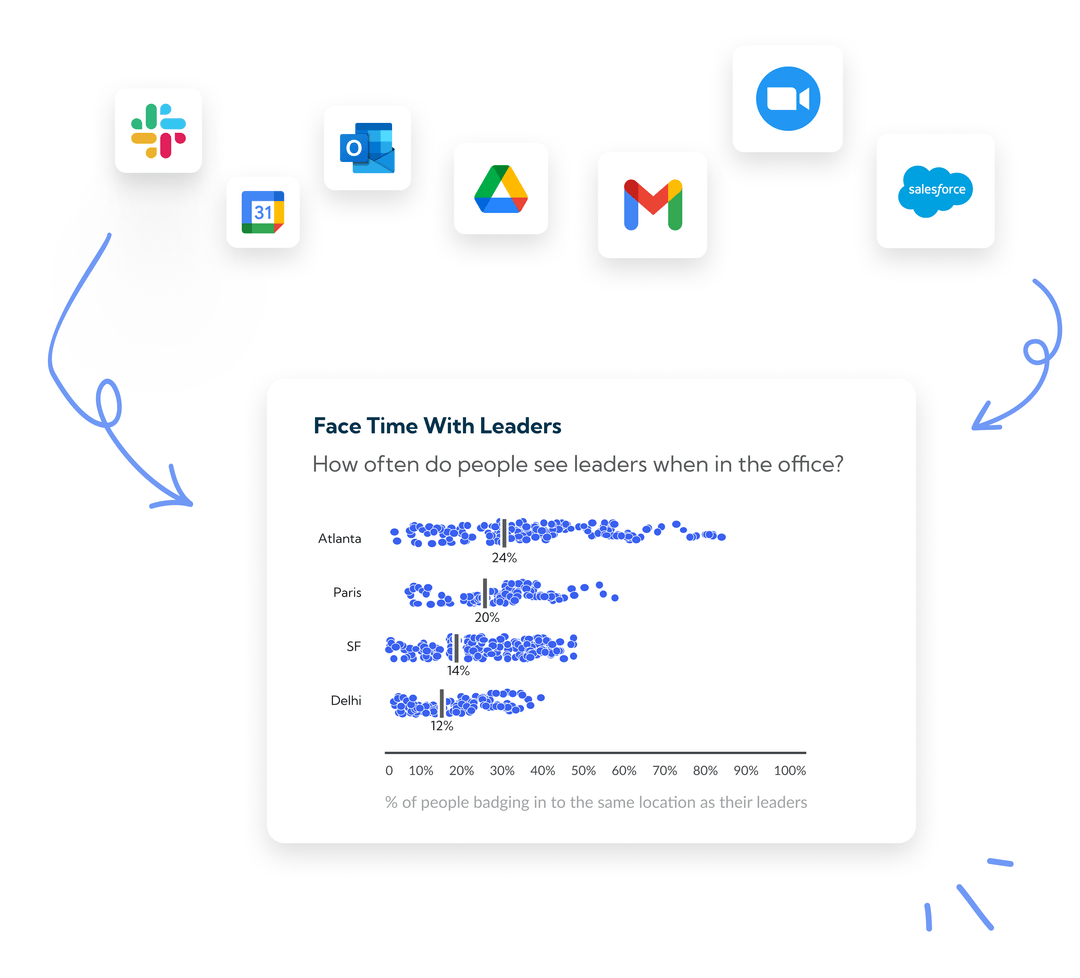
Cross-team collaboration metrics reveal critical productivity patterns by tracking meeting effectiveness, focus time preservation, and network connections across departments. Organizations implementing robust collaboration measurement see ROI ranging from 122% to 408%, with teams saving 25 hours annually through optimized meeting patterns and improved cross-functional workflows.
• Meeting overload crisis: Executives spend 23 hours weekly in meetings, with nearly half potentially wasted, while employees face 275 daily interruptions
• Focus time requirements: Knowledge workers need 3.5+ hours of uninterrupted time daily to maintain productivity, yet most struggle to protect even half that amount
• Network strength matters: Teams maintaining 3-5 new cross-functional connections quarterly see 40% faster problem resolution when 30% of interactions cross boundaries
• Manager impact: Teams with regular manager check-ins report 34% higher engagement compared to those with sporadic contact
• AI adoption surge: 58% of employees now use AI tools, a 107% increase reshaping productivity baselines
• Privacy-first approach: Modern platforms achieve compliance through anonymization at source, analyzing only group patterns of 8+ employees without accessing individual activities
In 2025, leaders can no longer fly blind - so they're turning to cross-team collaboration metrics to see how work really gets done and where productivity stalls.
The productivity gap continues to widen as organizations struggle with competing demands. While 53% of leaders say productivity must increase, 80% of the global workforce reports lacking the time or energy to do their work. This disconnect reveals a fundamental challenge: traditional approaches to measuring and managing work are failing.
The scale of inefficiency has become staggering. Executives spend 23 hours weekly in meetings, with nearly half of that time potentially wasted. Meanwhile, employees face 275 interruptions daily - one disruption every two minutes during work hours. These constant context switches fragment attention and destroy deep work capacity.
Cross-team collaboration metrics offer the solution by revealing hidden patterns in how work actually flows through organizations. Instead of relying on surface-level activity tracking, these metrics capture the real signals of productivity: connection strength between teams, focus time preservation, and meeting effectiveness. When implemented properly, they transform vague productivity concerns into specific, actionable insights that drive measurable improvements.
Organizations implementing robust collaboration measurement see dramatic returns across multiple dimensions. Companies report ROI ranging from 122% to 408% when they optimize collaboration patterns using data-driven insights. The financial impact extends beyond simple time savings - it fundamentally reshapes how teams create value.
Time recapture represents the most immediate benefit. By identifying and eliminating ineffective meetings, organizations help employees save 25 hours annually on meeting-related activities alone. This recovered time translates directly into capacity for strategic work and innovation. Teams redirect these hours toward measuring productivity improvements that matter: customer outcomes, project velocity, and creative problem-solving.
Yet the cultural transformation proves equally valuable. When teams understand their collaboration patterns, they make better decisions about when to meet, who to include, and how to communicate. Less than half of organizations currently measure their collaboration effectiveness, creating a massive opportunity for competitive advantage. Those that do measure report stronger cross-functional relationships, faster decision-making, and higher employee engagement scores.
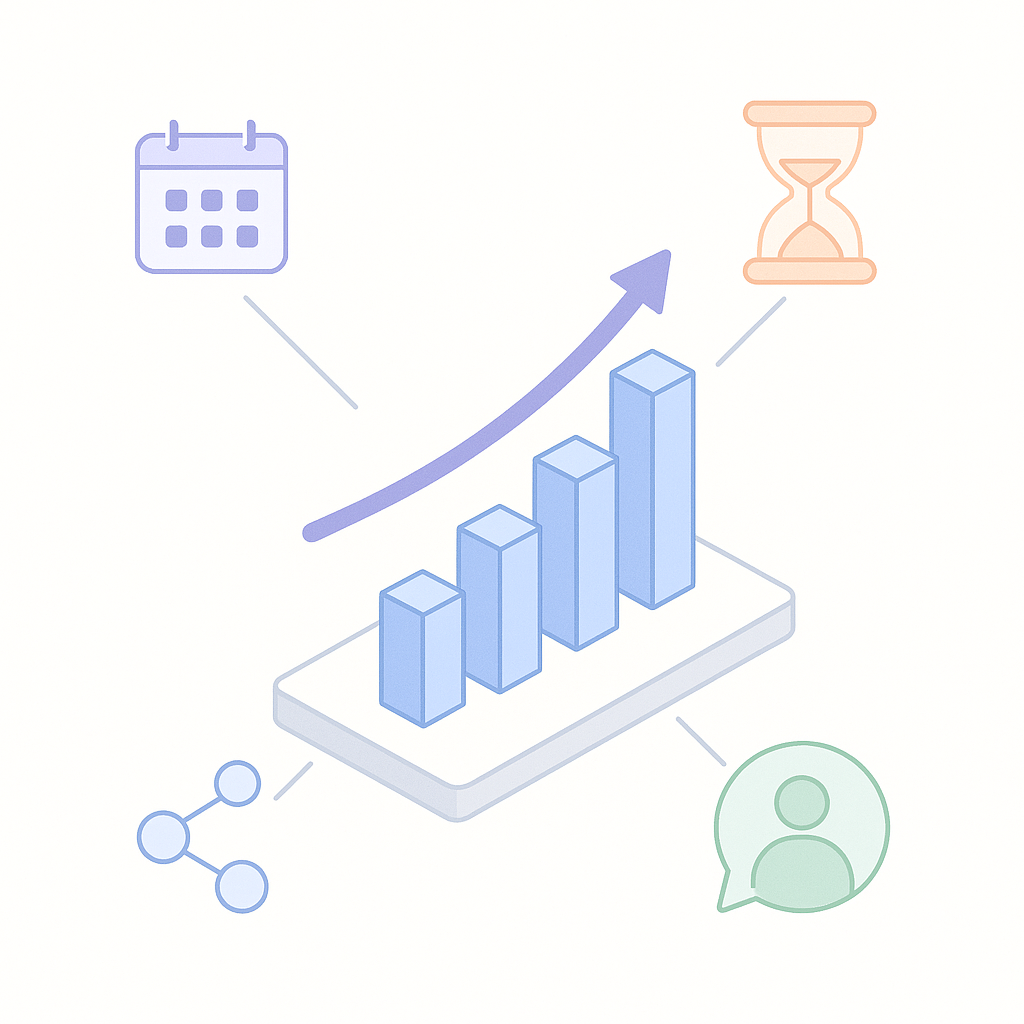
Modern collaboration measurement requires a sophisticated framework that captures multiple dimensions of team interaction. Knowledge workers need 3.5+ hours of focus daily to maintain productivity, yet most struggle to protect even half that amount. The right metrics reveal where time goes and how to reclaim it.
The most critical categories span meeting effectiveness, focus preservation, network strength, and manager engagement. Each category provides unique insights into organizational health. Focus-Time Fragmentation Index tracks how often deep work gets interrupted, while Cross-Functional Collaboration metrics reveal whether teams are truly working together or operating in silos.
These metrics connect directly to business outcomes. Organizations tracking top meeting effectiveness indicators report faster project completion, better decision quality, and reduced employee burnout. The key lies in selecting metrics that align with strategic priorities rather than measuring everything possible.
Meeting overload has reached crisis levels, with workers spending 31 hours monthly in unproductive meetings. "Studies show that workers spend an average of 31 hours per month in meetings that don't add value." For a 100-person company, this translates to $2.5 million in annual waste. The solution requires granular measurement of meeting patterns, participant engagement, and outcome quality.
Critical meeting metrics include time spent in meetings, recurring meeting counts, average meeting size, and late start frequency. "More than 10 hours per week for knowledge workers tend to correlate with lower engagement scores, less focus time to accomplish deep work, and longer work days." Organizations must track not just meeting quantity but quality indicators like participant diversity and decision-maker redundancy.
Advanced analytics now reveal meeting dynamics previously invisible to leaders. Tools can identify which meetings waste time and pinpoint specific bottlenecks holding teams back. By measuring meeting effectiveness systematically, organizations transform their meeting culture from a productivity drain into a strategic advantage.
The tension between collaboration and deep work defines modern productivity challenges. Knowledge workers with less than 3.5 hours of daily focus time report difficulty completing tasks effectively. Yet collaboration demands continue to intensify, creating an unsustainable squeeze on individual contributor time.
Measuring this balance requires tracking both focus time per day and collaboration intensity metrics. The ideal ratio varies by role, but most knowledge workers perform best with 40-50% of their time protected for focused work. When collaboration exceeds 60% of the workday, both quality and innovation suffer.
Successful organizations actively manage this trade-off through data-driven policies. They establish focus time ratios and cross-team thresholds that preserve deep work while maintaining necessary collaboration. This balanced approach drives both individual productivity and team effectiveness.
Organizational Network Analysis reveals the hidden architecture of how work actually gets done. ONA identifies silos and bottlenecks that traditional metrics miss entirely, mapping informal networks that determine information flow and decision speed.
Key network metrics include in-degree and out-degree centrality, betweenness scores, and cross-departmental connection density. Teams should maintain 3-5 new cross-functional connections quarterly to prevent isolation and ensure knowledge sharing. When 30% of interactions cross team boundaries, organizations see 40% faster problem resolution.
The power of network analysis lies in making invisible patterns visible. Leaders can identify key influencers, spot emerging silos before they solidify, and understand where critical knowledge resides. This insight enables targeted interventions that strengthen organizational resilience and adaptability.
Manager effectiveness directly predicts team performance, yet most organizations lack visibility into manager-employee interaction patterns. Regular manager 1:1s correlate with higher engagement, better performance clarity, and reduced turnover risk.
Critical manager metrics include 1:1 frequency, coaching conversation quality indicators, and team member reach rates. Teams with regular check-ins report 34% higher engagement compared to those with sporadic manager contact. The data reveals that hybrid workers with consistent manager communication show 30% higher engagement scores.
Effective measurement goes beyond counting meetings. It examines interaction quality through response times, communication balance, and feedback loops. Organizations mastering these metrics see 28% faster project completion and 41% lower voluntary turnover.
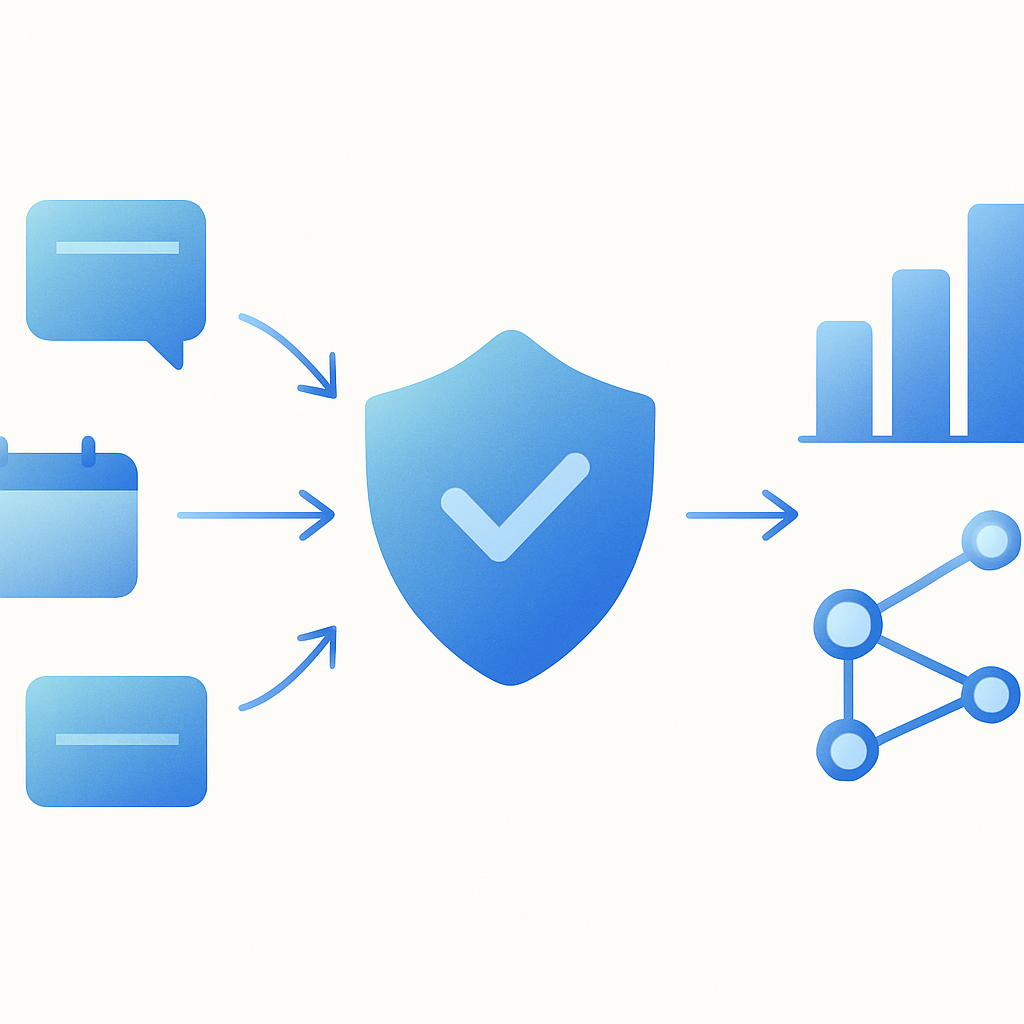
Trust forms the foundation of any successful analytics program. With 86% of employees believing employers should disclose monitoring tool usage, transparency becomes non-negotiable. The key lies in implementing privacy-first approaches that protect individual privacy while delivering organizational insights.
Modern platforms achieve this through sophisticated anonymization techniques. Data gets stripped of identifiers at ingestion, with all analysis occurring at group levels of eight or more employees. No individual activities are tracked, no message content is analyzed, and personal work patterns remain private. This approach ensures GDPR and CCPA compliance while maintaining analytical value.
Successful implementation requires clear communication about what's measured and why. Organizations should emphasize that collaboration analytics aims to improve team health measurement and remove friction from work, not surveil individuals. When employees understand the benefits - less meeting overload, better work-life balance, more focus time - they become advocates rather than skeptics.
Key takeaway: Privacy-first analytics builds trust by anonymizing data at the source, analyzing only group patterns, and never accessing work content or individual activities.
The landscape of work has shifted dramatically, with 58% of employees now using AI tools - a 107% increase that's reshaping productivity baselines. Understanding current benchmarks helps leaders set realistic targets and identify improvement opportunities.
Meeting load benchmarks have evolved with hybrid work patterns. While pre-2020 norms suggested 8-10 hours of weekly meetings as optimal, current data shows remote workers achieve 29 minutes more daily productivity with fewer synchronous meetings. The sweet spot now sits at 6-8 hours of purposeful meetings weekly, with anything above 10 hours flagging as problematic.
Focus time requirements vary by role but maintain consistent minimums. Knowledge workers need at least 3.5 hours of uninterrupted time daily, while creative roles require 4+ hours. Cross-functional collaboration should comprise 30% of interactions to prevent silos without overwhelming individual contributors. Leaders tracking economic downturn metrics find these thresholds even more critical for maintaining productivity during uncertainty.
The most damaging mistake organizations make is using one-size-fits-all metrics across diverse roles. Different positions require different measurement approaches - what works for sales teams fails for engineering groups. This misalignment creates frustration and drives gaming behaviors that undermine the entire measurement system.
Over-tracking represents another critical pitfall. When organizations monitor too many metrics or track at too granular a level, they create surveillance cultures that destroy motivation. More than two-thirds of employees are already disengaged from their jobs; excessive monitoring only deepens this disconnection. The solution lies in selecting fewer, more meaningful metrics that connect directly to business outcomes.
Ignoring employee wellbeing while pushing productivity metrics creates unsustainable situations. 80% of workers lack energy to complete their work effectively. Metrics must balance productivity with sustainability, tracking not just output but also work-life balance indicators, weekend work patterns, and burnout signals. Organizations that miss these human factors see short-term gains followed by talent exodus and performance collapse.
Successful implementation follows a phased approach that builds trust while demonstrating value. Start by connecting data from your existing tools - most organizations already have rich collaboration data across email, calendar, and messaging platforms. The key lies in aggregating and analyzing this information effectively.
Begin with a pilot program focusing on volunteer teams or departments facing specific challenges. ONA helps identify collaboration patterns and bottlenecks within these groups, providing quick wins that build organizational buy-in. Share results transparently, emphasizing improvements in meeting efficiency, focus time, and cross-team connections.
Scale gradually while maintaining privacy standards. 41% of leaders expect teams to manage AI agents within five years, making robust analytics infrastructure essential. Worklytics excels here by offering pre-built connectors for 25+ platforms while maintaining strict anonymization protocols. The platform processes data through privacy proxies, ensuring no personal information ever transfers from company servers. Organizations can explore productivity analytics approaches that align with their culture and goals.
The future of work demands sophisticated measurement approaches that balance productivity with human sustainability. Organizations cannot afford to dismiss the technology at the heart of employee experience. Those that master collaboration metrics gain competitive advantages through faster decision-making, stronger innovation, and higher retention.
The path forward requires selecting focused metrics that matter, implementing privacy-first collection methods, and using insights to remove friction rather than increase pressure. Success comes from measuring thoughtfully, not comprehensively. Start with meeting effectiveness and focus time preservation, then expand based on organizational needs and readiness.
Worklytics provides the foundation for this transformation through comprehensive analytics capabilities that respect privacy while delivering actionable insights. The platform's ability to track AI adoption patterns alongside traditional collaboration metrics positions organizations for success as work continues evolving. Leaders ready to embrace data-driven collaboration management will define the next era of organizational effectiveness.
Cross-team collaboration metrics are data points that reveal how work flows through an organization, focusing on connection strength, focus time, and meeting effectiveness to improve productivity.
Collaboration metrics transform vague productivity concerns into actionable insights by identifying inefficiencies like ineffective meetings and interruptions, allowing organizations to optimize work patterns and improve outcomes.
Organizations using collaboration metrics report ROI between 122% to 408%, as these metrics help eliminate ineffective meetings, recapture time, and enhance team decision-making and engagement.
Worklytics uses privacy-first analytics by anonymizing data at the source, analyzing only group patterns, and never accessing individual activities, ensuring compliance with GDPR and CCPA.
Key categories include meeting effectiveness, focus preservation, network strength, and manager engagement, each providing insights into organizational health and productivity.
4. https://worklytics.co/resources/top-10-employee-performance-metrics-hybrid-workforce-2025-benchmarks
5. https://worklytics.co/resources/manager-effectiveness-scorecard-metrics-hybrid-teams-2025-benchmarks
7. https://worklytics.co/resources/measuring-productivity-what-actually-works
8. https://worklytics.co/resources/top-12-metrics-for-effective-meetings
9. https://worklytics.co/meeting-effectiveness
10. https://worklytics.co/ona-data-analytics-software-worklytics
11. https://worklytics.co/blog/how-ona-helps-break-down-organizational-silos
12. https://worklytics.co/privacy
13. https://worklytics.co/resources/how-we-measure-team-health
14. https://worklytics.co/resources/top-6-metrics-to-measure-during-an-economic-downturn
15. https://worklytics.co/how-it-works