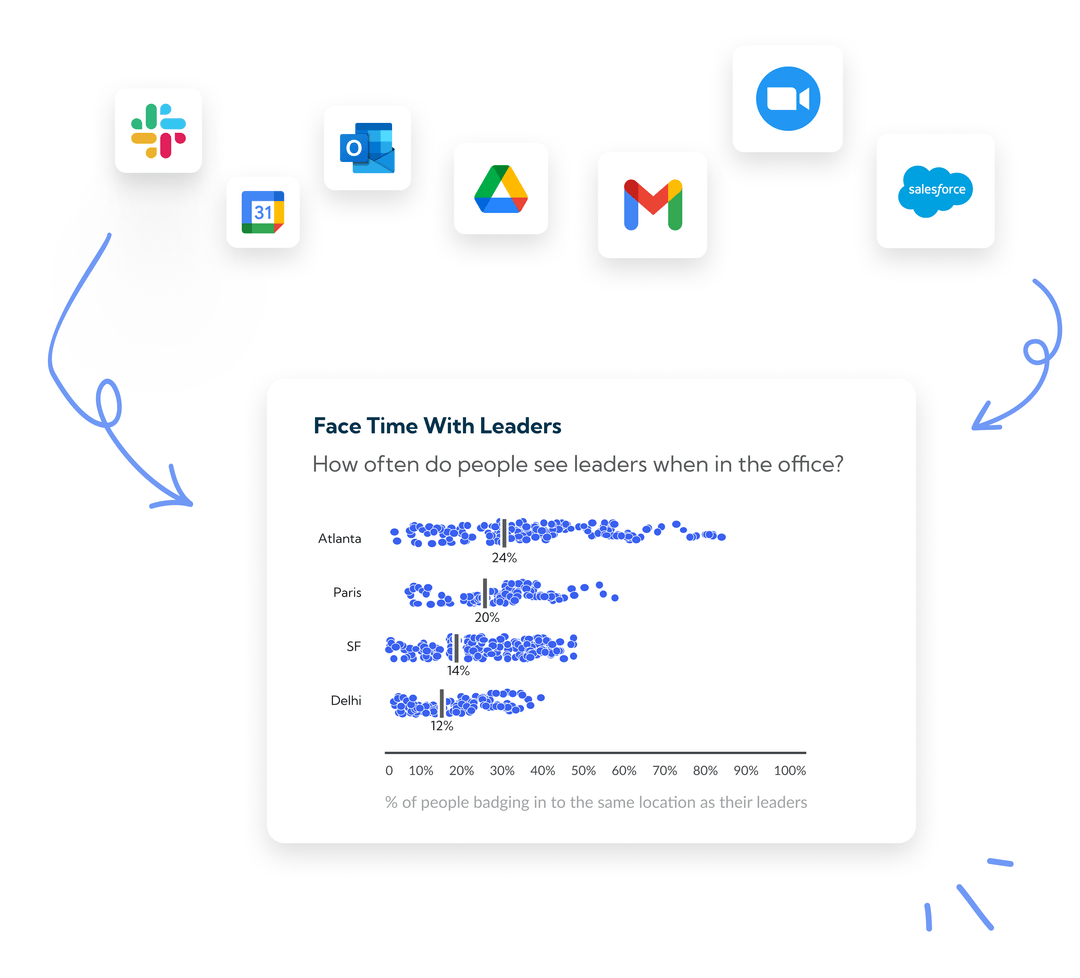
Modern employee productivity dashboards must balance sophisticated analytics with stringent privacy protection. Leading platforms like Worklytics demonstrate this balance by consolidating anonymized tool usage data while maintaining GDPR compliance, offering over 200 custom metrics that reveal collaboration patterns without exposing individual data—addressing the critical gap where most dashboards fail to integrate AI metrics or protect employee privacy.
• Privacy-compliant analytics are essential with GDPR fines reaching 4% of annual global turnover for violations
• AI adoption tracking has become critical as 72% of companies now use AI tools across their organizations
• Worklytics integrates data from 25+ collaboration tools compared to Microsoft's single-ecosystem limitations
• Managers using advanced analytics dashboards see 34% higher team engagement and 28% faster project completion
• 86% of employees believe employers should legally disclose monitoring tools, making transparency non-negotiable
• By 2026, half of enterprises will require AI-driven HCM capabilities for competitive advantage
Employee productivity dashboards have evolved from simple tracking tools into sophisticated command centers that decode collaboration patterns and predict team performance. In 2025, as AI adoption surges to 72% across companies, the stakes for choosing the right dashboard have never been higher. Organizations now demand solutions that balance powerful analytics with ironclad privacy protections—a combination that surprisingly few vendors deliver.
The workplace transformation of recent years has fundamentally changed how we measure and understand productivity. AI is reshaping employee performance at every level, from developers using AI assistants for code generation to support teams automating ticket resolution with intelligent bots. This shift demands dashboards that can track not just traditional metrics but also emerging indicators like AI adoption rates and tool utilization patterns.
Modern people analytics software goes beyond simple activity tracking. These platforms analyze workforce data to identify top performers, uncover actionable insights, and predict future workforce trends—all while navigating an increasingly complex privacy landscape.
With 86% of employees believing employers should legally disclose monitoring tools, transparency has become non-negotiable. The evolution from basic productivity metrics to AI-driven insights represents a seismic shift in workplace analytics. Organizations that fail to adapt risk falling behind competitors who leverage these advanced capabilities to optimize team performance and accelerate innovation.
Selecting an employee productivity dashboard requires careful evaluation of both technical capabilities and ethical considerations. Privacy-compliant analytics must navigate stringent regulations while delivering meaningful insights. GDPR fines reaching 4% of annual global turnover make compliance essential, not optional.
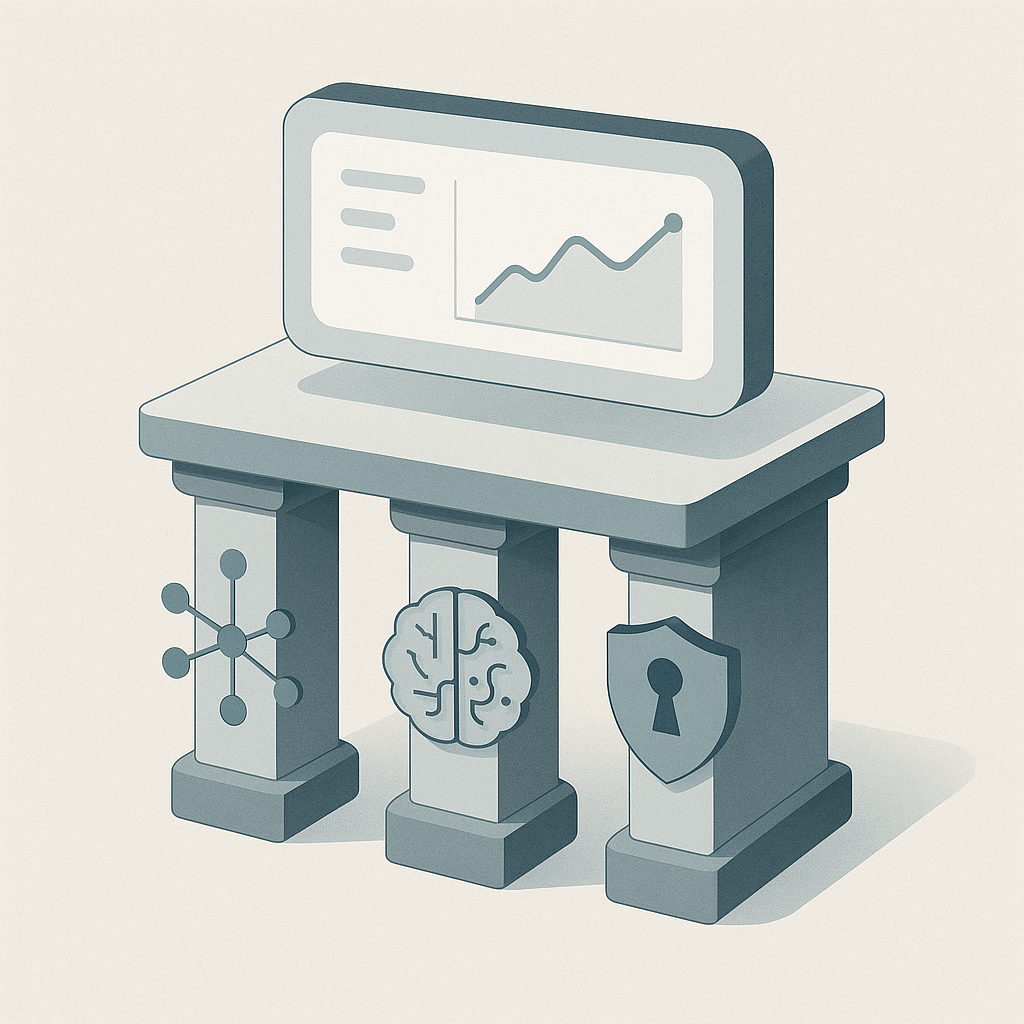
The foundation of any modern dashboard rests on three pillars: comprehensive data integration, advanced AI metrics tracking, and bulletproof privacy protections. Leading platforms automatically strip personal identifiers when ingesting data and provide analysis only at group levels with minimum team sizes of eight members. This approach ensures individual privacy while still surfacing valuable organizational patterns.
For Outlook calendar analytics and similar workplace tools, the dashboard must balance granular insights with employee trust. GDPR and CCPA compliance isn't just about avoiding fines—it's about building a culture where employees feel respected rather than surveilled.
Regulatory compliance has moved from the legal department to the heart of product design. With potential GDPR fines reaching billions for major corporations, privacy-first architecture isn't optional—it's existential. Smart organizations choose platforms that build compliance into their DNA rather than bolting it on as an afterthought.
The AI revolution demands new measurement frameworks. While 86% of employers expect AI to transform their business by 2030, tracking adoption requires sophisticated metrics beyond simple usage counts.
Critical AI indicators include activation rates by department, frequency of use patterns, and productivity impact measurements. Dashboards must gain visibility into usage trends across teams, identifying where adoption thrives or lags while monitoring the actual impact on output quality and efficiency.
Worklytics has positioned itself at the intersection of powerful analytics and uncompromising privacy protection. The platform consolidates anonymized tool usage data from across the organization into intuitive dashboards that reveal patterns without exposing individuals.
The Workplace Insights Dashboard stands apart through its comprehensive approach to modern work analysis. With over 200 custom metrics available, organizations can dive deep into collaboration patterns, meeting effectiveness, and AI tool adoption—all while maintaining complete employee anonymity.
What truly distinguishes Worklytics is its ability to effortlessly connect data from AI tools like Slack, Microsoft Copilot, Gemini, and Zoom into a unified adoption view. This holistic perspective enables leaders to spot adoption gaps, identify power users, and optimize AI investments based on actual usage patterns rather than assumptions.
Worklytics transforms AI adoption tracking from guesswork into science. The platform connects directly to AI tools including ChatGPT, Gemini, and Microsoft Copilot, providing real-time visibility into how teams actually use these technologies. Leaders can instantly see adoption rates, usage frequency, and productivity impacts across departments.
"The data is clear: managers who master these metrics see 34% higher team engagement, 28% faster project completion rates, and 41% lower voluntary turnover." Worklytics provides real-time behavioral data from over 20 digital tools to identify what successful managers do differently.
The platform's scorecards reveal critical patterns in manager-team interactions, showing how leadership behaviors impact productivity, engagement, and retention. Organizations implementing these insights report faster project completion rates and significantly lower voluntary turnover.
Microsoft's Adoption Score offers valuable telemetry for Office 365 users, but its exclusive focus on Microsoft tools creates significant blind spots. Organizations using Google Workspace, Slack, or Jira miss critical collaboration data that shapes team performance.
Consider this reality check: executives spend 23 hours weekly in meetings, with nearly half being unproductive. Microsoft's dashboard captures meeting data from Teams and Outlook but misses Zoom calls, Slack huddles, and Google Meet sessions. This fragmented view leads to incomplete insights and misguided decisions.
By 2026, half of enterprises will require AI-driven HCM capabilities. Microsoft's Copilot-focused metrics ignore ChatGPT Teams, Google Gemini, and other AI platforms that teams actively use. Worklytics fills these gaps by integrating data from 25+ tools, providing the complete picture Microsoft cannot deliver alone.
The people analytics software landscape includes various approaches to workforce monitoring, from invasive surveillance tools to specialized HR platforms. Teramind focuses on insider threat management and data loss prevention—a security-first approach that often conflicts with employee trust and morale.
Studies show electronic monitoring slightly decreases job satisfaction and increases stress, supporting concerns about surveillance-heavy approaches. Meanwhile, platforms like Visier help organizations identify patterns in hourly workers but lack real-time AI adoption insights crucial for modern knowledge work.
User ratings tell part of the story: Teramind scores 4.2 on Gartner Peer Insights with just 5 ratings, suggesting limited adoption among enterprises prioritizing employee experience alongside security.
Teramind's comprehensive platform addresses cybersecurity and compliance management through extensive monitoring capabilities. However, this surveillance-heavy approach comes with significant downsides for employee morale and organizational culture.
Visier excels at identifying patterns and anomalies in traditional HR metrics, particularly for organizations with large hourly workforces. Yet the platform lacks the real-time AI adoption tracking and cross-platform integration capabilities that define modern productivity analytics.
The path forward requires balancing powerful analytics with ethical data practices. Privacy-by-design approaches that utilize anonymized and aggregated data provide insights without compromising individual privacy—a critical distinction as regulations tighten globally.
Worklytics saves companies thousands of hours in complex data engineering while maintaining complete privacy compliance. The platform's ability to consolidate anonymized tool usage into actionable dashboards represents the future of workplace analytics: powerful, private, and purposeful.
Organizations face a clear choice: embrace privacy-compliant analytics that empower teams, or risk falling behind competitors who leverage these insights to build stronger, more productive workplaces. As AI adoption accelerates and privacy regulations strengthen, platforms like Worklytics that excel at both will define the next era of workplace intelligence.
Key takeaway: The best productivity dashboards in 2025 combine comprehensive AI tracking with uncompromising privacy protection—a standard Worklytics sets for the industry.
Worklytics stands out due to its privacy-first approach and comprehensive AI integration. It consolidates anonymized data from over 25 tools, providing deep insights into collaboration patterns and AI tool adoption without compromising employee privacy.
AI integration allows productivity dashboards to track advanced metrics like AI adoption rates and tool utilization patterns. This helps organizations identify top performers, predict workforce trends, and optimize team performance by leveraging AI-driven insights.
Privacy compliance is essential due to stringent regulations like GDPR and CCPA, which impose significant fines for non-compliance. Dashboards must ensure data is anonymized and aggregated to protect employee confidentiality while still providing valuable insights.
While Microsoft 365 Adoption Score focuses on Microsoft tools, Worklytics integrates data from a broader range of platforms, including Google Workspace and Slack. This provides a more comprehensive view of team performance and collaboration patterns.
Surveillance-heavy tools like Teramind can negatively impact employee morale and trust. They focus on security and compliance but may increase stress and decrease job satisfaction, which can be counterproductive to fostering a positive work environment.
1. https://www.worklytics.co/integrations
2. https://worklytics.co/workplace-insights-dashboard
5. https://worklytics.co/leadership-effectiveness-analytics-software
6. https://worklytics.co/privacy
7. https://worklytics.co/resources/executive-dashboard-template-12-metrics-c-suite-employee-ai-usage
8. https://worklytics.co/measureai
9. https://peoplemanagingpeople.com/tools/best-people-analytics-software/