
The conclusion is straightforward: productivity is not determined by location alone. The real differentiator is how organizations measure work patterns, optimize collaboration, and manage teams across distributed environments.
The debate about productivity in office vs remote work intensified after the global shift to distributed work models. Many organizations initially assumed productivity would decline when employees worked outside a centralized workplace. Data collected over the last several years shows a more complex reality.
Multiple studies indicate that employees working remotely often maintain or improve productivity. In fact, research shows 77% of remote workers report higher productivity levels, while employers also report stable or increased output from distributed teams.
However, the relationship between location and productivity is not linear. Productivity outcomes depend on several factors:
Organizations that attempt to compare remote and office productivity using simple output metrics frequently overlook these factors. Measuring productivity requires visibility into how teams actually work.
Workplace analytics platforms like Worklytics help organizations analyze collaboration patterns, meeting behavior, and digital activity to identify what truly drives productivity across work environments.
Remote work significantly changes how employees structure their workday. Several structural advantages explain why many knowledge workers report higher productivity when working remotely.
Office environments often contain interruptions such as spontaneous conversations, noise, and frequent meetings. These interruptions reduce deep work time, affecting much of the productivity
Studies indicate that remote workers spend less time being unproductive compared with office employees, largely due to reduced distractions.
Deep work requires sustained attention. When employees can control their work environment, they can allocate longer uninterrupted blocks of time to complex tasks.
Remote environments are particularly effective for professions that require deep focus and have long focus blocks, such as:
Hybrid productivity reports show that remote workers can achieve up to 18.5 hours of deep focus per week, significantly higher than office-based employees.
Remote work allows employees to align their working hours with their most productive periods. Some professionals produce their best work early in the morning, while others perform better in late afternoon or evening.
Research indicates that 64% of employees report better focus when they have flexible working hours.
Flexible scheduling reduces cognitive fatigue and allows employees to plan their workload around periods of peak concentration.
Organizations that measure focus patterns using workplace analytics tools can identify when productivity peaks occur across teams.
Platforms like Worklytics enable organizations to analyze focus blocks, helping identify the sources of workflow fragmentation and allowing teams to protect the time needed to produce their most valuable work.
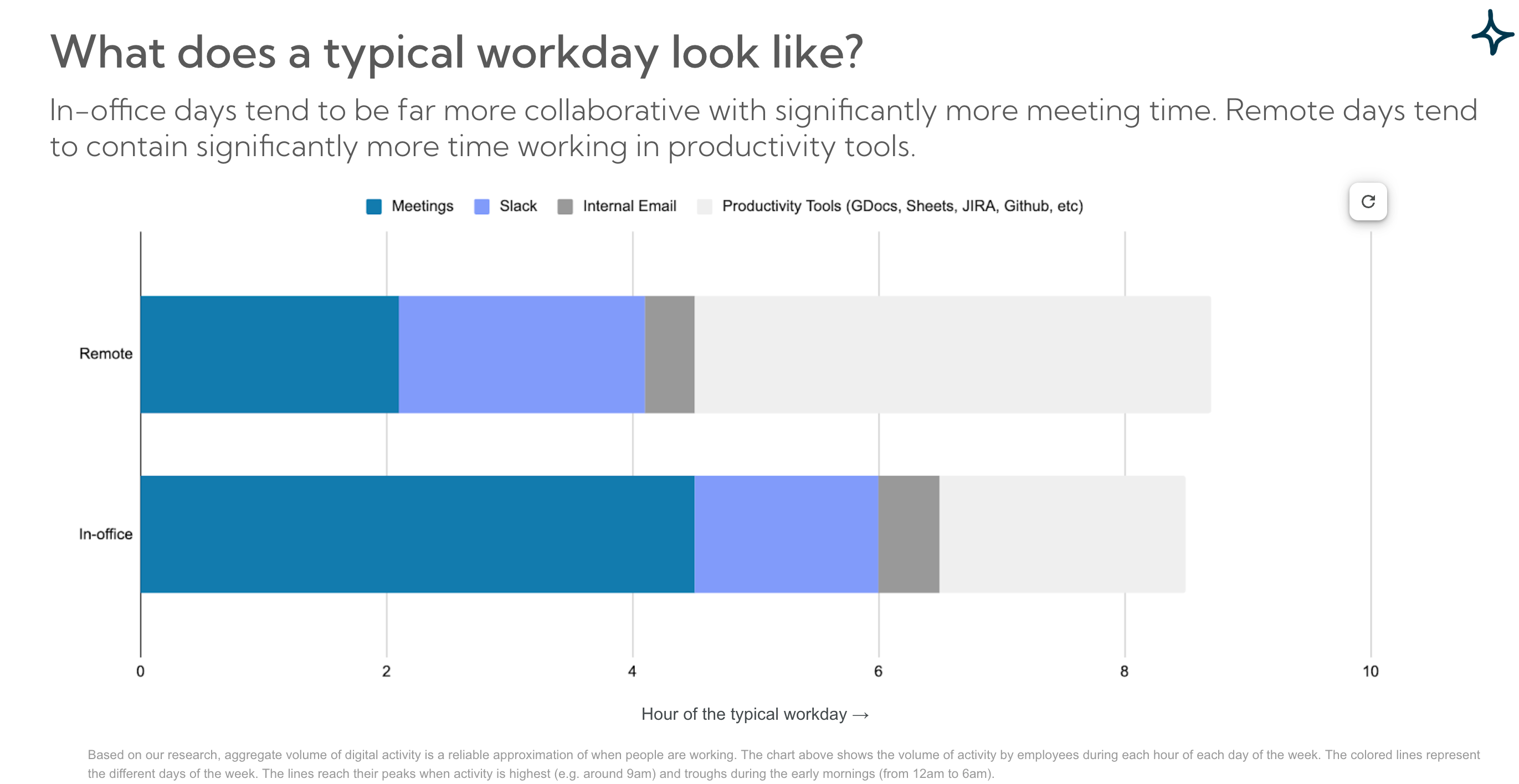
Commuting consumes time that could otherwise be used for productive work or recovery. Eliminating long commutes improves both productivity and well-being.
Employees often reinvest commute time into work or personal routines that support focus. In many cases, workers begin their day earlier and maintain higher energy levels.
Remote work also reduces stress associated with commuting logistics, which can influence cognitive performance and decision-making.
This relationship between productivity and well-being is often overlooked in traditional productivity metrics. Organizations increasingly track employee well-being using workplace analytics to understand how work patterns affect engagement and burnout.
Worklytics provides insights into employee well-being indicators, helping companies detect overwork patterns and unhealthy meeting loads across distributed teams.
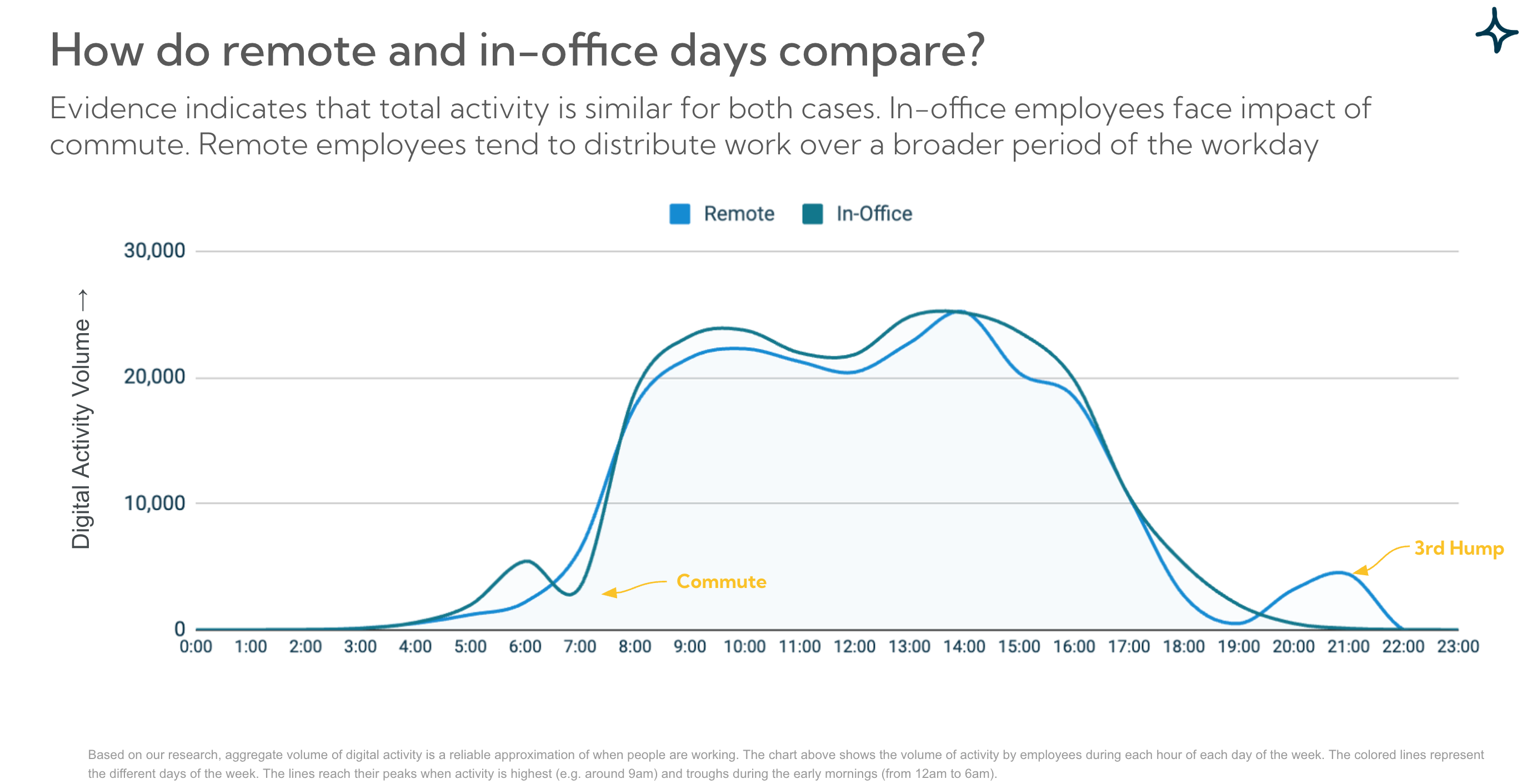
Despite the productivity gains associated with remote work, office environments still provide advantages that influence team performance.
These advantages typically relate to collaboration quality and leadership visibility rather than individual task output.
Physical proximity makes spontaneous collaboration easier. Quick conversations in office environments can resolve complex problems faster than asynchronous communication.
Collaboration research shows that cross-team interaction decreases when work becomes fully remote, which can reduce knowledge sharing and innovation.
In-office collaboration benefits activities such as:
These interactions contribute to innovation and organizational learning.
Organizations seeking to preserve collaboration quality often analyze communication networks within their teams.
Worklytics enables leaders to measure network connectivity across teams, identifying collaboration gaps that may appear in remote or distributed environments.

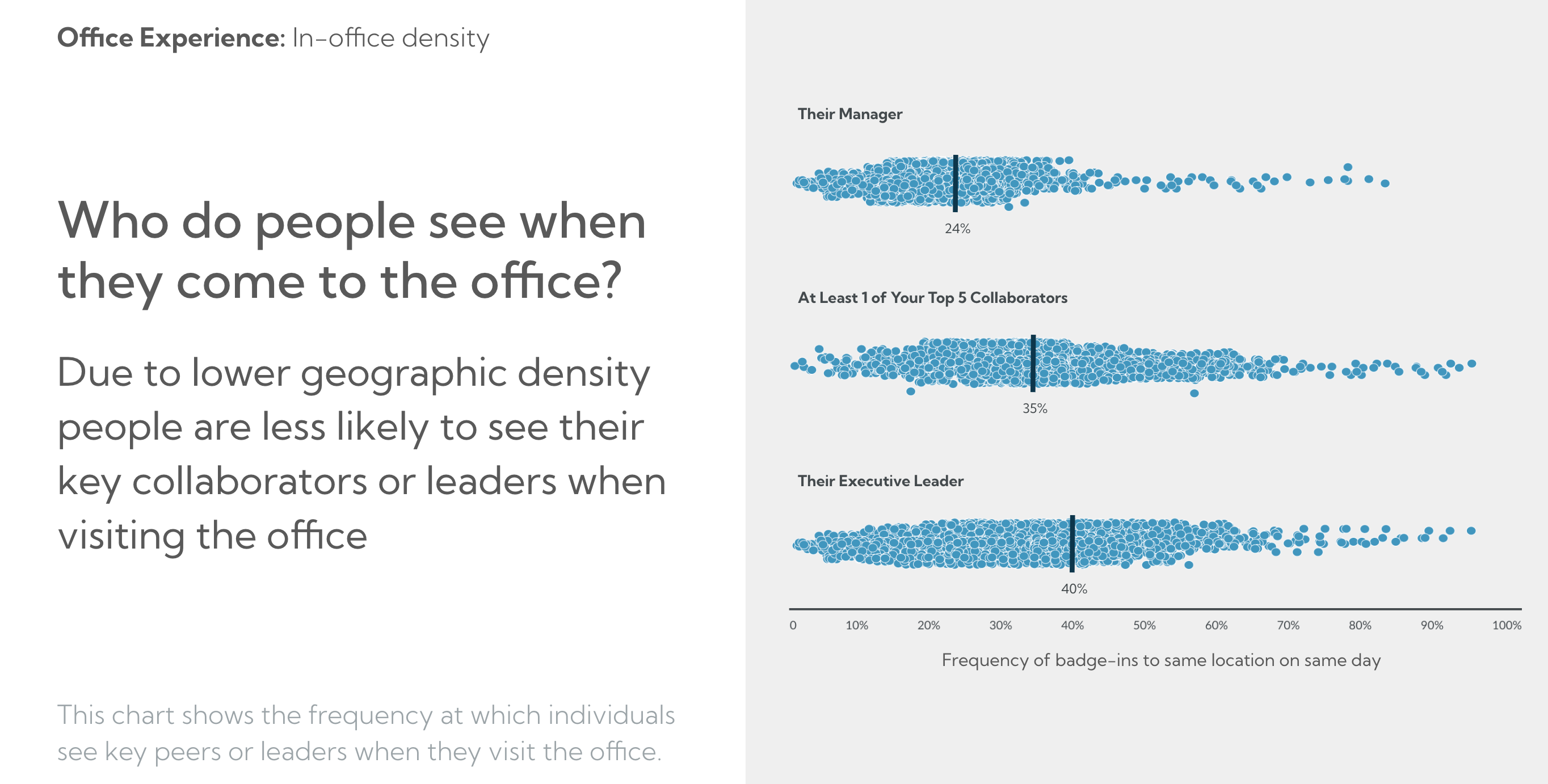
One challenge of remote work is reduced visibility between employees and leadership. Managers may struggle to observe team progress or detect early performance issues.
When employees work in a shared space, leaders can:
However, relying on physical presence as a productivity indicator can lead to inaccurate conclusions. Presence does not necessarily reflect actual contribution.
Instead, organizations increasingly rely on manager effectiveness analytics to evaluate leadership impact on productivity.
Worklytics analyzes management patterns such as:
These insights help organizations identify effective management practices across remote and in-office teams.
Workplace relationships influence employee engagement and retention. Some employees report that remote work reduces opportunities for social interaction and professional networking.
Recent workplace surveys suggest that hybrid and in-office workers report higher levels of social connection compared with fully remote employees.
Social connections support psychological safety and knowledge sharing. These factors contribute indirectly to productivity by improving team trust and collaboration quality.
Organizations that monitor engagement levels using workplace analytics can detect when remote teams begin experiencing collaboration or morale challenges.
Worklytics helps leaders measure employee engagement signals across communication platforms, providing insight into how connected teams remain over time.
Research increasingly suggests that hybrid work models produce the most balanced productivity outcomes.
Hybrid models combine the focus advantages of remote work with the collaboration benefits of office environments.
Studies show that hybrid workers often experience higher productivity, lower turnover, and stronger engagement levels.
Typical hybrid structures include:
Hybrid work allows organizations to design intentional workflows around different types of tasks.
For example:
Remote days are optimized for
Office days are optimized for
Organizations that analyze productivity data often discover that task type matters more than work location.
Worklytics helps organizations evaluate hybrid productivity by measuring:
These insights allow companies to refine hybrid schedules based on real workplace data rather than assumptions.
Managing hybrid and remote teams requires more than traditional productivity metrics. Leaders need visibility into collaboration patterns, engagement signals, and operational bottlenecks that occur across distributed work environments.
Workplace analytics platforms like Worklytics help organizations turn digital collaboration data into actionable insights that improve team performance and employee experience.
One of Worklytics' core capabilities is consolidating workplace data into actionable dashboards. These dashboards provide leaders with real-time metrics that help evaluate how remote and hybrid teams collaborate, communicate, and execute work.
Instead of relying on subjective observations, organizations can analyze patterns across collaboration tools to identify trends, measure productivity signals, and uncover operational bottlenecks.
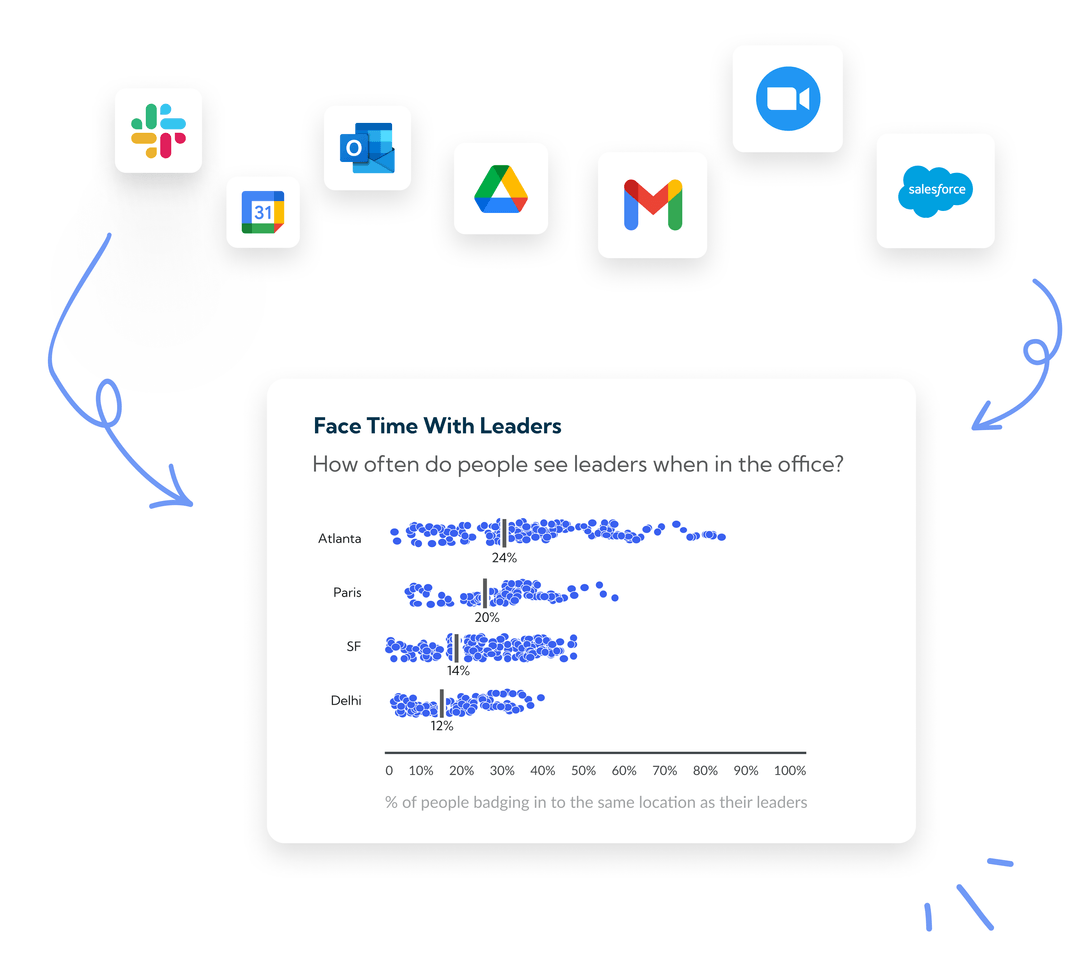
By visualizing collaboration behaviors and workflow patterns, organizations gain a clearer understanding of how distributed teams operate across locations.
In hybrid environments, many productivity challenges stem from invisible collaboration friction—such as delayed responses, excessive meetings, or weak cross-team communication.
Worklytics analyzes metadata from collaboration tools to uncover these patterns and surface insights into how work actually gets done. For example, the platform can reveal meeting loads, response-time trends, and cross-team interaction gaps that may slow execution or fragment team communication.
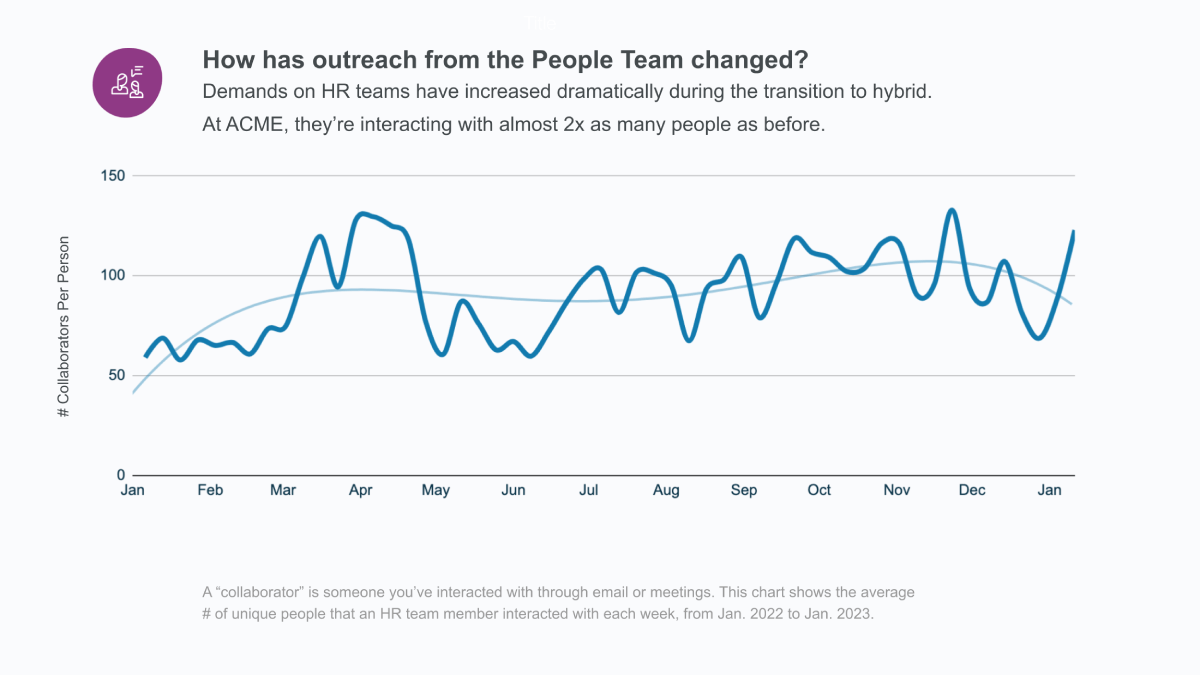
These insights help organizations rebalance collaboration practices, reduce unnecessary meetings, and improve how teams coordinate work across time zones and locations.
To help organizations evaluate the effectiveness of hybrid work strategies, Worklytics also provides Flexible Work Scorecards that measure how well teams adapt to remote or hybrid operating models.
The scorecard evaluates multiple dimensions of distributed work—including employee engagement, collaboration quality, leadership support, and productivity signals. It also compares organizational metrics against best practices and industry benchmarks to identify opportunities for improvement.
This benchmarking capability helps leaders move beyond assumptions about hybrid work and instead make decisions based on measurable workforce behaviors and outcomes.
Hybrid and remote work shouldn’t rely on assumptions. Worklytics helps organizations analyze workplace data to uncover collaboration patterns, identify productivity gaps, and understand how teams actually get work done. Start uncovering the insights behind your team’s work habits and make more informed decisions for a stronger, more productive hybrid workforce.
Remote work often improves individual productivity for tasks requiring deep focus. Studies show productivity increases between 5% and 15% for many knowledge workers.
However, collaborative tasks may perform better in office environments.
Hybrid work balances remote focus time with in-person collaboration. Research shows hybrid workers often report higher productivity and lower turnover compared with fully remote or fully office teams.
Organizations increasingly rely on workplace analytics platforms such as Worklytics to analyze collaboration patterns, meeting behavior, employee engagement, and manager effectiveness across distributed teams.
Many remote employees report working slightly longer hours because they have fewer interruptions and more flexible schedules.
Remote work can improve work-life balance but may also increase isolation if teams lack strong collaboration practices. Monitoring well-being indicators helps organizations maintain healthy work patterns.