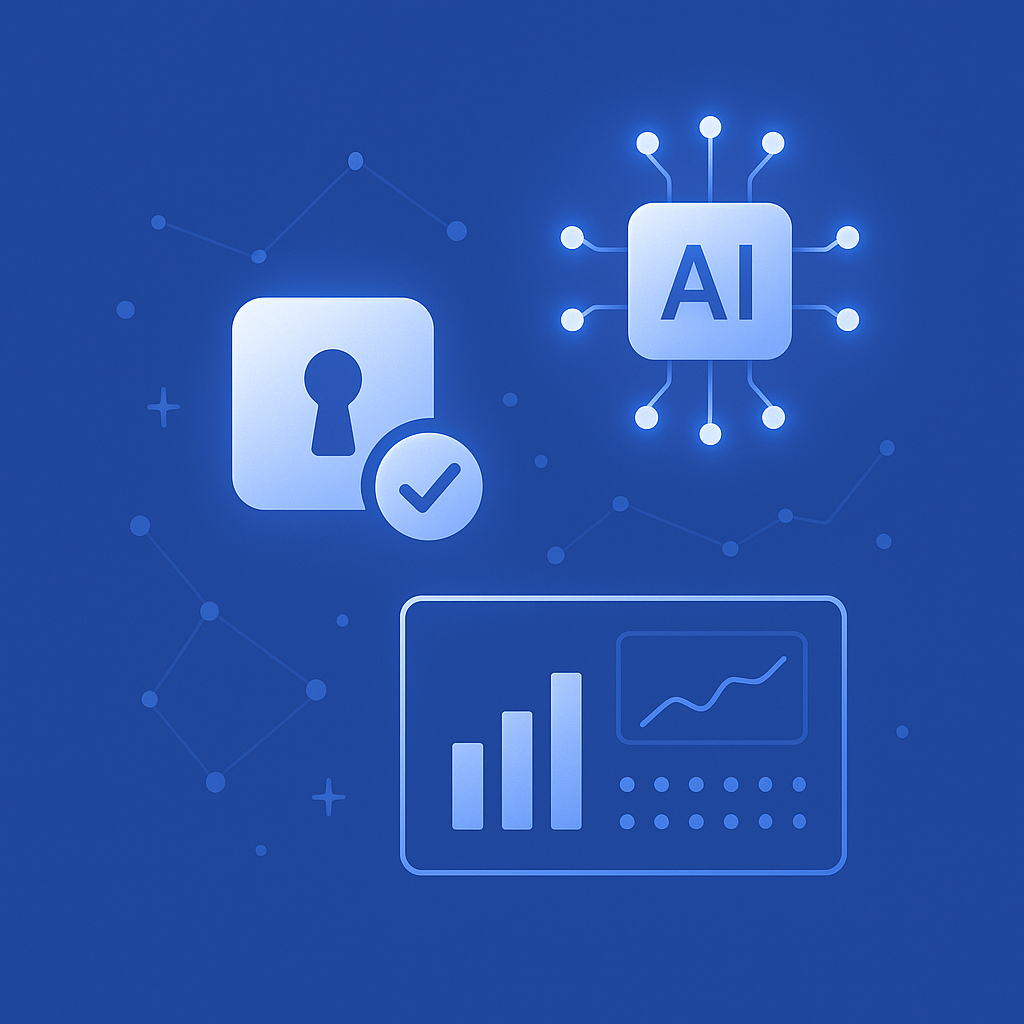
With the EU AI Act entering force by August 2026, privacy teams need dashboards that are future-proof today. (Clifford Chance) The intersection of AI systems and data protection regulations creates a complex compliance landscape that organizations must navigate carefully. (SecurePrivacy.ai)
As AI adoption in companies surged to 72% in 2024 (up from 55% in 2023), the need for compliant AI usage monitoring has become critical. (Worklytics) Organizations are increasingly integrating AI systems with business operations, creating new challenges for maintaining GDPR compliance while leveraging the benefits of artificial intelligence. (ComplianceHub)
This comprehensive guide translates complex legal requirements into actionable technical checklists, covering data minimization, audit trails, differential privacy, and k-anonymity principles. We'll explore how these requirements map to modern AI processing pipelines and provide practical templates for Data Protection Impact Assessments (DPIAs).
The EU Artificial Intelligence Act, enforced on August 1, 2024, follows a risk-based approach, classifying AI systems based on their potential impact on human lives, fundamental rights, and society. (Clifford Chance) This regulation significantly impacts employers and HR professionals who use AI systems in their operations, recruitment, performance evaluation, talent management, and workforce monitoring.
On February 2, 2025, specific AI practices became prohibited in the workplace, including AI emotion recognition systems, which are considered to pose unacceptable risks under Article 5(1)(f) of the AI Act. (Wolters Kluwer) Organizations must ensure their AI usage dashboards comply with these prohibitions while maintaining effective monitoring capabilities.
AI systems must adhere to the principle of data minimization, collecting only essential personal data needed for specific purposes. (SecurePrivacy.ai) Purpose limitation presents a significant challenge, requiring measures to prevent function creep, where data collected for one purpose gradually gets used for others without proper authorization.
Key GDPR principles for AI systems include lawful data handling, transparent and accountable AI, data subject rights, Data Protection Impact Assessment (DPIA), secure and private AI systems, and monitoring and auditing. (DialZara) These principles form the foundation for building compliant AI usage dashboards.
Essential Requirements:
Technical Implementation:
Mandatory Logging Requirements:
Dashboard Transparency Features:
Worklytics demonstrates this approach by providing visibility into how AI adoption varies across departments and roles, helping organizations understand usage patterns while maintaining privacy. (Worklytics)
Differential Privacy Implementation:
Recommended Parameters:
- Epsilon (ε): 0.1-1.0 for high privacy
- Delta (δ): 1/n² where n is dataset size
- Sensitivity: Calculated per query type
K-Anonymity Requirements:
Required Capabilities:
Response Time Requirements:
| Data Type | Retention Period | Justification | Anonymization |
|---|---|---|---|
| Raw activity logs | 30 days | Operational debugging | Full anonymization after 30 days |
| Aggregated metrics | 24 months | Trend analysis and benchmarking | K-anonymity applied |
| AI model outputs | 12 months | Model performance monitoring | Pseudonymization |
| Audit logs | 7 years | Regulatory compliance | Encrypted storage |
| User consent records | Duration of processing + 3 years | Legal compliance | Secure archival |
Section 1: Processing Description
Section 2: Risk Assessment
Section 3: Compliance Measures
Organizations implementing AI impact assessments early in their deployment process can identify and mitigate risks before they become compliance issues. (Worklytics)
Compliance Controls:
Technical Implementation:
Privacy-Preserving Techniques:
Worklytics leverages existing corporate data to deliver real-time intelligence on how work gets done, using data anonymization and aggregation to ensure compliance with GDPR and other data protection standards. (Worklytics)
User Interface Compliance:
Reporting Safeguards:
| Tool Category | Leading Solutions | Key Features | Integration Complexity | Cost Range |
|---|---|---|---|---|
| Privacy Management | OneTrust, TrustArc | DPIA automation, consent management | Medium | $50K-$500K annually |
| Data Discovery | Varonis, BigID | Automated PII detection, classification | High | $100K-$1M annually |
| Anonymization | Privacera, Immuta | Dynamic masking, synthetic data | Medium | $75K-$750K annually |
| Audit & Monitoring | Splunk, Elastic | Real-time monitoring, compliance reporting | Low-Medium | $25K-$250K annually |
| AI Governance | DataRobot, H2O.ai | Model monitoring, bias detection | High | $100K-$1M annually |
Phase 1: Foundation (Months 1-3)
Phase 2: Enhancement (Months 4-6)
Phase 3: Optimization (Months 7-12)
Organizations need to track key AI usage metrics while respecting privacy requirements. Six key AI usage metrics that business and tech decision-makers should track include Light vs. Heavy Usage Rate, AI Adoption per Department, Manager Usage per Department, and New-Hire vs. Tenured Employee Usage. (Worklytics)
Privacy-Compliant Metrics:
Challenge 1: Function Creep Prevention
Challenge 2: Cross-Border Data Transfers
Challenge 3: AI Model Transparency
The rapid growth in AI adoption, with 78.9% of respondents foreseeing an increase in AI importance and usage in the workplace, makes compliance frameworks even more critical. (Workable)
Expected Developments:
Preparation Strategies:
Emerging Privacy Technologies:
Implementation Roadmap:
Worklytics helps organizations accelerate AI adoption while maintaining compliance through comprehensive monitoring and analytics capabilities. (Worklytics)
Conduct Compliance Gap Analysis
Establish Governance Framework
Implement Basic Safeguards
Deploy Privacy-Preserving Analytics
Complete DPIA Documentation
Integrate Compliance Automation
Achieve Full Compliance
Optimize for Performance
Prepare for Future Requirements
The future of AI in hiring and workplace monitoring is cautiously optimistic, with 68.1% of industry professionals foreseeing a rise in AI usage within their organizations. (Workable) This growth makes robust compliance frameworks essential for sustainable AI adoption.
Building GDPR and EU AI Act compliant dashboards for AI usage monitoring requires a comprehensive approach that balances regulatory requirements with business needs. Organizations must implement technical safeguards, establish governance frameworks, and maintain ongoing compliance monitoring to succeed in this complex regulatory environment.
The key to success lies in treating compliance as an enabler of innovation rather than a barrier. By implementing privacy-preserving technologies, establishing clear governance processes, and maintaining transparency with stakeholders, organizations can build AI usage dashboards that not only meet regulatory requirements but also drive business value. (ComplianceHub)
As the regulatory landscape continues to evolve, organizations that invest in robust compliance frameworks today will be better positioned to adapt to future requirements while maintaining their competitive advantage in AI adoption. The combination of technical excellence, legal compliance, and business acumen will determine which organizations thrive in the AI-driven future while respecting individual privacy rights and regulatory requirements.
Worklytics provides the foundation for compliant AI usage monitoring through its privacy-first approach, helping organizations navigate the complex intersection of AI innovation and regulatory compliance. (Worklytics) By following the guidelines and checklists outlined in this article, privacy teams can build dashboards that are not only compliant today but also future-proof for tomorrow's regulatory requirements.
AI usage dashboards must adhere to core GDPR principles including data minimization (collecting only essential personal data), purpose limitation (preventing function creep), transparency and accountability, data subject rights protection, and conducting Data Protection Impact Assessments (DPIAs). Organizations must also implement secure data processing, regular monitoring, and auditing procedures to maintain compliance while tracking AI system usage.
The EU AI Act, which became applicable on February 2, 2025, follows a risk-based approach and prohibits certain AI practices in the workplace, including AI emotion recognition systems except for medical or safety reasons. Organizations using AI monitoring dashboards must classify their AI systems based on risk levels and ensure compliance with fundamental rights protections while maintaining trustworthy, human-centric AI operations.
Organizations should track adoption rates by team, department, and role to identify gaps and training needs, similar to how GitHub Copilot achieved success with over 1.3 million developers on paid plans. Key metrics include usage frequency, efficiency gains, quality improvements, and employee well-being indicators. However, all tracking must comply with GDPR's data minimization principle and obtain proper consent for employee monitoring.
A comprehensive DPIA for AI usage dashboards must include risk assessment of personal data processing, evaluation of necessity and proportionality, identification of data subjects' rights impacts, security measures documentation, and mitigation strategies for identified risks. The assessment should cover both direct personal data collection and any indirect profiling or behavioral analysis that the dashboard might enable through AI usage patterns.
Organizations can achieve this balance by implementing privacy-by-design principles, using anonymization and pseudonymization techniques where possible, establishing clear data retention policies, and ensuring transparent communication about AI monitoring purposes. Regular compliance audits, employee consent management, and limiting data collection to business-essential metrics help maintain innovation while respecting privacy rights and regulatory requirements.
GDPR violations can result in fines up to €20 million or 4% of annual global turnover, whichever is higher, along with potential legal issues and significant reputational damage. The EU AI Act introduces additional penalties for prohibited AI practices and non-compliance with risk management requirements. Organizations must prioritize compliance to avoid these substantial financial and operational consequences while maintaining stakeholder trust.