Most of the “year to come” predictions that I’m seeing are either recycled LinkedIn tropes or flat-out sci-fi reads. I’m going to try a different tack here: pulling signals from the messy reality of how work actually happens - inside calendars, chats, docs, tickets - instead of prognosticating about what I wish would change. (We all know that’d be a much longer list.)
So let’s talk 2026. No crystal balls, just an early read on what work data is showing: what’s getting harder, what’s getting automated, and what new landmines we’re seeing with AI.
Along the way, I’ll lean on what we’re seeing in collaboration data across a lot of organizations - the same metadata your org should be using to sanity-check these trends against what you’re seeing in your own teams.
I’m no florist, but I think we’re deep in the “let a thousand pilots bloom” phase of AI adoption. Every team has grabbed its own copilots, agents, and note-takers. Great for learning. Terrible for ROI, security, and anyone who has to reconcile expense lines.
In 2026, I think that the experimentation wave will hit a wall. CFOs don’t want fifteen AI stacks; they want one stack that’s adopted, integrated into workflows, and measurable end-to-end.
Two important nuances:
Meetings are still the core human collaboration layer. AI can draft, summarize, and schedule… but it can’t replace the actual work of alignment, trust building, and creative conflict. Ironically, that makes meetings more central, not less.
The problem: AI is making meetings cheap to create and easy to expand. Bots take notes, so invites get bigger (“it’s fine, they don’t have to talk”). AI builds decks in minutes, so people show up with more slides than original thought. Instant scheduling removes friction, so we fill every blank spot.
As a result, we see ballooning meeting hours, bigger calendars, thinner focus time. We’ve written plenty on the cost curve here, including how meeting overload correlates with burnout risk.
What I think should change in 2026: Smart companies will stop hand-wringing and start budgeting meetings like money:
But let's be real. Most of us aren’t Shopify. Even if your exec team isn’t ready to declare meeting bankruptcy, I think you’ll see more leaders pushing back on meeting creep because the math is getting impossible to ignore.
As AI gets better at answering “how do I do X?”, fewer people ask other humans. That feels efficient — until you see what you’re trading away.
A pattern we’re already seeing goes like this:
A mid-sized org rolls out a solid internal AI in late 2025. Nothing flashy but grounded answers, decent retrieval, quick summaries of “how we do things here.” People love it. Especially new hires.
Fast forward three months. The onboarding experience looks better on paper: fewer “dumb” questions in Slack, fewer pings to managers, fewer calendar interrupts. The AI is doing its job; instant answers, clean templates, link to the right doc. New folks ramp faster individually.
But then a weird thing happens. The product team hits a cross-functional snag: a customer escalation that touches Product, Support, and Security. Historically, you’d see a flurry of human collaboration - someone taps a counterpart they trust, a DM turns into a huddle, context spreads sideways fast.
But this time, it doesn’t. Everyone goes to the AI first. They get answers, but not alignment. The Support lead assumes Product already knows. Product assumes Security is on it. Security thinks Support is handling comms. Each person is locally efficient… and globally disconnected.
By the time the escalation finally converges into a shared thread, the fix is slower, the tone is more tense, and you can feel the lack of connective tissue.
Nobody did anything “wrong.” They just didn’t build the same human pathways on the way in because the AI was so good at removing the friction that used to force those connection points into existence.
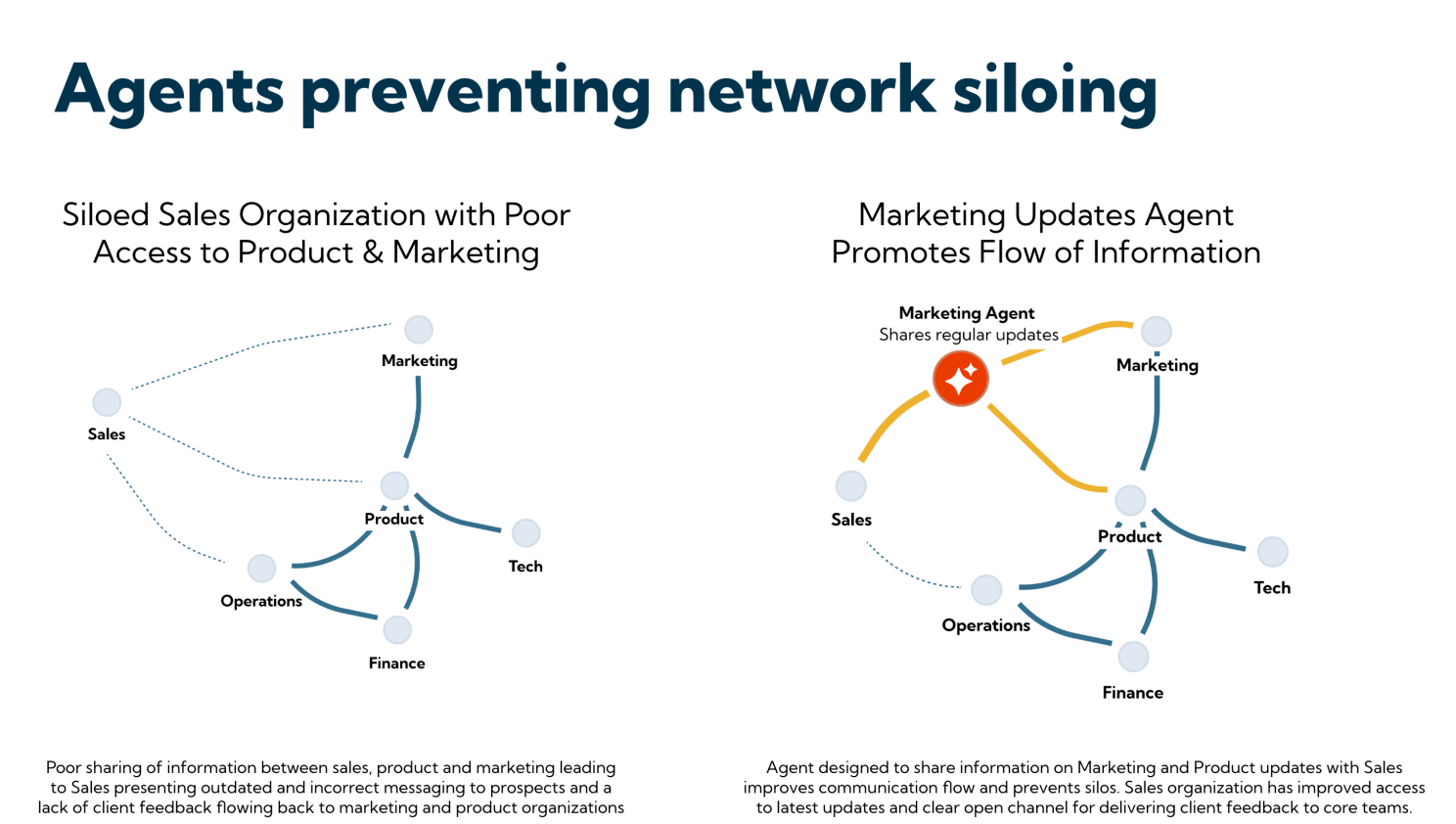
That’s the 2026 risk in a nutshell: AI can shrink the friction of collaboration, but it can also shrink the habit of collaboration. Orgs get quieter. People reach out less. Cross-team work erodes a few percent a quarter until the network gets brittle.
I don’t think you’ll notice it day-to-day. You notice it during reorgs, launches, outages, and messy moments where the answer isn’t in a doc… it’s in another person’s head.
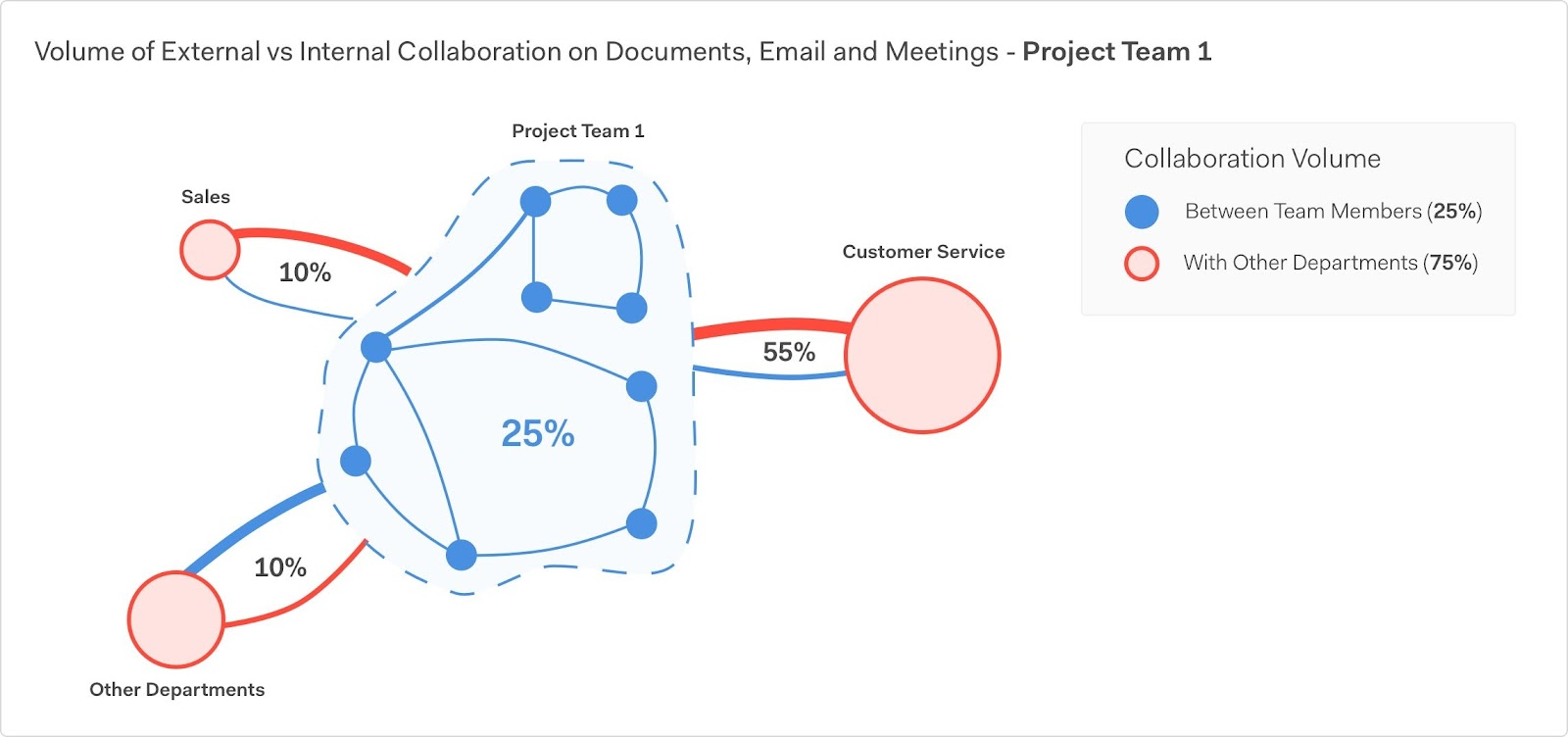
So as AI adoption rises, the smart move isn’t just measuring productivity. It’s watching network health right alongside it, because execution strength still depends on the human graph under the hood.
AI makes output infinite. That’s not automatically a win.
Two trends converge here:
The takeaway for 2026: orgs stop measuring volume and start measuring signal quality and load. Think read-through, decision yield, duplication, after-hours creep, and overload diagnostics. The question won’t be “how much did we produce?” but “how much of this actually mattered?”
When AI agents can generate anything, the scarce resource becomes discerning what’s worth doing.
The easiest way to waste AI leverage is to automate the easy parts of work and leave the slow parts untouched. If AI removes drafting and analysis time, but decisions still queue through three committees and four review layers, you just automated the waiting room.
At the same time, manager spans keep widening. Delayering doesn’t stop just because AI is here — it accelerates because admin work gets cheaper. AI helps managers with high-volume tasks (reviews, action-items, synthesis), but the human surface area of management expands: coaching, conflict, culture, prioritization, systems-thinking. That work doesn’t scale linearly with headcount. It scales with complexity.
Companies with smaller decision groups and fewer review layers are going to get exponentially faster than competitors who stay mired in process. The best managers become those who delegate decisions wherever possible and build real autonomy in their teams. Reserve their own time for fast, high-quality judgment—optimizing for speed and adjusting later when needed.
Expect to see things like decision-latency dashboards help hold people accountable.
In the last decade, performance gaps were about tenure, domain skill, or raw hustle. In 2026, the gap is AI leverage.
Two people with the same job description can produce wildly different output depending on whether they:
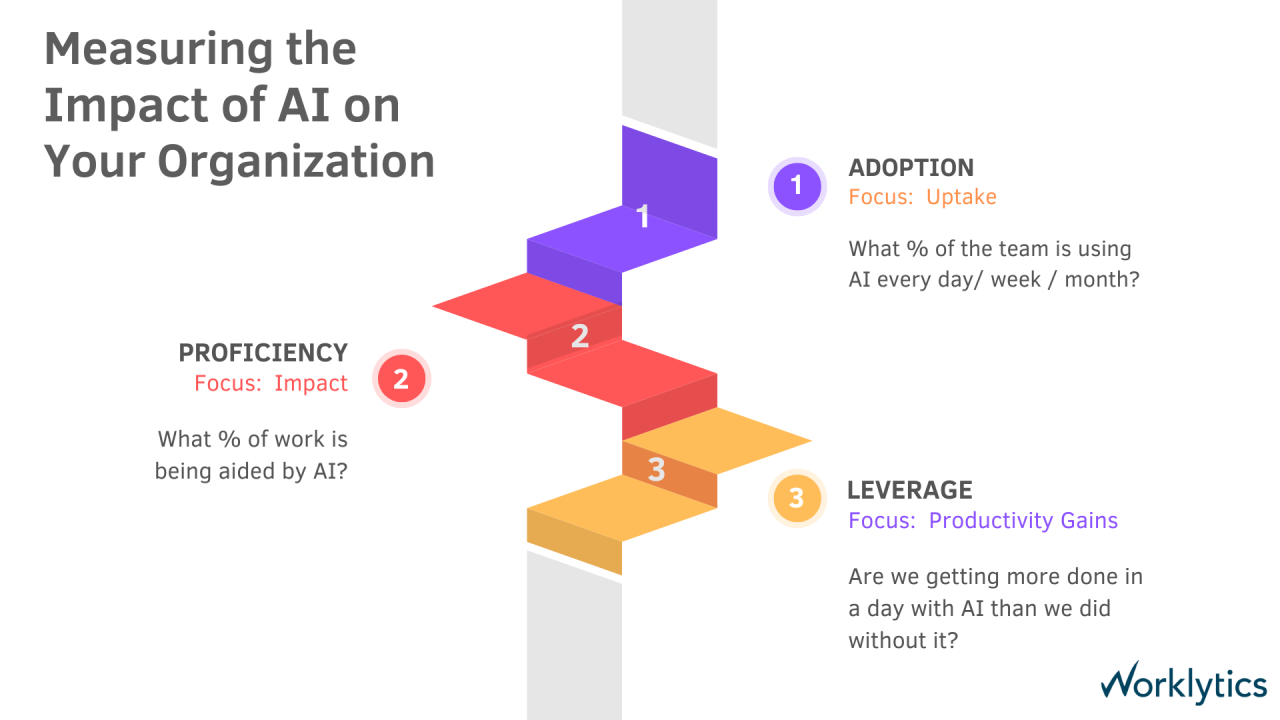
This is why “AI fluency” and “AI proficiency” stop being training buzzwords and become core talent metrics. We’ve seen orgs start to quantify it explicitly to spot champions, identify laggards, and prevent a two-tier workforce.
The uncomfortable bit: laggards don’t just fall behind — they become structurally expensive. And as consolidation happens, there’s less room to hide behind “my tool doesn’t support my workflow.”
Here’s what the most progressive companies are already seeing – and what we expect most orgs to experience in 2026:
None of these trends are abstract. They’re already present in the data; just not evenly distributed yet. If you’re trying to get ahead, start by measuring what’s actually happening in your collaboration layer, not what you hope is happening.
That’s where the future shows up first.