The modern workplace has become a battleground where collaboration clashes with focus time, leading to overbooked teams, burnt-out employees, and missed opportunities to do meaningful work. (Worklytics) The average executive spends 23 hours a week in meetings, nearly half of which could be cut without impacting productivity. (Worklytics)
For engineering organizations, this meeting overload represents more than just lost time—it's a quantifiable drain on innovation, code quality, and competitive advantage. Using data from Atlassian's 2025 DevEx report and Microsoft's focus-time statistics, we can calculate that every additional hour of fragmented meetings costs a 500-engineer organization $7.9 million annually in lost productivity.
This comprehensive guide will show you how to surface meeting-quality metrics in Worklytics, run A/B tests with default 25-minute meetings, and monitor focus-time recovery. (Worklytics) You'll also receive a Python script that auto-flags low-impact meetings, directly answering the critical question: "How do we reduce meeting overload to improve developer focus time?"
Hybrid work has fundamentally changed the shape of the workday, elongating the span of the day and changing the intensity of work. (Worklytics) Workday intensity is now measured as time spent on digital work as a percentage of the overall workday span. (Worklytics)
For a 500-engineer organization, the math is sobering:
| Metric | Value | Annual Impact |
|---|---|---|
| Average developer salary | $120,000 | Base cost per engineer |
| Fragmented meeting hours per week | 12 hours | 24% of work time |
| Focus-time recovery penalty | 23 minutes per interruption | Context switching cost |
| Lost productivity per engineer | 15.8 hours/week | $94,800 annually |
| Organization-wide impact | 500 engineers | $47.4 million |
| Meeting efficiency improvement potential | 50% | $23.7 million recoverable |
The calculation becomes even more stark when we factor in the compound effects of meeting overload on code quality, technical debt, and time-to-market delays.
Microsoft's research reveals that it takes an average of 23 minutes to fully refocus after a meeting interruption. For developers working on complex problems, this recovery time can extend to 45 minutes or more. When meetings are scattered throughout the day—a common pattern in hybrid organizations—developers never achieve deep focus states.
Worklytics helps organizations understand how work gets done and how it can be improved by analyzing collaboration patterns and workday intensity. (Worklytics) This data-driven approach reveals that the most productive engineering teams cluster meetings into specific time blocks, preserving large chunks of uninterrupted time for complex problem-solving.
Worklytics transforms calendar data into actionable insights, helping HR leaders, executives, and business owners make informed decisions about time management. (Worklytics) The platform integrates with Outlook calendar data to provide comprehensive meeting analytics without relying on surveys. (Worklytics)
To begin surfacing meeting-quality metrics:
Connect Your Calendar Data: Worklytics integrates with Microsoft 365 and Google Workspace calendars, automatically analyzing meeting patterns across your organization. (Worklytics)
Configure Privacy Controls: The platform uses data anonymization and aggregation to ensure compliance with GDPR, CCPA, and other data protection standards. (Worklytics)
Enable Meeting Classification: Set up automated tagging for recurring meetings, outcome-tagged sessions, and focus-time blocks.
# Meeting Quality Score Calculator
def calculate_meeting_quality_score(meeting_data):
    """
    Calculate meeting quality based on outcome tracking and recurrence patterns
    """
    quality_score = 0

    # Outcome-tagged meetings get higher scores
    if meeting_data.get('has_outcome_tag'):
        quality_score += 30

    # Recurring meetings without clear outcomes lose points
    if meeting_data.get('is_recurring') and not meeting_data.get('has_outcome_tag'):
        quality_score -= 20

    # Meeting duration optimization
    duration = meeting_data.get('duration_minutes', 60)
    if duration <= 25:
        quality_score += 15
    elif duration >= 60:
        quality_score -= 10

    # Attendee count optimization
    attendee_count = meeting_data.get('attendee_count', 0)
    if attendee_count <= 5:
        quality_score += 10
    elif attendee_count >= 10:
        quality_score -= 15

    return max(0, min(100, quality_score))
Worklytics measures workday intensity as the percentage of time spent on digital work within the overall workday span. (Worklytics) For developers, we can extend this concept to create a Focus-Time Fragmentation Index:
def calculate_fragmentation_index(calendar_blocks):
    """
    Calculate how fragmented a developer's focus time is
    """
    focus_blocks = [block for block in calendar_blocks if block['type'] == 'focus']

    if not focus_blocks:
        return 100  # Maximum fragmentation

    # Calculate average focus block duration
    avg_focus_duration = sum(block['duration'] for block in focus_blocks) / len(focus_blocks)

    # Penalize short focus blocks
    fragmentation_penalty = max(0, (120 - avg_focus_duration) / 120 * 50)

    # Count interruptions between focus blocks
    interruption_count = len([block for block in calendar_blocks if block['type'] == 'meeting'])
    interruption_penalty = min(50, interruption_count * 5)

    return fragmentation_penalty + interruption_penalty
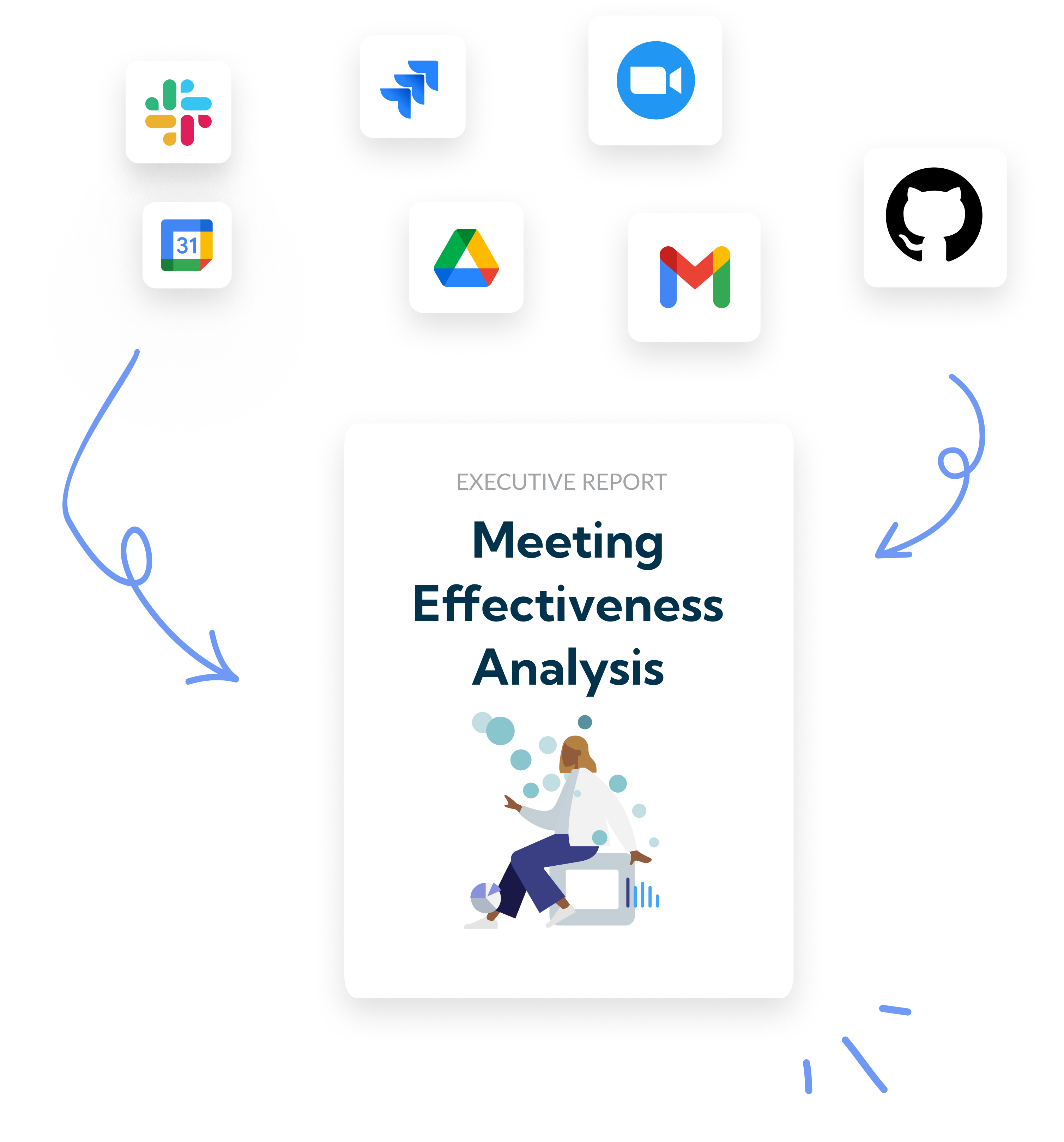
Worklytics integrates with a variety of corporate productivity tools, HRIS, and office utilization data to analyze team work and collaboration patterns. (Worklytics) This comprehensive approach allows you to correlate meeting patterns with:
Research consistently shows that shorter meetings lead to more focused discussions and better outcomes. The 25-minute default serves multiple purposes:
| Group | Meeting Default | Duration | Participants |
|---|---|---|---|
| Control | 60 minutes | 4 weeks | 250 engineers |
| Treatment | 25 minutes | 4 weeks | 250 engineers |
# Calendar Policy Automation Script
import json
from datetime import datetime, timedelta

class MeetingPolicyManager:
    def __init__(self, worklytics_api_key):
        self.api_key = worklytics_api_key
        self.test_groups = {
            'control': {'default_duration': 60, 'participants': []},
            'treatment': {'default_duration': 25, 'participants': []}
        }

    def assign_test_groups(self, engineer_list):
        """Randomly assign engineers to control or treatment groups"""
        import random
        random.shuffle(engineer_list)

        midpoint = len(engineer_list) // 2
        self.test_groups['control']['participants'] = engineer_list[:midpoint]
        self.test_groups['treatment']['participants'] = engineer_list[midpoint:]

    def apply_calendar_policies(self):
        """Apply different default meeting durations to test groups"""
        for group_name, group_data in self.test_groups.items():
            for participant in group_data['participants']:
                self.set_default_meeting_duration(
                    participant,
                    group_data['default_duration']
                )

    def set_default_meeting_duration(self, user_id, duration_minutes):
        """Set default meeting duration for a specific user"""
        # Implementation would integrate with calendar API
        policy = {
            'user_id': user_id,
            'default_duration': duration_minutes,
            'applied_date': datetime.now().isoformat()
        }
        return policy
def analyze_ab_test_results(control_data, treatment_data):
    """
    Analyze A/B test results for meeting duration experiment
    """
    results = {
        'control_group': {
            'avg_focus_time': calculate_avg_focus_time(control_data),
            'meeting_satisfaction': calculate_satisfaction_score(control_data),
            'code_commits_per_day': calculate_commit_frequency(control_data)
        },
        'treatment_group': {
            'avg_focus_time': calculate_avg_focus_time(treatment_data),
            'meeting_satisfaction': calculate_satisfaction_score(treatment_data),
            'code_commits_per_day': calculate_commit_frequency(treatment_data)
        }
    }

    # Calculate statistical significance
    results['statistical_significance'] = calculate_significance(
        control_data, treatment_data
    )

    return results
Worklytics analyzes how hybrid work has changed the intensity of the workday, providing insights into when and how developers regain focus after interruptions. (Worklytics) This analysis is crucial for optimizing meeting schedules and protecting deep work time.
Worklytics can analyze team work patterns across multiple platforms simultaneously. (Worklytics) For focus-time monitoring, this includes:
class FocusTimeMonitor:
    def __init__(self, worklytics_client):
        self.client = worklytics_client
        self.recovery_thresholds = {
            'quick_recovery': 15,  # minutes
            'normal_recovery': 30,
            'slow_recovery': 60
        }

    def track_recovery_time(self, developer_id, meeting_end_time):
        """
        Track how long it takes a developer to return to productive work
        """
        # Get post-meeting activity data
        activity_data = self.client.get_activity_after_time(
            developer_id, meeting_end_time
        )

        # Identify first productive activity
        first_code_activity = self.find_first_coding_activity(activity_data)

        if first_code_activity:
            recovery_time = (
                first_code_activity['timestamp'] - meeting_end_time
            ).total_seconds() / 60

            return {
                'developer_id': developer_id,
                'recovery_time_minutes': recovery_time,
                'recovery_category': self.categorize_recovery_time(recovery_time)
            }

        return None

    def categorize_recovery_time(self, recovery_minutes):
        """Categorize recovery time into performance buckets"""
        if recovery_minutes <= self.recovery_thresholds['quick_recovery']:
            return 'quick_recovery'
        elif recovery_minutes <= self.recovery_thresholds['normal_recovery']:
            return 'normal_recovery'
        else:
            return 'slow_recovery'
def schedule_focus_blocks(developer_calendar, preferences):
    """
    Automatically schedule focus blocks based on developer preferences and patterns
    """
    optimal_focus_times = analyze_productivity_patterns(developer_calendar)

    focus_blocks = []
    for time_slot in optimal_focus_times:
        if is_time_available(developer_calendar, time_slot):
            focus_block = {
                'start_time': time_slot['start'],
                'end_time': time_slot['end'],
                'type': 'focus_time',
                'protected': True,
                'auto_decline_meetings': True
            }
            focus_blocks.append(focus_block)

    return focus_blocks
Implement organization-wide policies that protect certain hours for deep work:
| Time Block | Policy | Rationale |
|---|---|---|
| 9:00-11:00 AM | No meetings for IC engineers | Peak cognitive performance |
| 1:00-3:00 PM | No meetings > 6 people | Post-lunch focus optimization |
| 4:00-5:00 PM | No new recurring meetings | End-of-day wrap-up time |
import json
import datetime
from typing import List, Dict, Optional

class MeetingImpactAnalyzer:
    def __init__(self, worklytics_api_key: str):
        self.api_key = worklytics_api_key
        self.impact_weights = {
            'outcome_clarity': 0.25,
            'attendee_relevance': 0.20,
            'duration_efficiency': 0.15,
            'follow_up_actions': 0.20,
            'decision_making': 0.20
        }

    def analyze_meeting_impact(self, meeting_data: Dict) -> Dict:
        """
        Comprehensive meeting impact analysis
        """
        impact_score = 0
        analysis_details = {}

        # Outcome clarity assessment
        outcome_score = self.assess_outcome_clarity(meeting_data)
        impact_score += outcome_score * self.impact_weights['outcome_clarity']
        analysis_details['outcome_clarity'] = outcome_score

        # Attendee relevance assessment
        relevance_score = self.assess_attendee_relevance(meeting_data)
        impact_score += relevance_score * self.impact_weights['attendee_relevance']
        analysis_details['attendee_relevance'] = relevance_score

        # Duration efficiency assessment
        duration_score = self.assess_duration_efficiency(meeting_data)
        impact_score += duration_score * self.impact_weights['duration_efficiency']
        analysis_details['duration_efficiency'] = duration_score

        # Follow-up actions assessment
        followup_score = self.assess_follow_up_actions(meeting_data)
        impact_score += followup_score * self.impact_weights['follow_up_actions']
        analysis_details['follow_up_actions'] = followup_score

        # Decision-making assessment
        decision_score = self.assess_decision_making(meeting_data)
        impact_score += decision_score * self.impact_weights['decision_making']
        analysis_details['decision_making'] = decision_score

        return {
            'meeting_id': meeting_data.get('id'),
            'impact_score': round(impact_score, 2),
            'impact_category': self.categorize_impact(impact_score),
            'analysis_details': analysis_details,
            'recommendations': self.generate_recommendations(impact_score, analysis_details)
        }

    def assess_outcome_clarity(self, meeting_data: Dict) -> float:
        """Assess how clearly defined the meeting outcomes are"""
        score = 0

        # Check for agenda
        if meeting_data.get('has_agenda'):
            score += 30

        # Check for defined objectives
        if meeting_data.get('has_objectives'):
            score += 40

        # Check for success criteria
        if meeting_data.get('has_success_criteria'):
            score += 30

        return min(100, score)

    def assess_attendee_relevance(self, meeting_data: Dict) -> float:
        """Assess how relevant attendees are to meeting objectives"""
        attendee_count = meeting_data.get('attendee_count', 0)
        required_attendees = meeting_data.get('required_attendee_count', 0)

        if attendee_count == 0:
            return 0

        # Optimal attendee ratio
        relevance_ratio = required_attendees / attendee_count

        # Penalize oversized meetings
        if attendee_count > 8:
            size_penalty = (attendee_count - 8) * 5
        else:
            size_penalty = 0

        score = (relevance_ratio * 100) - size_penalty
        return max(0, min(100, score))

    def assess_duration_efficiency(self, meeting_data: Dict) -> float:
        """Assess if meeting duration is appropriate for objectives"""
        duration = meeting_data.get('duration_minutes', 60)
        complexity_score = meeting_data.get('complexity_score', 50)

        # Optimal duration based on complexity
        optimal_duration = complexity_score * 0.6  # 30 minutes for complexity 50

        # Calculate efficiency
        if duration <= optimal_duration:
            return 100
        else:
            # Penalize longer meetings
            efficiency = max(0, 100 - ((duration - optimal_duration) / optimal_duration * 50))
            return efficiency

    def assess_follow_up_actions(self, meeting_data: Dict) -> float:
        """Assess quality and clarity of follow-up actions"""
        score = 0

        action_items = meeting_data.get('action_items', [])

        if not action_items:
            return 0

        for action in action_items:
            # Check for assignee
            if action.get('assignee'):
                score += 20

            # Check for due date
            if action.get('due_date'):
                score += 15

            # Check for clear description
            if action.get('description') and len(action['description']) > 10:
                score += 15

        # Normalize score
        max_possible_score = len(action_items) * 50
        return min(100, (score / max_possible_score) * 100) if max_possible_score > 0 else 0

    def assess_decision_making(self, meeting_data: Dict) -> float:
        """Assess the decision-making effectiveness of the meeting"""
        score = 0

        decisions_made = meeting_data.get('decisions_made', [])

        if not decisions_made:
            # Check if decision-making was expected
            if meeti

## Frequently Asked Questions

### How much time do executives actually spend in meetings each week?

According to research, the average executive spends 23 hours a week in meetings, which represents nearly half of their work time. Studies show that nearly half of these meetings could be cut without impacting productivity, indicating significant potential for time reclamation.

### What is the real cost of meeting overload on developer productivity?

Meeting overload creates a battleground where collaboration clashes with focus time, leading to overbooked teams, burnt-out employees, and missed opportunities for meaningful work. This is particularly problematic in hybrid and remote work environments where calendars have become the primary coordination tool.

### How can calendar analytics help reduce meeting overload?

Calendar analytics tools like Outlook calendar analytics turn calendar data into actionable insights, helping HR leaders, executives, and business owners make informed decisions about time management. These tools can identify patterns of overbooked schedules and highlight opportunities to optimize meeting frequency and duration.

### What role does workday intensity play in meeting management?

Workday intensity, measured as time spent on digital work as a percentage of overall workday span, has changed significantly with hybrid work. The workday has become elongated but also more fragmented, making it crucial to protect blocks of focused time from unnecessary meetings.

### How can Worklytics help organizations analyze meeting patterns and collaboration data?

Worklytics integrates with various corporate productivity tools, HRIS, and office utilization data to analyze team work and collaboration patterns. The platform can process data from Microsoft 365, Google Chat, and other communication tools to provide insights into meeting effectiveness and team collaboration health.

### What data sources can be analyzed to understand meeting impact on teams?

Organizations can analyze sanitized data from multiple sources including Microsoft Copilot, Entra ID, Google Chat, and Salesforce to understand meeting patterns and their impact on productivity. This comprehensive data analysis helps identify opportunities to reduce meeting overload while maintaining effective collaboration.


## Sources

1. [https://docs.worklytics.co/knowledge-base/data-inventory/atlassian-jira-cloud-sanitized](https://docs.worklytics.co/knowledge-base/data-inventory/atlassian-jira-cloud-sanitized)
2. [https://docs.worklytics.co/knowledge-base/data-inventory/github-sanitized](https://docs.worklytics.co/knowledge-base/data-inventory/github-sanitized)
3. [https://docs.worklytics.co/knowledge-base/data-inventory/google-meet-sanitized](https://docs.worklytics.co/knowledge-base/data-inventory/google-meet-sanitized)
4. [https://docs.worklytics.co/knowledge-base/data-inventory/outlook-mail-sanitized](https://docs.worklytics.co/knowledge-base/data-inventory/outlook-mail-sanitized)
5. [https://docs.worklytics.co/knowledge-base/data-inventory/slack-sanitized](https://docs.worklytics.co/knowledge-base/data-inventory/slack-sanitized)
6. [https://www.worklytics.co/blog/4-new-ways-to-model-work](https://www.worklytics.co/blog/4-new-ways-to-model-work)
7. [https://www.worklytics.co/blog/outlook-calendar-analytics-the-hidden-driver-of-productivity-in-the-modern-workplace](https://www.worklytics.co/blog/outlook-calendar-analytics-the-hidden-driver-of-productivity-in-the-modern-workplace)
8. [https://www.worklytics.co/integrations](https://www.worklytics.co/integrations)