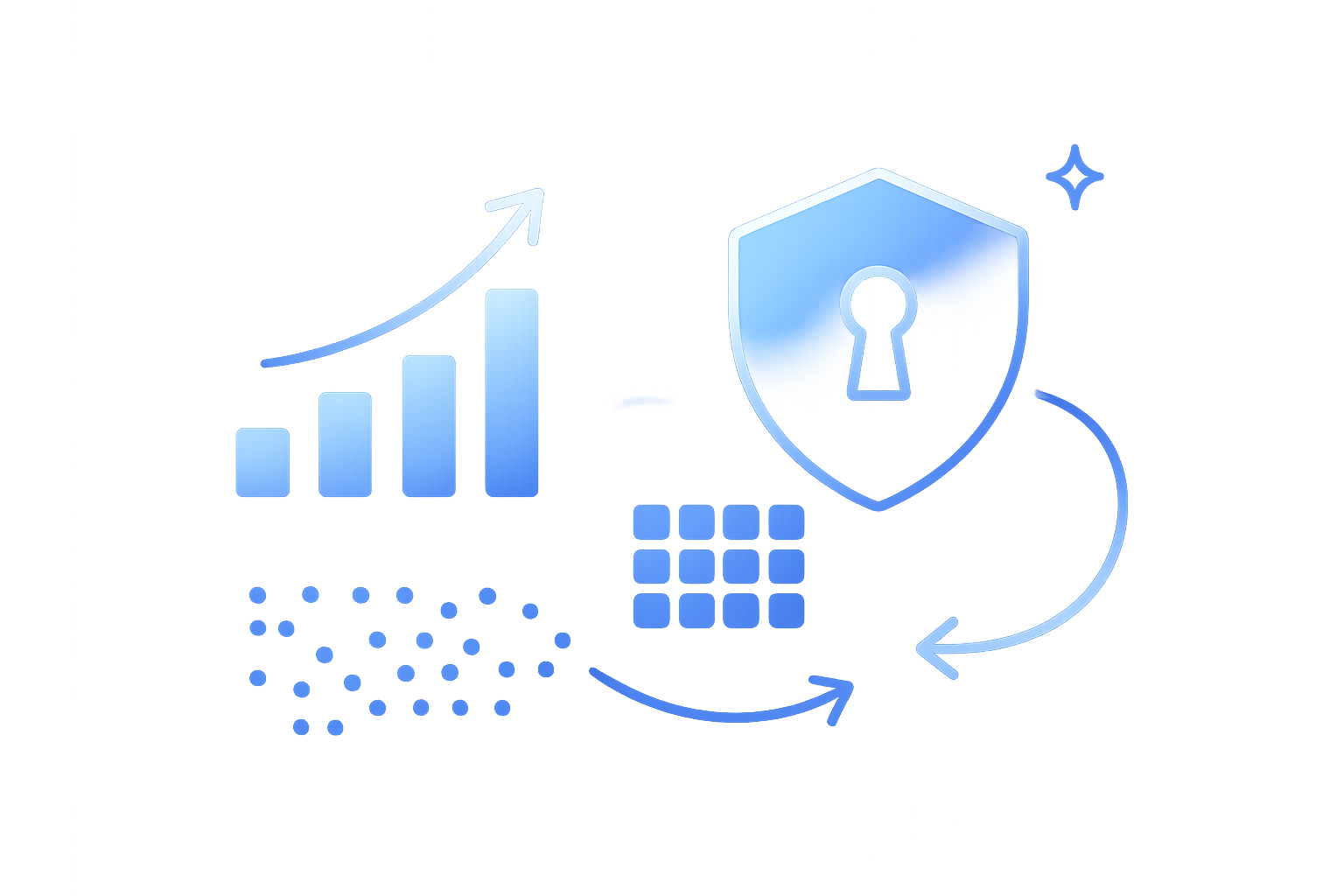
Organizations can measure employee AI usage without invading privacy through aggregated analytics, pseudonymization, and differential privacy techniques. Modern platforms detect up to 5x more AI tools than companies realize while maintaining group-level insights. Privacy-preserving dashboards track adoption patterns and usage metrics without individual surveillance, helping organizations understand AI impact while preserving trust.
An AI adoption dashboard tracks how employees across an organization are using AI tools — measuring activation rates, usage frequency, power-user distribution, and productivity impact across platforms like Microsoft Copilot, Google Gemini, and ChatGPT Enterprise. Unlike individual usage reports, enterprise AI adoption dashboards aggregate anonymized data at team and department level, giving HR and operations leaders the visibility to accelerate adoption and prove ROI to the board.
• Shadow AI is widespread: Organizations typically use up to 5x more AI tools than they realize, creating security and compliance risks
• Privacy-first tools exist: Platforms like WitnessAI can detect 3,000+ AI applications without requiring agents on individual devices
• Aggregation protects individuals: Data aggregation and pseudonymization techniques enable pattern analysis without exposing personal usage data
• Trust drives adoption: 86% of employees believe employers should legally disclose monitoring tools, making transparency essential
• Compliance is critical: Companies face severe penalties for privacy violations, including €32 million fines for invasive productivity monitoring
Leaders who need to measure employee AI usage without compromising trust can now do so thanks to privacy-preserving analytics. This post shows exactly how to measure employee AI usage while keeping personal data safe.
The AI revolution in the workplace has arrived with remarkable speed. According to recent data, 80% of employees already use AI tools at work. Yet despite this widespread adoption, organizations struggle to understand the real impact. In fact, 41% of organizations report struggling to define and measure the exact impacts of their Generative AI efforts.
This measurement gap creates significant risk. Organizations typically use up to 5x more AI tools than they realize, creating what's known as "shadow AI" - unauthorized tools operating outside IT oversight. Without visibility into actual AI usage patterns, companies miss opportunities to optimize productivity, identify training gaps, and maximize their technology investments.
But the solution isn't invasive monitoring. Organizations must balance the need for insights with respect for employee privacy. This means adopting privacy-preserving analytics that provide group-level insights without tracking individuals.
Traditional employee monitoring software has become increasingly common, with over 58% of the workforce now engaging in remote work, leading companies to rely on these tools. However, this approach fundamentally undermines the trust necessary for successful AI adoption.
One of the immediate consequences of using remote employee monitoring software is the erosion of trust between management and staff. When employees know they're being watched at an individual level, innovation freezes. The fear of making mistakes or experimenting with new AI features leads to conservative usage patterns that never fully realize AI's potential.
The risks extend beyond culture. The more employee monitoring resembles surveillance - with its systematic, continuous and detailed tracking of employees' activities, behaviors or communications - the greater the potential for infringement of both privacy and data protection rights. Companies implementing invasive monitoring face significant legal exposure, as demonstrated by Amazon France's €32 million fine for scanner-based productivity scoring.
Instead of invasive monitoring, organizations need analytics that provide insights while preserving individual privacy. This approach builds rather than destroys trust, enabling the psychological safety necessary for AI experimentation and adoption.
"To really understand how your org is using AI, tool log-in data isn't enough." Organizations should track metrics that reveal adoption depth, breadth, and impact across teams and departments.
Light vs. Heavy Usage Rate segments users based on the intensity of their AI use, helping identify power users who can champion adoption versus those who need additional support. Rather than tracking specific individuals, this metric shows distribution patterns across the organization.
AI Prompts Per Employee (Monthly) provides insight into actual usage frequency without revealing who submitted which prompts. Microsoft's AI score represents the extent to which users in your organization have made Microsoft 365 Copilot a daily habit, calculated based on a target of getting each licensed user to use Copilot for an average of three days per week.
Adoption Breadth Score measures tool diversity across the organization. Teams using multiple AI tools often show more sophisticated adoption patterns than those stuck with a single application.
These metrics should connect to business outcomes. For example, support teams might track how AI assistance correlates with ticket resolution rates, while development teams could measure the relationship between AI tool usage and code deployment frequency.
The AI Maturity Curve provides a framework for understanding where your organization stands in its AI journey. Organizations progress through three distinct stages:
Stage 1: Adoption focuses on uptake. Companies in the Adoption stage ask: "How many people are using AI each day/week/month?" This foundational stage establishes baseline usage patterns.
Stage 2: Proficiency shifts focus to effectiveness. AI Proficiency is a more complicated metric, but it gets closer to the heart of things - is AI helping? Organizations measure not just usage frequency but feature depth and task completion improvements.
Stage 3: Leverage examines business impact. The central question becomes whether teams are accomplishing more with AI than without it. Percentage of Work Activities with AI Assistance extends beyond user counts to examine the penetration of workflow automation.
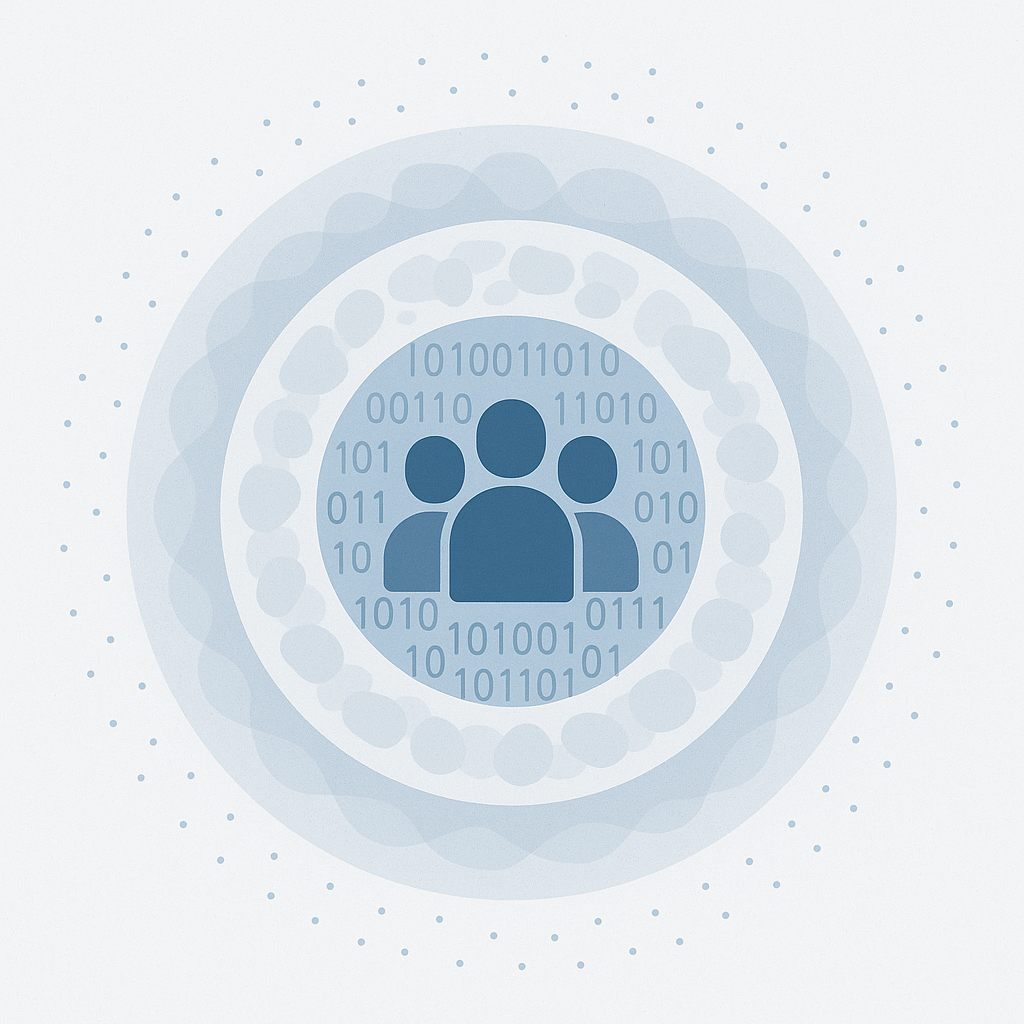
Privacy-preserving analytics rely on specific technical approaches to protect individual data while generating useful insights. These techniques form the foundation of ethical AI measurement.
Pseudonymization replaces direct identifiers with coded references, ensuring that usage data cannot be traced back to specific individuals. This allows organizations to track patterns over time without knowing who generated them.
Differential Privacy adds statistical noise to protect individual privacy while maintaining the accuracy of aggregate insights. Even if someone had access to the raw data, they couldn't determine any individual's specific AI usage patterns.
Data Aggregation ensures insights are only generated at the group level. Compliance with GDPR principles of data minimization and transparency is difficult given digital technologies collect and process large amounts of data, but aggregation helps meet these requirements by never exposing individual-level data.
These techniques work together to create a privacy-first measurement system. Organizations can understand AI adoption patterns, identify training needs, and optimize their AI investments - all without compromising employee privacy.
Modern AI visibility tools take different approaches to balancing insight with privacy. Understanding these differences helps organizations choose solutions aligned with their values.
WitnessAI can detect over 3,000 AI applications without requiring agents on individual devices. The platform finds every AI tool in use across your environment, including unapproved or unknown apps, using network-level visibility that doesn't require intrusive endpoint monitoring.
Snitch by Blueteam operates as a TLS-decrypting proxy, providing full visibility into AI applications employees are using. While it decrypts traffic for security purposes, it focuses on aggregate patterns rather than individual surveillance.
Worklytics takes a different approach entirely. The platform's AI Adoption Dashboard integrates usage logs from Slack, Microsoft 365 Copilot, Gemini, Zoom, and dozens of other tools into a single, privacy-safe view. All data is fully anonymized and content-free, helping compliance teams craft "approved use" policies with confidence.
The distinction between analytics and surveillance is crucial. Teramind's workforce analytics delivers real-time data on employee activities and productivity trends, but this level of detail often crosses into surveillance territory.
In contrast, privacy-first platforms focus on patterns rather than people. Instead of adopting invasive monitoring practices, companies should explore better alternatives for managing remote teams and improving employee performance through aggregated insights.
Worklytics exemplifies this approach. The platform focuses on collaboration patterns rather than individual monitoring. Email analytics help understand team communication and identify opportunities to streamline workflows without ever reading message content.
The regulatory landscape for AI and employee data is rapidly evolving, with significant penalties for non-compliance. Organizations must navigate multiple overlapping frameworks.
The EU AI Act, the first-of-its-kind globally, came into force in August 2024. From February 2025, the Act bans emotion recognition AI systems in workplaces unless for medical or safety reasons. Breaching the Act could lead to fines of up to €35 million or 7% of global annual turnover, whichever is higher.
The right to privacy and data protection have their legal basis in Article 7 and Article 8 of the EU Charter of Fundamental Rights. These fundamental protections extend to workplace AI usage monitoring.
The Artificial Intelligence Act lays down rules for regulating the use and provision of AI systems in the EU. It primarily governs high-risk applications of AI - those which pose significant risks to fundamental rights of workers.
Organizations must also comply with existing data protection regulations like GDPR, which requires transparency, proportionality, and purpose limitation in any employee data processing.
Implementing a privacy-first AI measurement system requires careful planning and phased execution. Here's a roadmap backed by real-world results:
Start with stakeholder alignment and privacy impact assessment. GitHub Copilot became a mission-critical tool in under two years, with more than 1.3 million developers on paid plans. This rapid adoption happened because organizations laid proper groundwork.
Conduct a Data Protection Impact Assessment (DPIA) to identify privacy risks and mitigation strategies. Define clear success metrics tied to business outcomes.
Configure data collection and anonymization systems. Christopher Fernandez, CVP of Microsoft HR, emphasizes that "The key to getting a real return on your AI investment is a human-centered approach, enabling individuals to leverage these tools in service to their work."
Set up aggregation thresholds (minimum team sizes for reporting) and implement differential privacy where needed.
Launch with select departments and gather feedback. Organizations using Microsoft Security Copilot see 30.13% reduction in security incident mean time to resolution. Similar productivity gains are possible across departments.
Expand gradually while maintaining privacy standards. Track ROI through concrete metrics:
• Efficiency gains: Up to 60% per FTE per year in content-generation activities
• Support improvements: Up to 50% per year improvement in chatbot resolution at contact centers
• Developer productivity: 12.92% to 21.83% more pull requests completed weekly
Microsoft's research shows that Copilot users completed tasks in 26% to 73% of the time compared with people not using Copilot.
The path forward is clear: organizations must measure AI adoption to maximize their investments, but they must do so without compromising employee privacy. Worklytics empowers organizations to measure productivity, collaboration, and engagement using ethical, privacy-first analytics.
The core principles remain constant:
• Focus on patterns, not people
• Aggregate data to protect individuals
• Be transparent about what you measure and why
• Connect metrics to business outcomes, not surveillance
As one Worklytics client puts it: "No message content is read. No employee surveillance. All insights aggregated, anonymized, and used to improve the system, not to penalize individuals."
Organizations that embrace privacy-first AI measurement will build the trust necessary for successful adoption. They'll identify which teams need support, which tools deliver value, and how AI transforms their business - all while respecting the privacy and dignity of their workforce.
Ready to measure AI adoption the right way? Worklytics provides the privacy-first analytics platform that leading organizations trust to understand their AI transformation without compromising employee privacy. Learn how Worklytics can help your organization measure smarter and respect privacy.
Yes, provided the tracking is proportionate, transparent, and privacy-preserving. The key requirements are anonymizing data before it reaches managers, limiting analysis to metadata rather than content, and informing employees that aggregate AI usage is measured. Worklytics processes only usage frequency signals — never prompt content — and aggregates results to team level, keeping individual employees invisible in the data.
Yes. Modern AI tools like Microsoft Copilot, Google Gemini, and ChatGPT Enterprise expose usage data through admin-level APIs, not device agents. This means tracking is done at the platform level — no software installed on laptops, no screen recording, and no access to what employees are typing.
Worklytics connects to Microsoft 365 Copilot, Google Gemini, ChatGPT Enterprise, GitHub Copilot, and Slack AI, with additional integrations added as enterprise AI tools mature. Usage data from all connected platforms is unified into a single dashboard so you can compare adoption across tools side by side.
AI usage tracking measures aggregate, anonymized patterns — what percentage of a team used Copilot this week, which departments have the highest activation rates. Employee monitoring tracks individual behaviour — keystrokes, screenshots, time-on-task. The first gives leaders data to improve adoption; the second creates a surveillance environment that erodes trust. Worklytics is built exclusively for the former.
1. https://witness.ai/product/witness-observe/
4. https://www.eurofound.europa.eu/en/publications/all/employee-monitoring-moving-target-regulation
5. https://learn.microsoft.com/en-us/microsoft-365/admin/adoption/ai-adoption-score?view=o365-worldwide
6. https://www.worklytics.co/resources/measuring-ai-adoption-team-5-new-kpis-2025-manager-scorecard
7. https://worklytics.co/blog/the-ai-maturity-curve-measuring-ai-adoption-in-your-organization
8. https://www.worklytics.co/blog
9. https://worklytics.co/resources/privacy-compliant-dashboard-employee-ai-adoption-2025
10. https://blueteam.ai/docs/products/snitch/
11. https://www.teramind.co/blog/workforce-analytics-software/
14. https://papers.ssrn.com/sol3/papers.cfm?abstract_id=5207635
15. https://info.microsoft.com/ww-landing-forrester-tei-of-microsoft-azure-openai-service.html
16. https://papers.ssrn.com/sol3/papers.cfm?abstract_id=5207690
17. https://www.microsoft.com/en-us/research/uploads/prod/2024/04/MicrosoftGenAIReportMarch2024.pdf
18. https://www.worklytics.co/blog/measure-employee-performance-in-the-age-of-ai