Engineering teams achieving the highest GenAI ROI aren't those with maximum usage rates—they're those protecting developer focus time. While 72% of organizations have adopted AI tools, nearly half lack metrics to evaluate actual success. The critical missing variable: measuring whether AI preserves or fragments the uninterrupted work blocks where complex problems get solved.
• 63% of software professionals use AI tools without authorization or governance, fragmenting workflows
• Developer focus requires minimum 2-hour uninterrupted blocks; each interruption costs 20+ minutes to regain deep concentration
• Teams protecting focus time while using AI see 26% task completion gains versus negligible improvement with fragmented attention
• Only 40% of developers receive adequate AI training, causing constant tool-switching that breaks flow
• Organizations report average 19% productivity boost, but one-third see minimal gains due to poor focus time correlation
• Worklytics correlates AI usage with calendar and communication data to identify when tools help versus hurt productivity
Engineering leaders watch their GenAI dashboards with growing frustration. Adoption rates climb steadily--AI adoption surged to 72% in 2024. Teams activate licenses, run pilots, generate code faster. Yet delivery velocity barely budges.
The disconnect runs deeper than training gaps or tool maturity. While organizations obsess over usage counts and generation metrics, they miss the critical variable that determines whether AI actually improves output: developer focus time.
New research reveals why generic adoption metrics mislead. When teams correlate AI usage with deep-work patterns, a different story emerges--one where automation's promise collides with the reality of fragmented attention.
The numbers paint a compelling picture of AI momentum. AI adoption hit 72% in 2024, with engineering teams leading the charge through tools like GitHub Copilot and code assistants. Yet 74% of companies report they have yet to show tangible value from their AI initiatives.
This paradox becomes clearer when examining what organizations actually measure. Most track surface-level metrics: license activations, prompt counts, lines of code generated. These dashboards show impressive activity but reveal nothing about impact on actual engineering productivity.
The missing piece? Focus time correlation. Nearly half lack standard metrics to evaluate the success of generative AI use in software engineering. Without measuring how AI tools affect deep work blocks--those uninterrupted periods where complex problems get solved--teams can't distinguish between busy work and meaningful progress.
Consider what happens when a developer uses AI throughout the day. Each prompt interrupts flow. Each generated snippet requires review and integration. Each context switch between human thinking and AI interaction costs cognitive energy. Traditional metrics count these as "adoption wins" while actual productivity may decline.
The evidence suggests organizations need a fundamental shift in measurement approach. Instead of celebrating usage rates, they should track whether AI preserves or fragments the focused work time that drives engineering output.
Generic adoption metrics create dangerous blind spots for engineering leaders. Nearly half lack standard metrics to evaluate generative AI success, defaulting instead to vanity metrics that obscure real impact.
These dashboards typically showcase impressive numbers: prompt volumes, code suggestions accepted, time saved per task. Yet they fail to capture the hidden costs of constant tool switching and cognitive fragmentation. Organizations report average productivity boost of 19%, but one third have seen minimal gains--a variance that generic metrics can't explain.
The measurement gap extends beyond tools to people. Software engineering intelligence platforms now recognize that traditional metrics miss behavioral context. Without understanding how AI adoption affects work patterns, organizations can't identify whether their tools help or hinder deep work.
Three critical blindspots emerge from generic dashboards:
Usage without context: High adoption rates may mask ineffective usage patterns. A developer generating hundreds of AI suggestions daily might be less productive than one using AI strategically during specific tasks.
Activity versus outcomes: Counting AI interactions tells nothing about code quality, technical debt, or delivery speed. More AI usage doesn't automatically mean better results.
Individual versus team impact: Aggregate adoption metrics hide variations in how different developers benefit from AI. Junior developers may see gains while senior engineers experience disruption.
The solution requires metrics that capture not just what developers do with AI, but how it affects their ability to maintain focus and complete complex work.
Developer focus time represents uninterrupted periods where engineers can engage in deep, cognitively demanding work. A single interruption costs developers more than 20 minutes to regain deep focus--a devastating loss when multiplied across daily disruptions.
The neuroscience is unforgiving. Each interruption causes cognitive reset, requiring 15-25 minutes to regain focus and flow state. For developers juggling complex mental models, these interruptions don't just pause work--they destroy it.
The cost compounds quickly. Developers juggling five projects spend just 20% of their cognitive energy on real work. The other 80% evaporates in mental overhead from context switching. This translates to real economic impact: at $83 per developer hour, context switching drains $250 per developer daily.
Focus time isn't just about individual productivity--it's about code quality and system reliability:
Error rates increase: Interrupted tasks often contain more errors than those completed in focused blocks
Mental models collapse: Complex architectural decisions require sustained attention that fragmentation destroys
Flow state vanishes: The "zone" where developers do their best work requires minimum two-hour blocks without interruption
Modern development environments make focus increasingly rare. Developers navigate dozens of tools daily--IDEs, build pipelines, monitoring dashboards, chat channels. Each tool switch represents a potential focus break.
The introduction of AI tools adds another layer of complexity. While promising to accelerate development, these tools may inadvertently fragment the very focus time that enables complex problem solving.
The evidence becomes compelling when teams protect focus time while using AI tools. Developers using GitHub Copilot saw a 26.08% increase in completed tasks--but only when their work patterns allowed for sustained concentration.
The key lies in how AI gets integrated into workflow. Having access to Copilot induces developers to shift task allocation towards core coding activities and away from non-core project management tasks. This reallocation works when developers can maintain focus on their primary work.
MIT research reveals another crucial pattern: top developers who received free GitHub Copilot access increased their coding tasks as a share of all tasks performed. But this benefit materialized specifically for developers who could dedicate uninterrupted blocks to leveraging the tool.
The relationship between focus time and AI productivity isn't linear--it's conditional:
Protected focus amplifies gains: Teams with higher protected focus time typically see stronger task completion gains when using AI assistants
Fragmented attention negates benefits: Developers constantly switching between AI suggestions and other tasks show lower productivity improvement
Experience matters differently: Less experienced developers benefit more from AI when given focused time to learn and integrate suggestions
The implication is clear: AI tools don't automatically improve productivity. They amplify the quality of available focus time. Organizations that protect developer concentration while introducing AI see genuine gains. Those that add AI to already-fragmented workflows may actually reduce output.
Worklytics connects data from all corporate AI tools--Slack, Microsoft Copilot, GitHub--to reveal actual adoption patterns across teams. But the real insight comes from correlating this usage with calendar and communication data to identify focus time impacts.
Start by establishing baseline focus metrics before AI rollout. The Deep Work Playbook shows teams how to gain insight into current focus time levels and track changes as AI tools deploy. This creates the foundation for understanding AI's true impact.
The correlation process requires three data streams:
AI usage telemetry: Modern workplace analytics platforms leverage existing corporate data to track tool interactions without surveys. Pull usage logs from GitHub Copilot, Microsoft 365, and development environments.
Calendar and communication patterns: Analyze meeting schedules, Slack activity, and email volumes to identify potential focus blocks. Look for two-hour minimum uninterrupted periods.
Output metrics: Connect focus time and AI usage to actual delivery metrics--PRs merged, cycle time, bug rates.
Practical implementation steps:
1. Install telemetry collection: Use platform APIs to gather AI interaction data automatically
2. Map focus windows: Identify when developers have uninterrupted blocks versus fragmented time
3. Correlate patterns: Match high-AI-usage periods with focus availability and output quality
4. Segment by role: Separate patterns for junior versus senior developers, different team types
5. Create dashboards: Build real-time views showing AI effectiveness during focused versus fragmented periods
The data typically reveals surprising patterns. Teams often discover their highest AI ROI comes not from maximum usage, but from strategic usage during protected focus blocks.
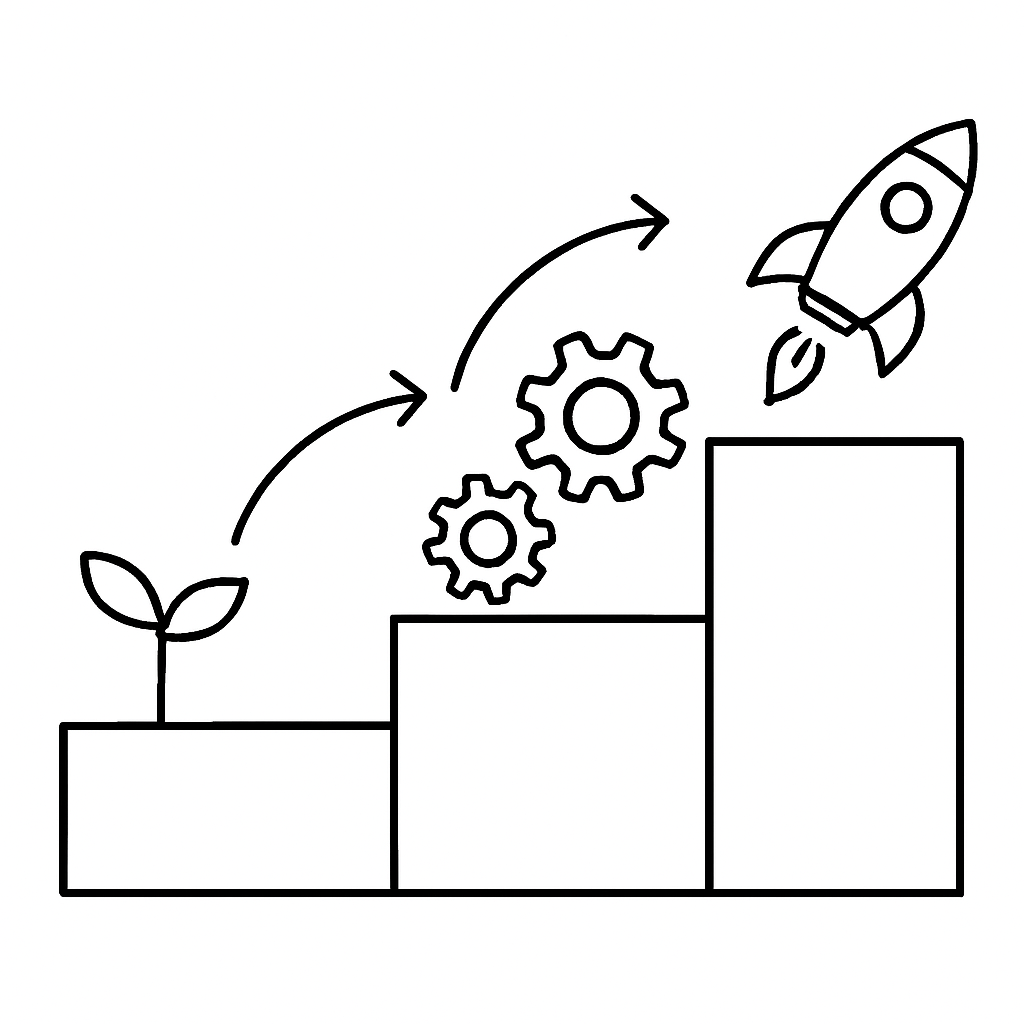
Organizations progress through three distinct AI maturity stages: Adoption, Proficiency, and Leverage. Focus time data reveals which teams are ready to advance--and which need intervention.
Stage 1: Adoption (0-6 months)
• Baseline focus time: 15-20 hours weekly
• AI usage pattern: Sporadic, experimental
• Key metric: Maintain focus time while introducing tools
• Warning sign: Focus drops below 12 hours weekly
Stage 2: Proficiency (6-18 months)
• Target focus time: 20-25 hours weekly
• AI usage pattern: Regular, integrated into workflow
• Individual reliance on AI peaks around 15-20 months
• Success indicator: AI usage concentrated in focus blocks
Stage 3: Leverage (18+ months)
• Optimized focus time: 25+ hours weekly
• AI usage pattern: Strategic, amplifying deep work
• Achievement: AI enables more focus time by eliminating routine tasks
DORA metrics provide additional guidance at each stage. The canonical DORA metrics--Deployment Frequency, Lead Time, Change Failure Rate, Time to Restore--show whether AI adoption improves or degrades engineering fundamentals.
Focus time data reveals progression readiness:
• Teams maintaining 60%+ weekly focus time can absorb new AI capabilities
• Teams below 40% focus time need workspace optimization before adding tools
• Sudden focus drops after AI introduction signal adoption problems requiring intervention
The path to AI maturity isn't about maximizing usage--it's about preserving the focused work time that makes AI valuable.
Beyond technical implementation, human factors create the largest barriers to AI value realization. As Capgemini notes, "63% of software professionals currently using generative AI are doing so with unauthorized tools, or in a non-governed manner."
The trust deficit runs deep. 75% of developers report positive productivity impacts from gen AI, yet 39% express low trust in its outputs. This cognitive dissonance creates hesitation that breaks flow--developers constantly second-guess AI suggestions instead of maintaining momentum.
Training gaps compound the problem. Only 40% of software professionals receive adequate training on AI tools. Without proper guidance, developers waste focus time experimenting with prompts and debugging AI-generated code.
Governance failures multiply these issues:
Policy vacuum: Organizations with clear AI policies show 451% higher adoption than those without guidelines
Shadow IT proliferation: Unofficial tool usage fragments workflows and creates security risks
Measurement blindness: 61% of organizations lack governance frameworks to track AI impact
Focus time analytics surface these barriers clearly:
• Teams with low AI trust show more context switching between AI and manual coding
• Untrained developers exhibit longer review cycles for AI-generated code
• Policy confusion correlates with scattered tool usage across multiple platforms
The solution requires addressing all three dimensions simultaneously. Organizations must provide training during protected learning time, establish clear usage policies, and build trust through transparent measurement of AI's actual impact on developer focus and productivity.
When selecting an analytics platform to measure AI's impact on engineering productivity, focus time protection emerges as the critical differentiator. Software engineering intelligence platforms vary significantly in their ability to correlate AI usage with deep work patterns.
Worklytics addresses the challenge with a privacy-by-design approach that utilizes anonymized and aggregated data to provide insights without compromising individual privacy. This matters for focus time measurement--developers need assurance their productivity patterns won't become surveillance.
Comparing the platforms:
CapabilityWorklyticsJellyfishFaros AIFocus time trackingNative 2-hour block detectionLimited calendar analysisRequires custom configurationAI tool integration25+ tools including Copilot, ChatGPTGitHub-centricEngineering tools onlyPrivacy approachAnonymized by defaultManager visibilityFull transparencyReal-time correlationYes, automaticDaily batch processingDepends on data pipelineBehavioral insightsCommunication + calendar + toolsPrimarily engineering metricsDevOps-focused
The distinction matters for AI adoption. By 2030, AI-enabled skills management will be a core capability of workforce platforms. Organizations need analytics that can evolve with their AI maturity.
The platform advantage lies in comprehensive correlation. By connecting Slack patterns, calendar data, and AI usage in real-time, teams can immediately see when AI helps or hinders focus. Jellyfish excels at engineering metrics but misses the broader collaboration context. Faros provides deep DevOps insights but requires significant setup to track focus patterns.
For organizations serious about protecting developer focus while scaling AI, the platform choice directly impacts their ability to measure and improve what matters.
The evidence is clear: generic AI adoption metrics tell a false story. While organizations celebrate climbing usage rates and prompt volumes, the real determinant of AI value hides in focus time data.
Engineering teams that protect deep work blocks while introducing AI tools see genuine productivity gains. Those that layer AI onto already-fragmented workflows often experience productivity declines despite impressive adoption dashboards.
The path forward requires a fundamental shift in measurement philosophy. Stop counting AI interactions. Start correlating AI usage with the uninterrupted work time that enables complex problem-solving. Track whether your AI tools preserve or destroy the focus that makes engineering possible.
Worklytics helps organizations track, benchmark, and scale AI adoption--without compromising the focus time that determines success. By connecting AI telemetry with calendar, communication, and collaboration patterns, teams finally see where automation helps and where it hurts.
The organizations winning with AI aren't those with the highest usage rates. They're those that understand a simple truth: AI amplifies the quality of available focus time. Protect focus first, then let AI accelerate what's possible within those protected blocks.
Your next step is clear. Measure your team's current focus time. Correlate it with AI usage patterns. Identify where tools fragment attention versus enhance productivity. Then make the adjustments that turn AI investment into actual engineering velocity.
Because in the end, the metric that matters isn't how much AI your team uses--it's whether that usage preserves the deep work that drives real output.
Engineering teams often struggle with GenAI adoption because they focus on generic usage metrics rather than correlating AI usage with developer focus time, which is crucial for productivity.
Focus time allows developers to engage in deep, uninterrupted work, which is essential for maximizing the productivity benefits of AI tools. Without it, AI usage can lead to fragmented attention and reduced output.
Organizations progress through three AI maturity stages: Adoption, Proficiency, and Leverage. Each stage requires different focus time metrics and AI usage patterns to ensure productivity gains.
Worklytics helps organizations track AI adoption by correlating AI usage with focus time data, providing insights into how AI tools impact productivity without compromising privacy.
Generic adoption metrics often focus on surface-level activity, such as prompt counts and code generation, without considering the impact on developer focus and actual productivity.
1. https://www.worklytics.co/blog/insights-on-your-ai-usage-optimizing-for-ai-proficiency
3. https://www.worklytics.co/resources/how-to-measure-employee-ai-usage-slack-microsoft-365-2025
5. https://www.gartner.com/reviews/market/software-engineering-intelligence-platforms
6. https://codezero.io/the-hidden-cost-of-context-switching-for-developers
7. https://linearb.io/blog/what-is-context-switching-in-software-development
8. https://papers.ssrn.com/sol3/papers.cfm?abstract_id=4945566
9. https://papers.ssrn.com/sol3/papers.cfm?abstract_id=5007084
10. https://ide.mit.edu/wp-content/uploads/2025/08/GenAI-and-the-nature-of-work-Version-2.pdf?x93667=
11. https://worklytics.co/measureai
13. https://www.worklytics.co/blog/engineering-benchmarks-2025-ai-adoption-focus-time-dora-metrics
14. https://www.worklytics.co/blog/the-ai-maturity-curve-measuring-ai-adoption-in-your-organization
15. https://dora.dev/research/ai/adopt-gen-ai
16. https://alexchesser.medium.com/vibe-engineering-a-field-manual-for-ai-coding-in-teams-4289be923a14