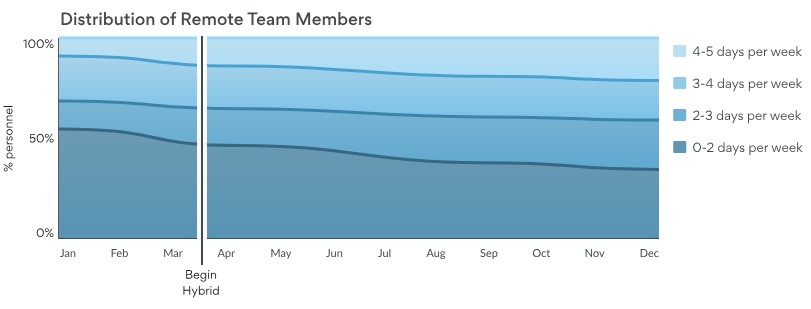
Remote work has shifted how organizations operate, but measurement systems have not always kept pace. Measuring effectiveness in a distributed environment requires metrics that reflect how work actually produces value rather than how visible effort appears. Remote work metrics are essential because they translate distributed activity into reliable indicators for decision making, planning, and performance management.
When organizations fail to define the right metrics, they often default to tracking availability, responsiveness, or tool usage. These indicators do not explain whether work contributes to outcomes, nor do they support improvement. Effective remote work metrics exist to answer a specific question: Is distributed work producing predictable, high-quality results while sustaining employee engagement?
Remote work reduces physical oversight, which removes traditional proxies for performance. Without metrics grounded in outcomes, leaders lose the ability to distinguish productive work from unproductive effort. Measurement is necessary for three specific reasons:
Research on remote and hybrid work shows that productivity outcomes improve when autonomy increases, but only when work systems provide clarity and feedback loops. Measurement creates those feedback loops.
Outcome metrics are present because they measure value delivery. Remote work effectiveness is ultimately defined by whether the organization reliably produces high-quality outputs on time, at acceptable cost and risk. Input metrics cannot confirm any of that.
This metric exists to answer a direct question: Are commitments being met? In remote environments, delays often result from dependency issues, unclear ownership, or poor prioritization. Completion rate highlights whether the operating system is converting plans into shipped work.
Quality metrics exist because speed without quality is not effectiveness. Remote teams can appear productive while silently accumulating rework, defects, or customer dissatisfaction. Quality consistency confirms whether output remains usable and stable.
Predictability exists to make planning real. Remote work increases reliance on cross-functional and time-zone coordination. Predictability measures whether teams can be trusted to hit expected timelines, which is essential for product roadmaps and revenue-dependent initiatives.
These outcome metrics are widely recognized as core remote work KPIs because they connect directly to operational performance rather than activity.
Collaboration metrics are present because remote work introduces coordination costs. Execution slows when information is incomplete, when decisions are not captured, or when work depends on synchronous availability. These metrics exist to measure whether the organization can coordinate at scale.
This metric exists because remote work is mediated by systems: project tools, documentation, shared channels, and planning workflows. If participation is low, work becomes fragmented, and decisions become private, creating delivery risk.
Communication completeness exists because remote execution depends on the written context. Messages that lack background, decisions, and next steps force repeated clarifications, which increases cycle time.
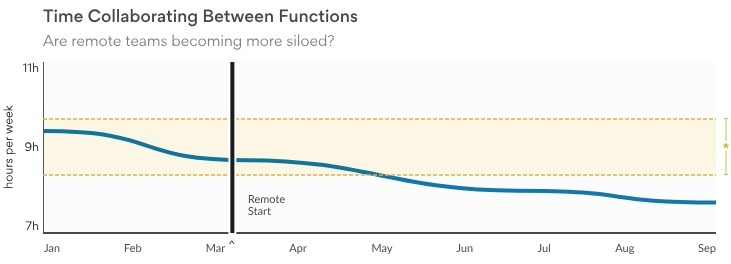
This metric exists because asynchronous work is a structural advantage of remote teams. When teams depend on meetings for routine progress, they lose deep work time and become constrained by time zone overlap.
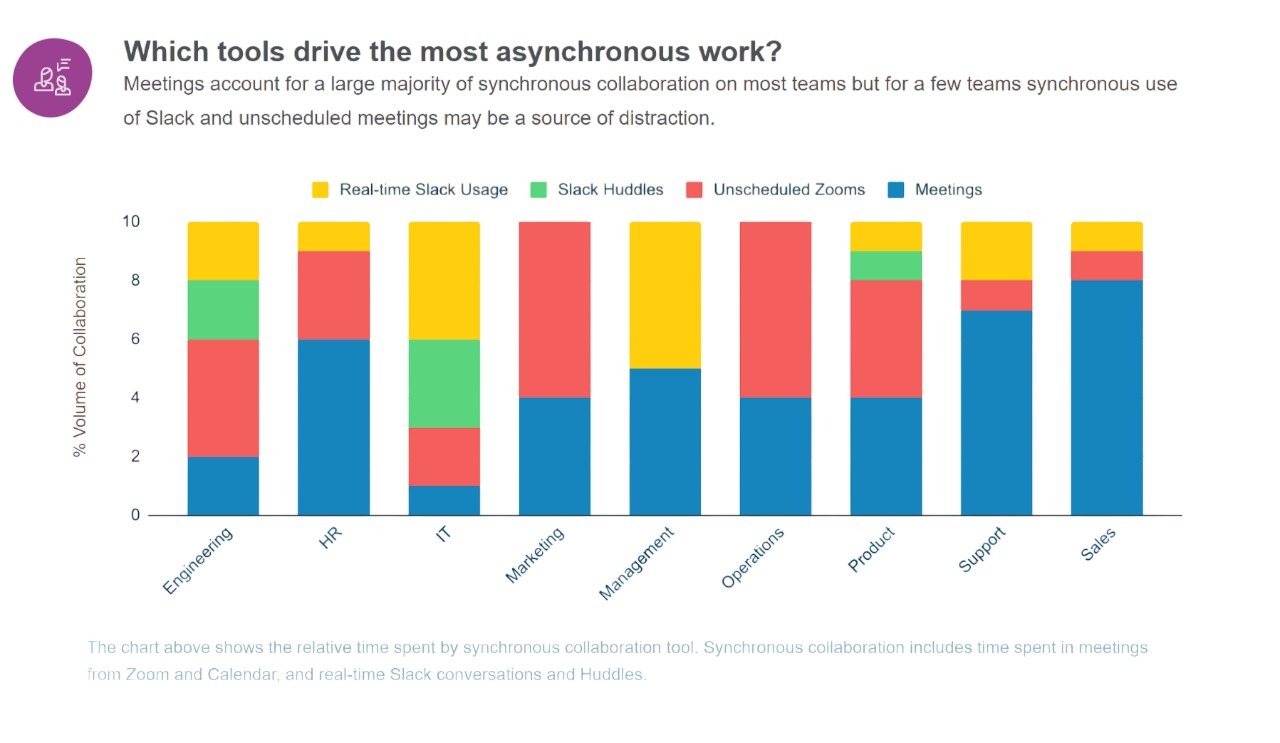
These metrics are used in remote KPI frameworks because they address the primary failure mode of distributed work: coordination breakdown.
These metrics are present because effectiveness must be sustainable. A team can deliver in the short term while silently accumulating exhaustion, disengagement, and turnover. Sustainability metrics exist to detect that trajectory early.
Engagement metrics exist because they predict execution stability. When engagement declines, discretionary effort declines, coordination weakens, and quality often deteriorates before delivery metrics indicate issues.
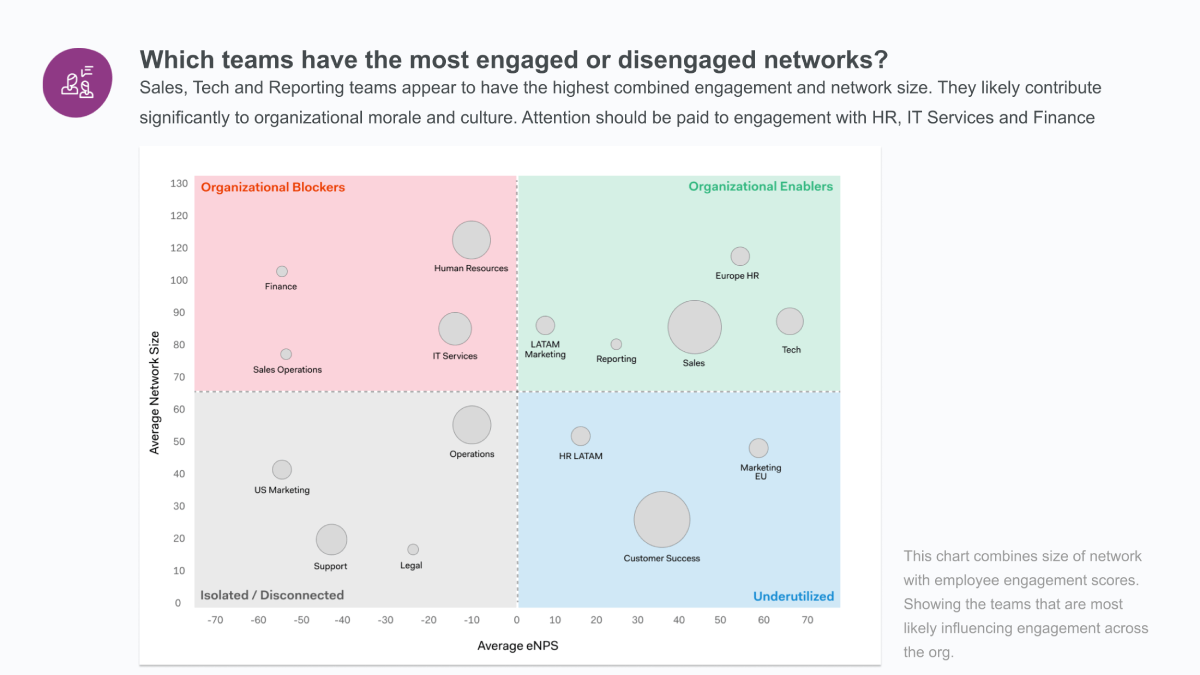
Burnout indicators exist because burnout is an operational failure state. It leads to quality defects, missed deadlines, and eventual attrition. Remote work can hide burnout because output may continue temporarily while health declines.
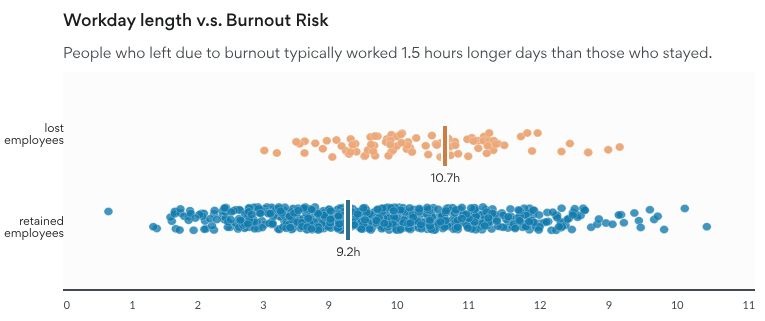
Turnover metrics exist because they quantify the long-term cost of remote work design. If high performers leave, remote work is not effective even if short-term throughput appears acceptable.
Operational metrics exist because remote work exposes inefficiencies in processes. When a team is distributed, weak prioritization, poor planning, and excessive coordination costs become more expensive. These metrics measure whether the operating system supports execution.
Milestone adherence exists to validate planning discipline. Missed milestones signal unrealistic estimation, shifting priorities, or hidden dependency risks.
This metric exists because effort can drift away from priorities. Remote work makes misalignment harder to see because work happens across tools and time zones. Time allocation signals whether capacity is being consumed by strategic delivery or by internal overhead.
Meeting effectiveness exists because meetings are the most common tax on remote work. A high meeting load often indicates unclear decision processes or inadequate documentation. Measuring meeting load relative to outcomes shows whether collaboration time is productive or wasteful.
.png)
These metrics align with modern remote measurement guidance that emphasizes meaningful indicators over superficial tracking.
These metrics persist because they are easy to capture, but they produce distorted behavior and do not answer meaningful management questions.
They serve as legacy proxies for effort but do not measure output, quality, or impact. They reward performative availability and penalize efficient execution.
Speed is not effectiveness. Measuring response time encourages interruption-driven work, reducing deep execution capacity and increasing error rates.
Most organizations agree on the right principles, but fail to execute for one reason: they cannot reliably measure remote work effectiveness without either relying on vanity metrics or creating a surveillance culture. Worklytics exists to solve that gap.
Worklytics is not a generic reporting layer. It is built to translate digital work patterns into metrics that reflect delivery health, collaboration quality, and sustainability in remote and hybrid organizations. It gives leaders a way to manage remote work with the same confidence they had in office-based environments, without regressing into presence-based control.
Internal dashboards usually fail for three structural reasons:
Worklytics addresses each failure point by building decision-grade analytics around how teams actually operate.
Worklytics supports productivity analytics focused on delivery and execution patterns, enabling leaders to evaluate effectiveness through measurable progress signals rather than monitoring time online. This aligns directly with the outcome-based metrics that matter most.
Worklytics surfaces collaboration and communication patterns across tools, showing where work stalls, where dependency load concentrates, and where cross-functional alignment breaks. That matters because remote work fails when coordination is weak, not when people are idle.
Worklytics enables visibility into workload and collaboration load patterns that correlate with exhaustion risk. Leaders can act earlier by redistributing work, reducing unnecessary coordination, or fixing operating processes that create chronic overload.
Worklytics provides dashboards designed for leadership use cases: organizational health, hybrid effectiveness, and productivity trends. Instead of debating anecdotes, leaders can make operating model decisions using consistent metrics.

Worklytics includes benchmark comparisons to help leaders interpret results with context. Without benchmarks, metrics are numbers without decision value.
If the goal is to measure remote work effectiveness without pushing employees into performative activity, Worklytics is a direct solution because it operationalizes meaningful remote work metrics at scale.
Q: Why are outcome metrics prioritized over activity metrics in remote work?
A: Because outcomes confirm value delivery. Activity metrics only confirm motion. In remote environments, motion can be high while delivery is low, so outcome metrics prevent false confidence.
Q: What should leaders do when collaboration metrics show rising coordination costs?
A: Reduce dependency chains, formalize decision ownership, shift routine updates into async channels, and limit meetings to decision points. Collaboration metrics exist to pinpoint where operational design must change.
Q: How can organizations measure burnout risk without creating surveillance?
A: By measuring aggregate workload and collaboration load patterns rather than individual behavior monitoring. Burnout metrics exist to detect systemic overload early and trigger operational adjustments.
Q: How does Worklytics help leaders act on remote work metrics?
A: It turns remote work signals into dashboards that highlight risk, trends, and structural bottlenecks, enabling leaders to intervene through process and resourcing decisions rather than guesswork.
Q: What is the business outcome of implementing remote work metrics correctly?
A: Higher delivery predictability, fewer execution surprises, stronger retention, and a more stable operating rhythm that scales across distributed teams.
Remote work effectiveness cannot be inferred from visibility. It is measured by whether teams deliver outcomes predictably, collaborate efficiently, and sustain performance without burnout. The metrics in this guide exist because each one answers a management question that matters for execution and workforce stability. Worklytics is the practical solution for operationalizing those metrics, providing leaders with decision-grade visibility into productivity, collaboration health, and sustainability in remote and hybrid organizations.