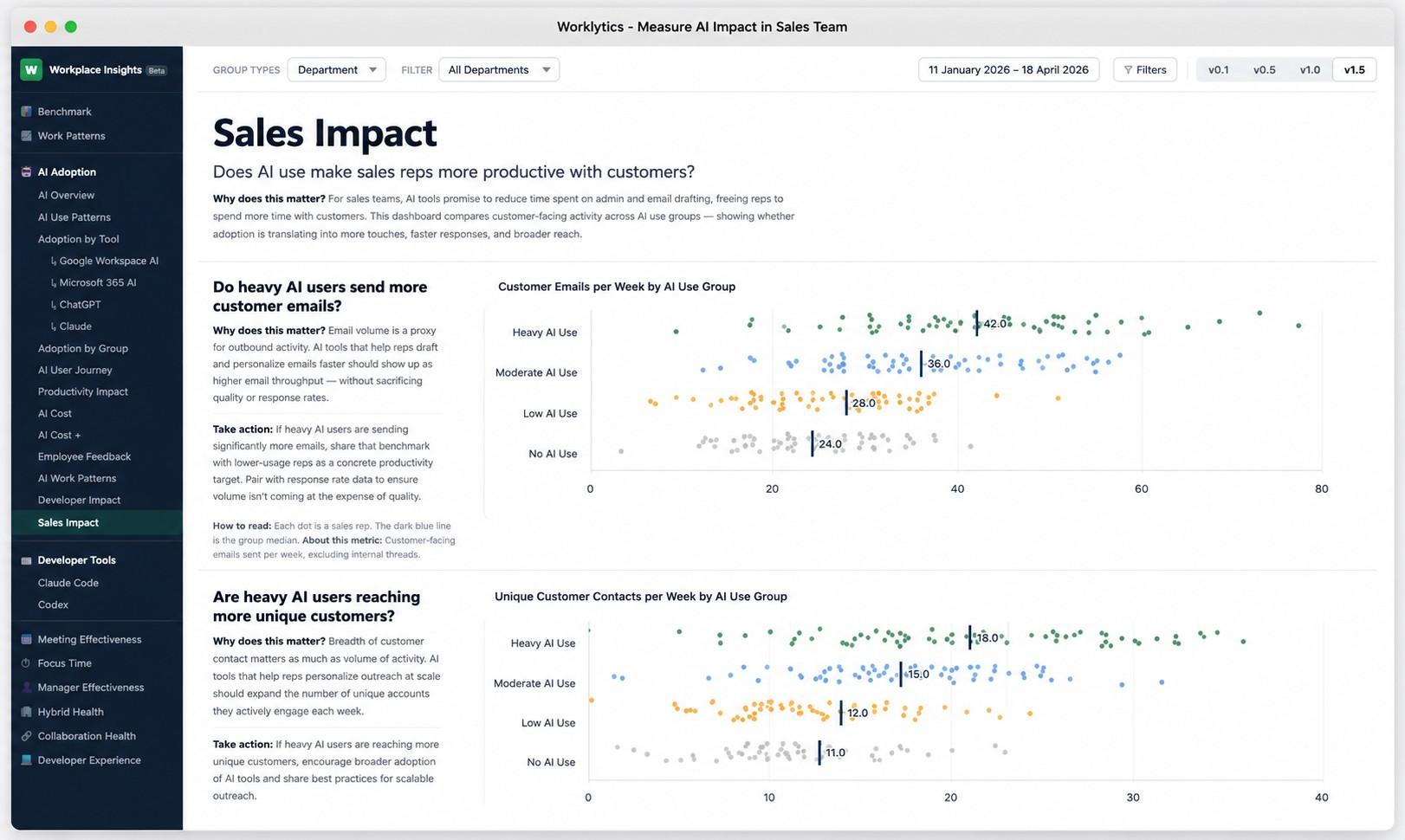
[Insert image: Worklytics MeasureAI Sales Impact dashboard screenshot, used as the post's main/hero imagMost sales leaders can tell you how many reps have an AI tool and how many logged in this week. Neither answers the real question: did AI make the team better at selling? That's not the same as owning the tool, and it's not the same as hitting target attainment on its own. A rep can close deals from a strong territory or a lucky quarter without AI touching the outcome.
What AI has to change is the daily habits that decide which deals close: reply speed, prospects reached, prep time. The job is to connect AI use to those habits, then to a dollar figure finance will accept. Worklytics built Measure AI Feature to close that gap between tool use and real selling.
Two dashboards run most sales teams, and neither was built for this. AI tool dashboards show sign-ups and logins: who opened the tool, not whether the work changed. Your CRM shows revenue results and target attainment by rep, but can't separate AI's effect from a good territory, a slow season, or one deal that would have closed anyway.
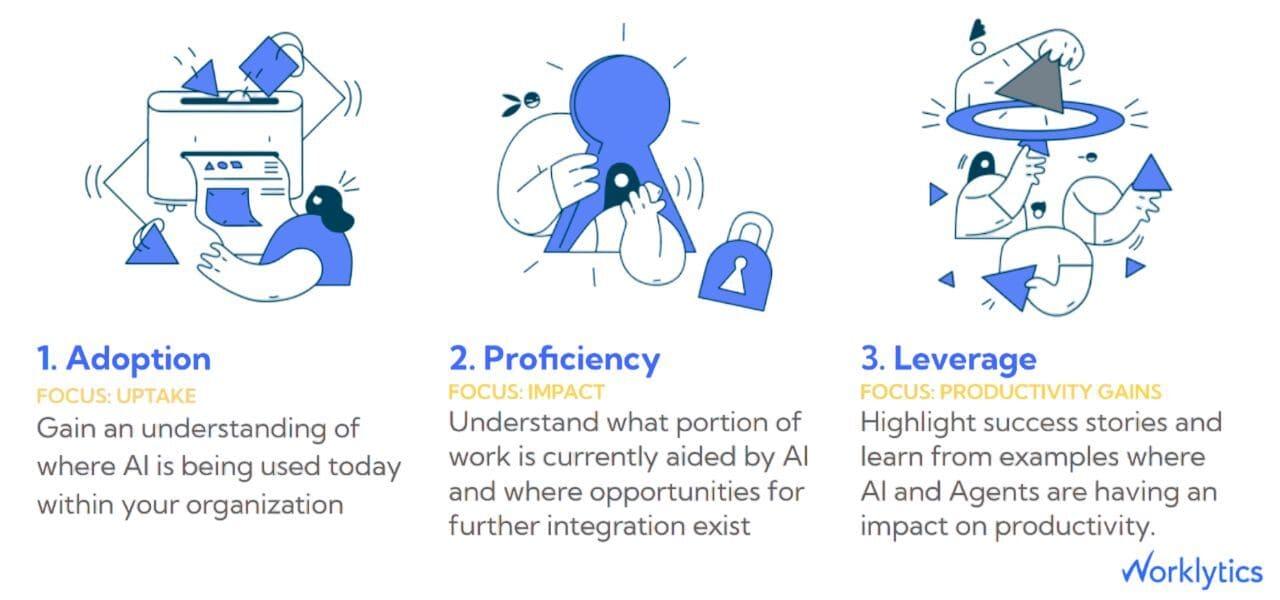
The blind spot sits between “has AI” and “closed more deals.” It's made of habits: prospects contacted, reply speed, prep time, manager involvement in calls. All measurable from calendar and email activity, without reading a single message. Worklytics checks it in order: who uses AI, then how deeply, then what changes.
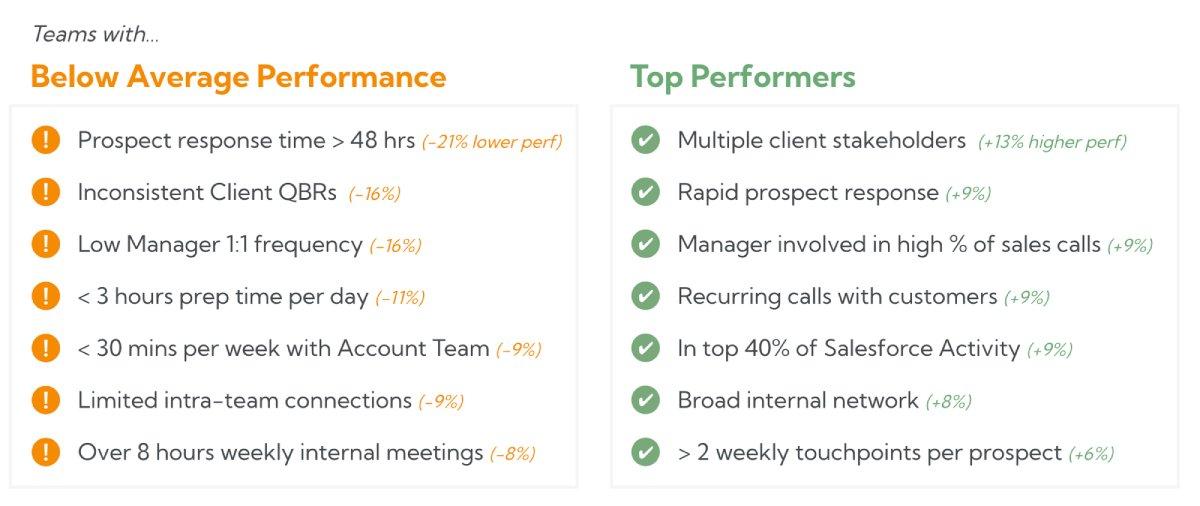
Worklytics studied sales teams and found a clear split between top reps and weak ones. The difference was not personality, but countable habits.
Top reps reply fast, keep 2+ touchpoints a week per prospect, build relationships with several people per account, and get their manager on a good share of live calls. Weak teams take 2+ days to reply, get under 3 hours of prep a day, skip client check-ins, and lose 8+ hours a week to internal meetings. Replying slowly alone lined up with a 21% performance drop, the biggest single hit in the data. Covering more people per account lined up with a 13% lift.
This is the yardstick. AI helps sales performance exactly as much as it pushes reps toward these habits.
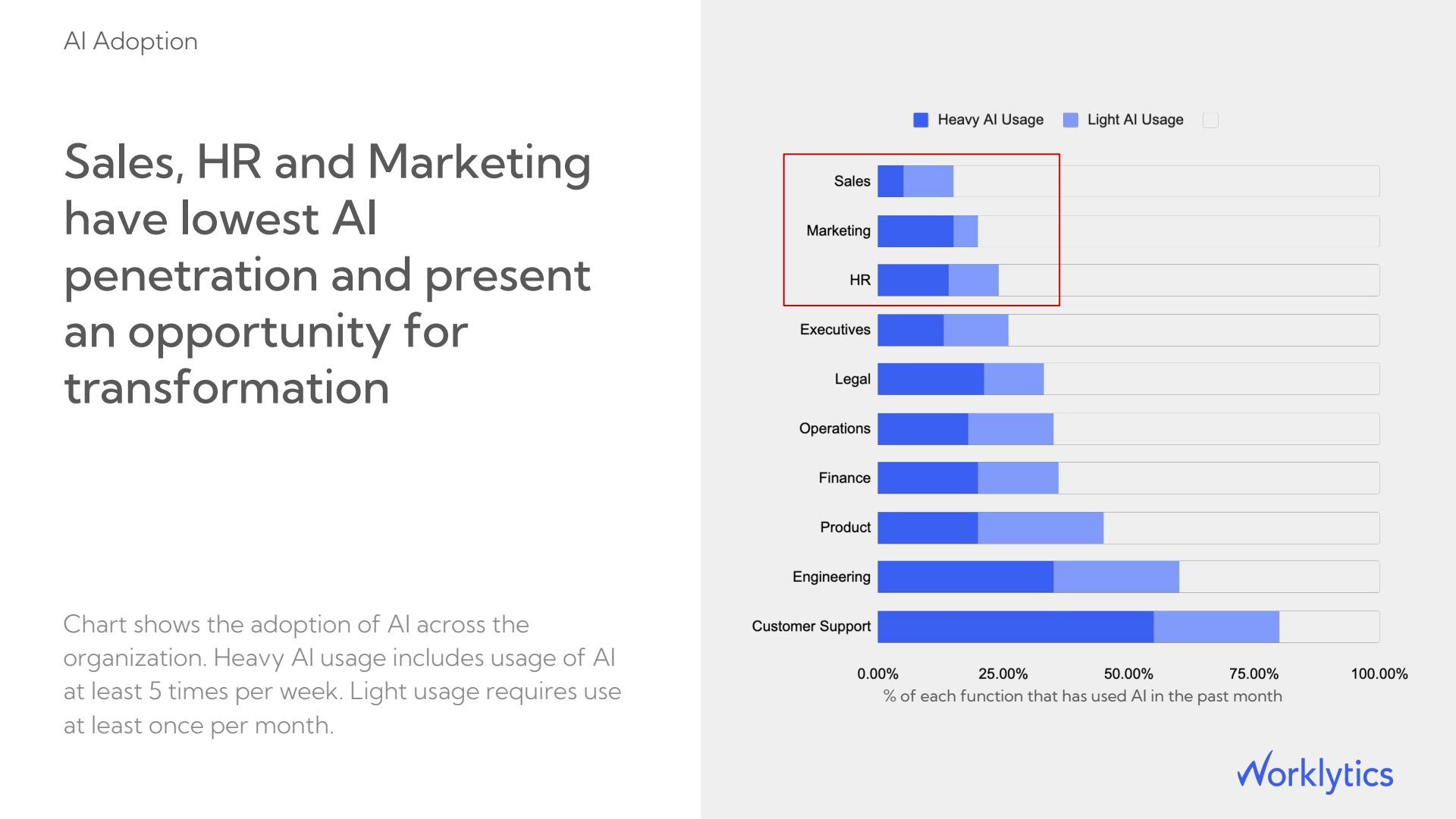
You can't credit AI for a change on a team that barely uses it, and in most companies, that's Sales. Worklytics data puts Sales among the three lowest-use teams, next to HR and Marketing, while Customer Support and Engineering run several times higher. That's an opening: the team closest to revenue has the most room to grow.
Pull every tool into one view. Worklytics combines sign-in and weekly use across ChatGPT, Copilot, Gemini, Slack AI, and Zoom AI, split by team, role, and manager, since a 15% company average can hide one region at 45% and another at 4%. See the AI adoption scorecard for managers and benchmarks by department. The pattern holds nationally too: Bick, Blandin and Deming (2025) found 23% of workers used AI in a given week but only 9% daily, with just 1 to 5% of work hours involving AI. Trying it isn't the same as using it deeply, and only deep use changes how a rep sells.
A rep who uses AI once a week to clean up an email has adopted it and changed nothing. A rep who leans on it for a fifth of their day has changed how they work. Only the second one is a real habit change.
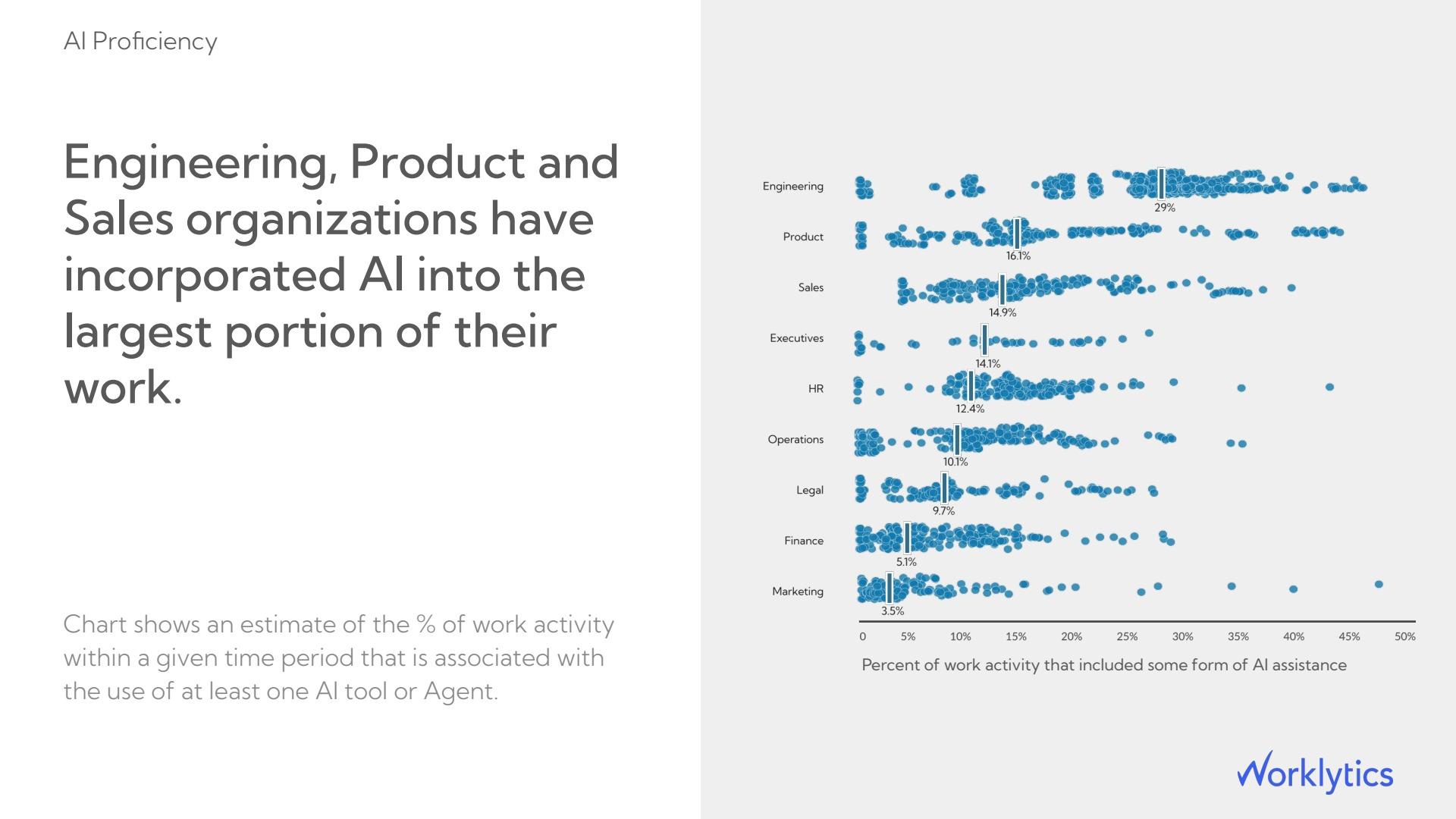
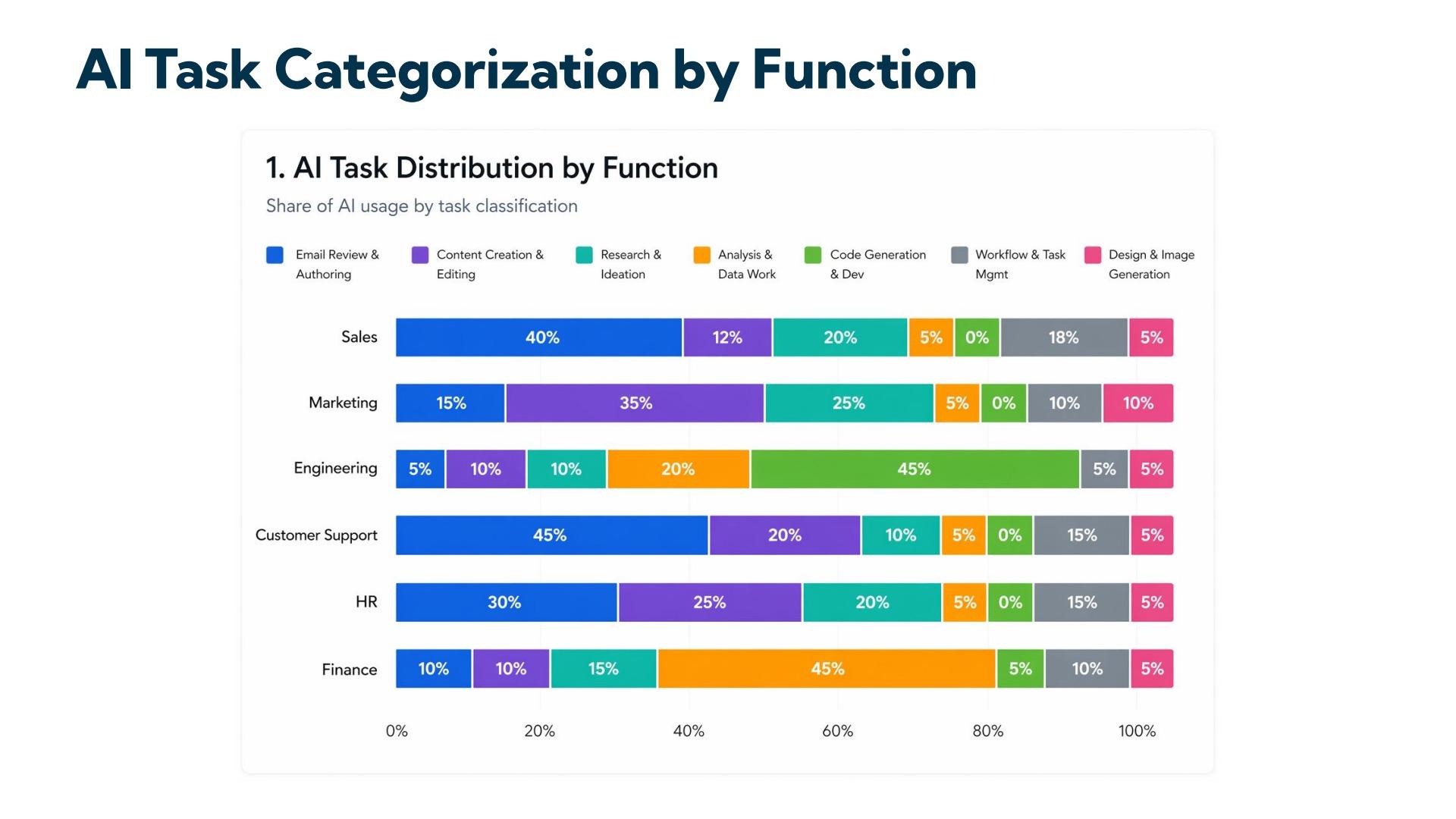
Worklytics measures this as share of work involving AI: Sales sits near 14.9%, ahead of most non-technical teams but behind Engineering (29%) and Product (16.1%). What reps use it for matters too. About 40% of Sales AI use is writing and cleaning up emails, another 20% is research, and very little goes to pipeline or task management. Reps are using AI to write faster, not yet to sell differently. That's the gap to coach toward.
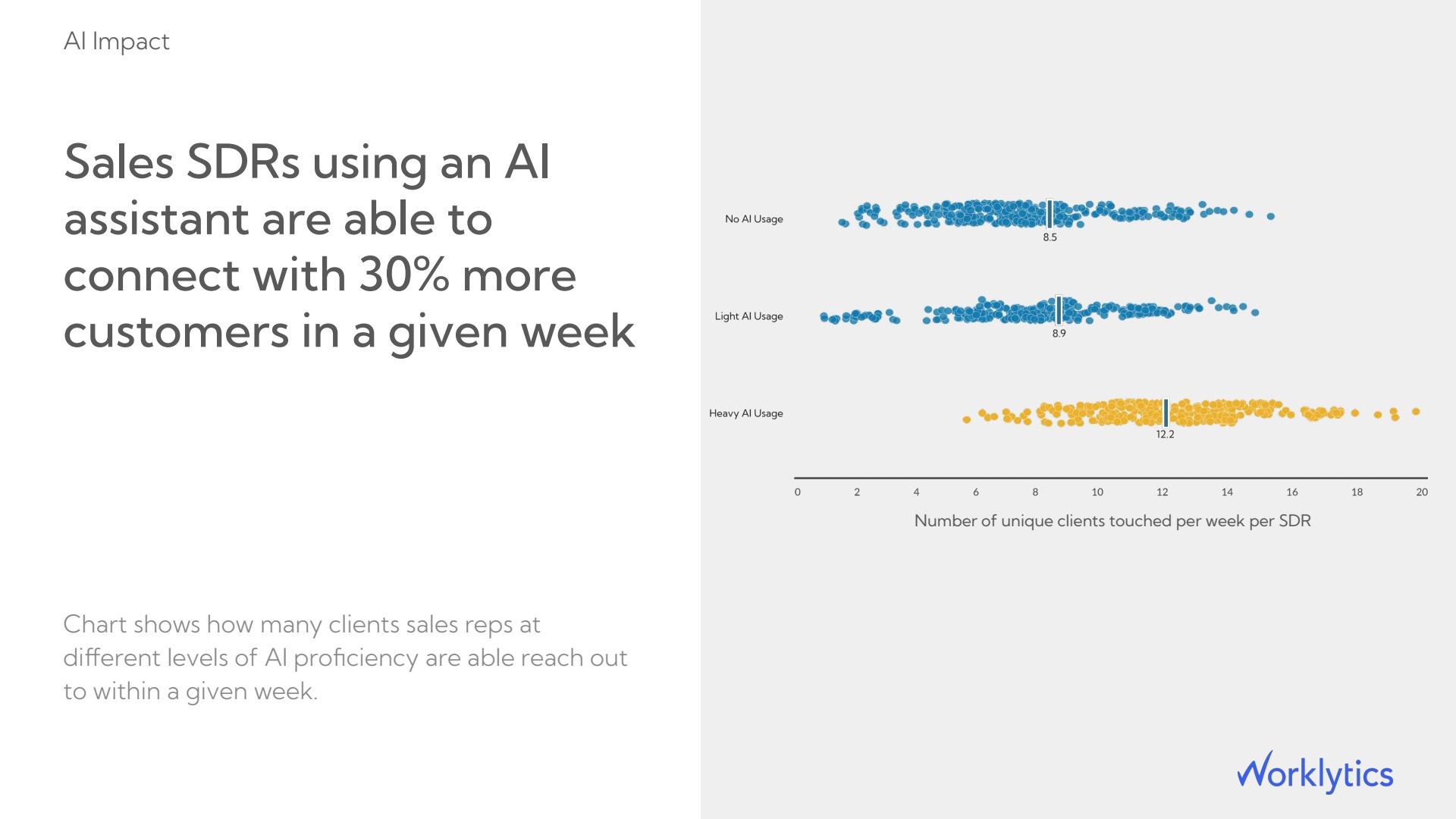
Compare the actual selling habits of heavy AI users against light and non-users over the same period. Heavy AI users reach 12.2 prospects a week versus 8.5 for non-users, 30% more, since research and drafting that used to eat the morning now take minutes, freeing time for outreach. That ties to two top-rep habits: more touchpoints and more contacts per account.
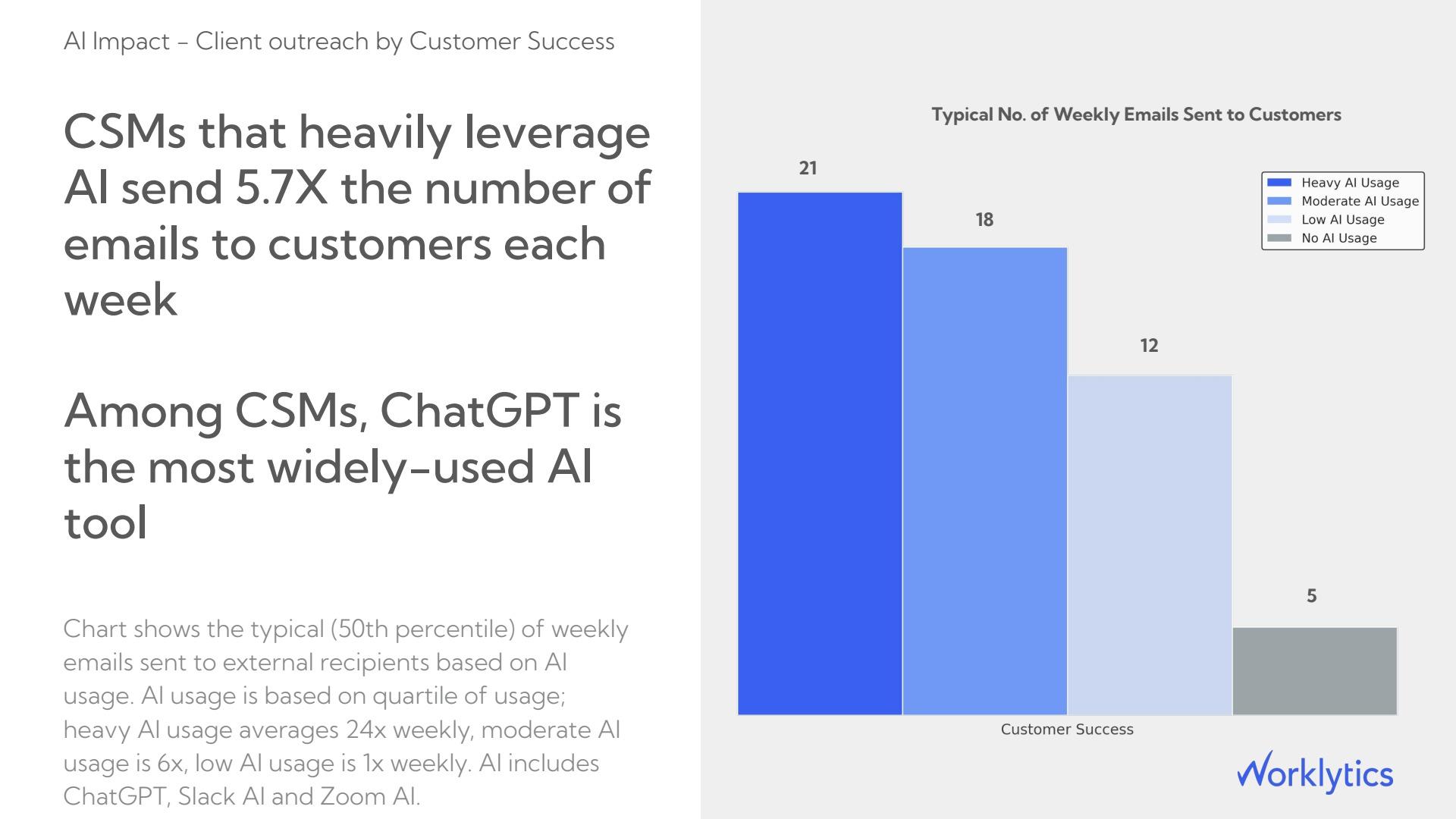
The pattern is stronger in Customer Success, which runs on communication. Heavy AI users send 5.7x more customer emails a week (21 vs. 5) and book 2.5x more meetings (6 vs. 3). That counts as real productivity, since it's customer-facing contact, not internal busywork.
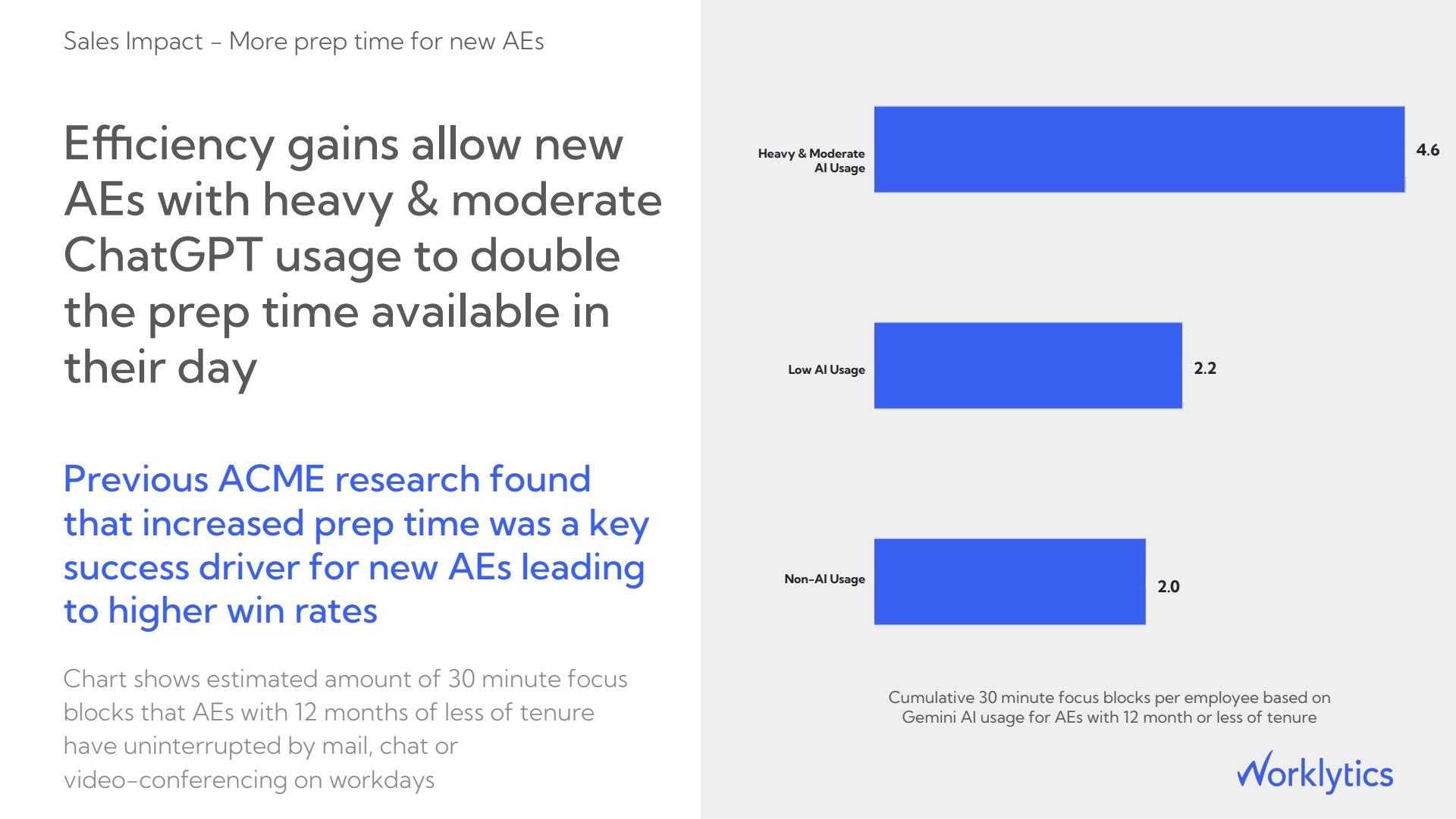
The most telling signal isn't output. It's time. New reps who use ChatGPT heavily get about double the uninterrupted prep time in their day (2 to 4.6 half-hour focus blocks), and prep time is a top driver of win rates for newer reps. That matches the largest real-world study of AI at work so far, Brynjolfsson, Li and Raymond (2025), which found a 14% average productivity gain that jumped to 34% for the least experienced workers. AI helps your newest reps most, exactly where prep time is shortest.
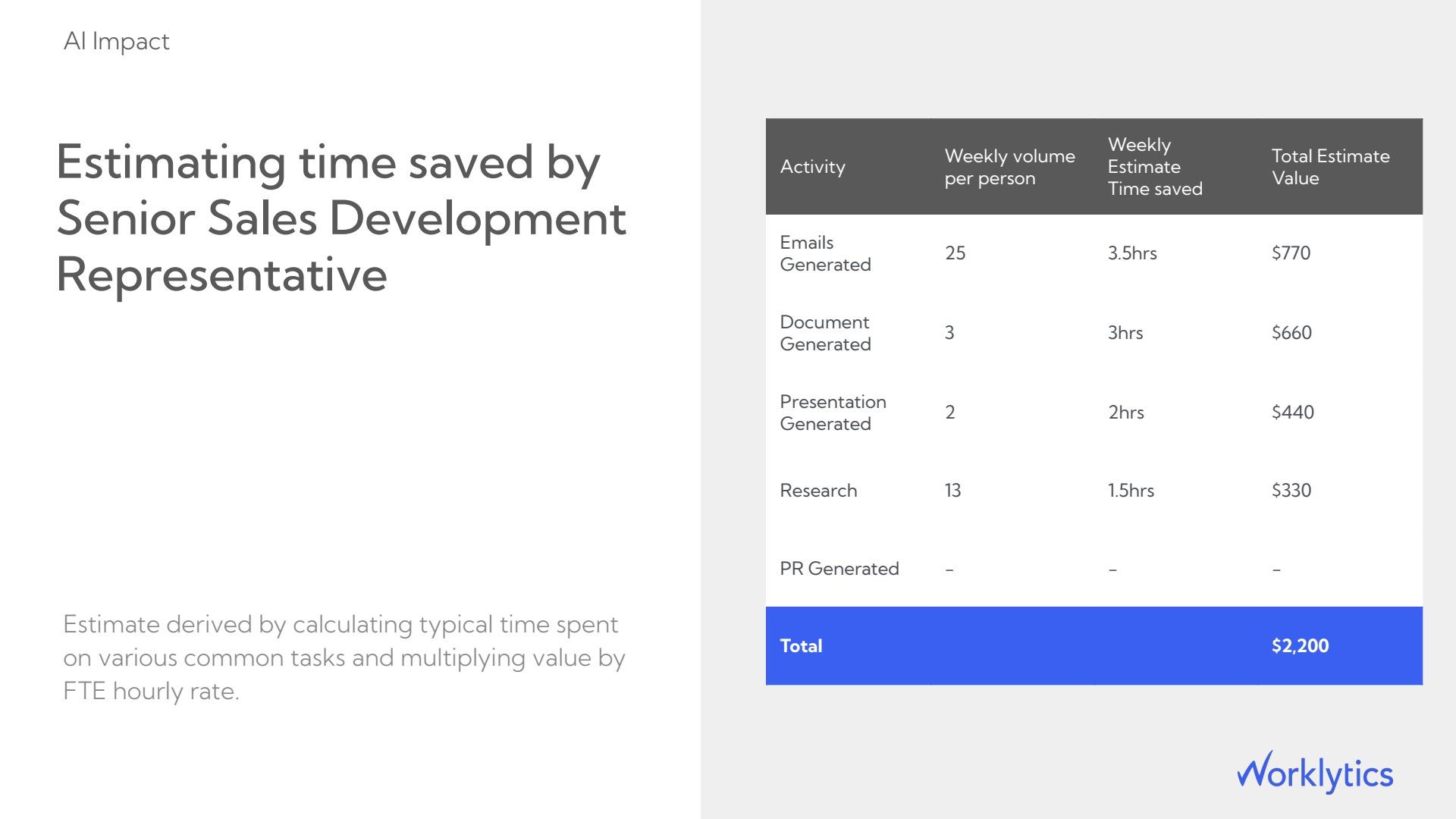
Don't divide revenue by AI license spend. That math won't hold up. Build it bottom-up instead: time saved per task times hourly cost of that rep's time (pay plus benefits), summed by role and team. For a senior rep, Worklytics estimates about 10 hours saved a week across emails, documents, decks, and research, worth roughly $2,200 per rep per week. Every input traces to a real task and rate, so finance can trust it.
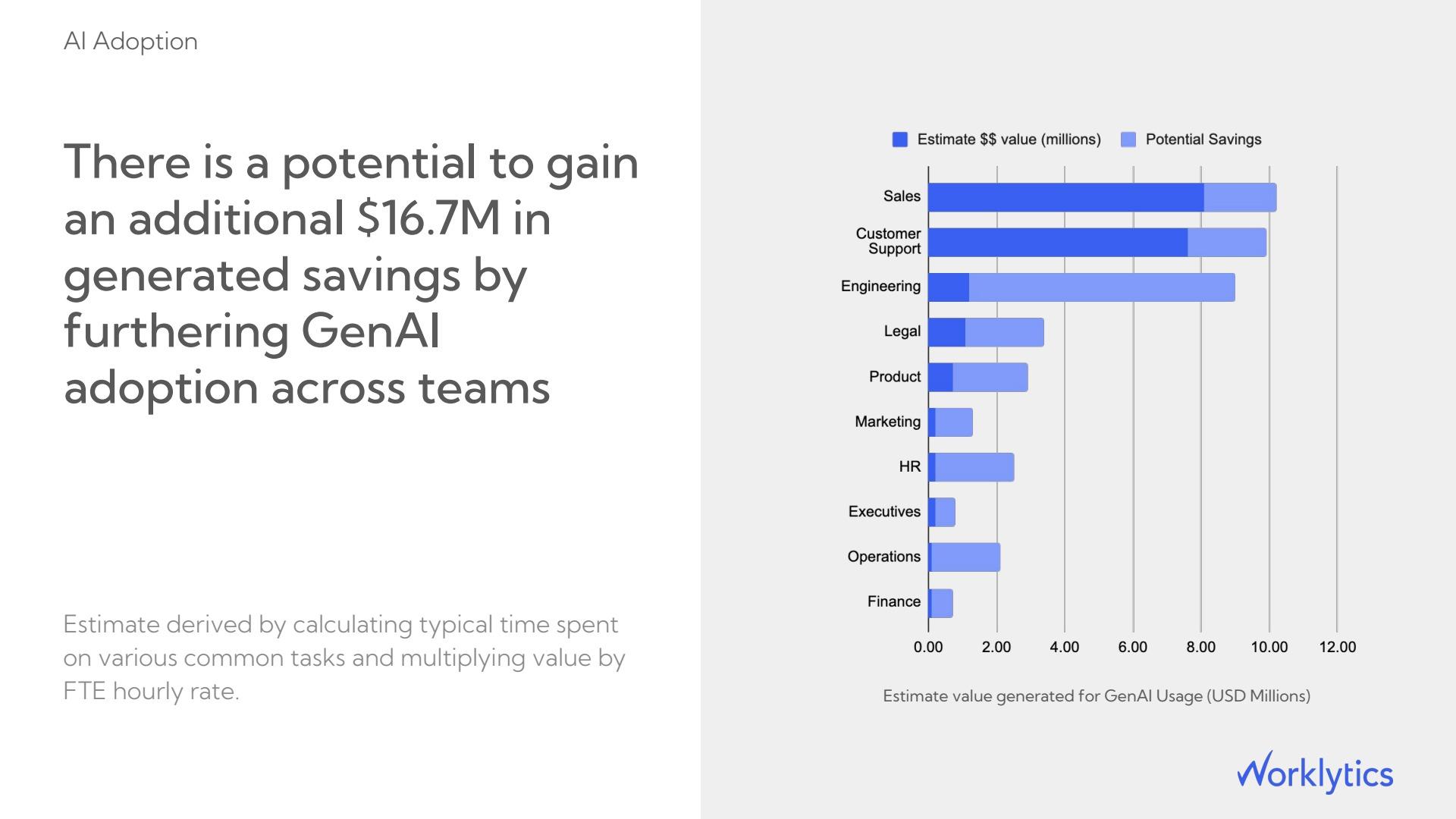
Company-wide, getting AI use to a realistic ceiling was worth about $16.7M more a year in one example setup, and Sales was the single biggest slice. The team using AI the least is sitting on the most unclaimed value. This kind of measurement, by role, by team, as a gap you can still close, is the main output of Worklytics Measure AI.
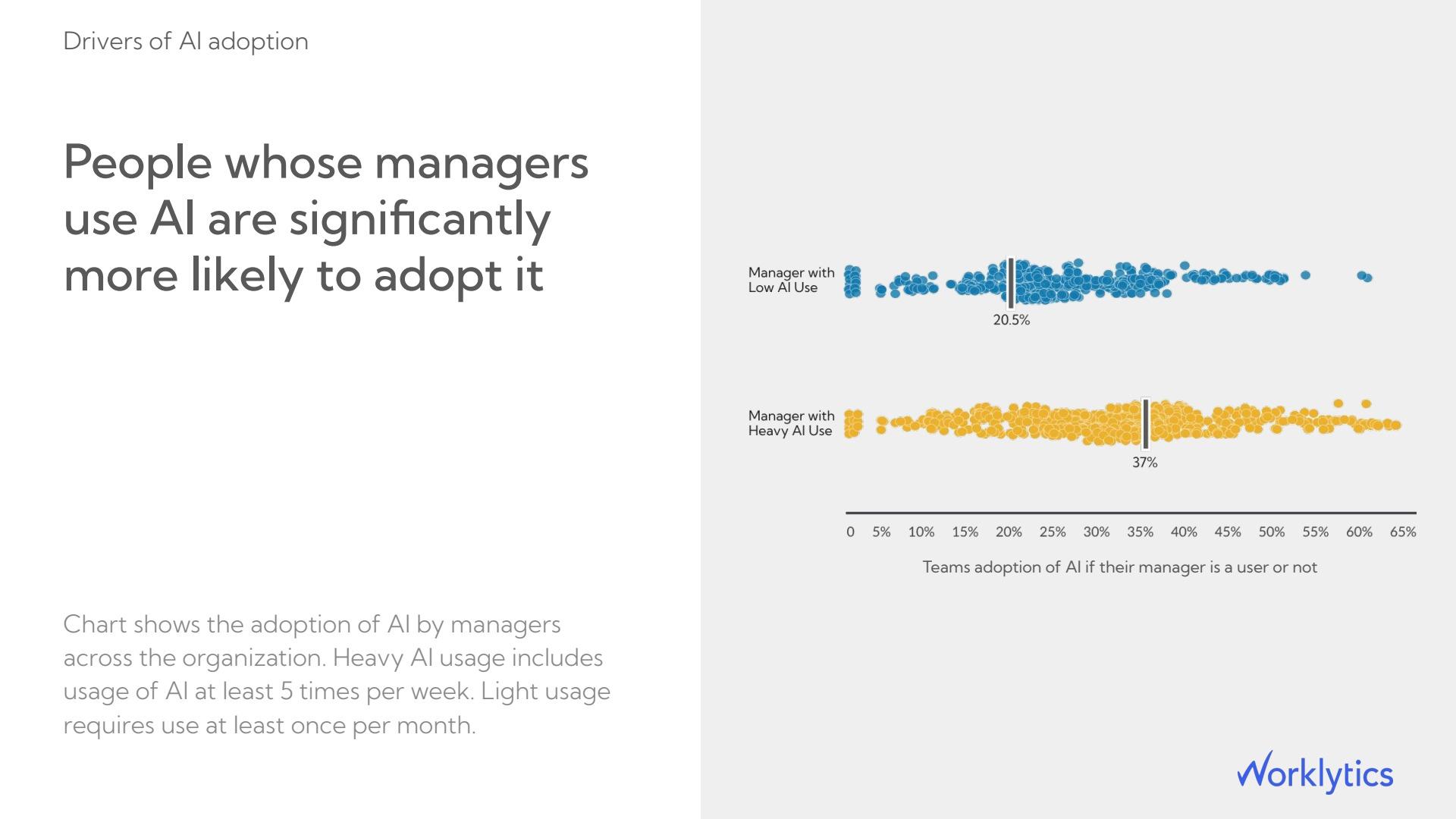
One lever moves every step at once: the manager. Teams whose manager uses AI heavily reach 37% team use, versus 20.5% when the manager barely touches it. Weak manager check-ins lined up with a 16% performance drop; strong call involvement lined up with a lift. Managers set the tone and show the behavior, so their own AI use is an early signal for where the team's performance is headed.
Track three things: the manager's own AI use, one-on-one frequency with reps, and how often they join live calls. Worklytics surfaces these through its manager effectiveness and meeting effectiveness reports.
AI can also blur work-life lines if it just stretches the day longer. The habits that protect performance, fewer scattered days and less after-hours work, are the same ones that protect people. Worklytics measures well-being from work patterns like burnout risk and after-hours load, not by reading anyone's messages.
StepQuestion it answersWhat to measureWho uses AIAre reps using it at all?How many use it each week, by team and managerHow deeplyIs AI really part of the work?Share of work involving AI, and what it's used forWhat changesDid selling habits shift?Prospects reached, customer emails, prep timeWhat it's worthWhat is the payoff?Time saved times hourly cost, by role
A team can look strong on step 1 and flat on step 3. That's your signal to coach toward deeper use, not buy more licenses.
In four steps: who uses AI, how deeply, what changes in selling habits (prospects reached, prep time), and what that time is worth in dollars. Worklytics Measure AI connects AI use to the habits that win deals.
Customer-facing numbers, not internal activity. Heavy AI users reach 30% more clients a week and CS managers book 2.5x more meetings. The strongest sign is prep time: new reps on ChatGPT get about double the quiet time to prepare.
Busy shows up as more internal activity and email volume. Better shows up as more customer contact, faster replies, and more prep time. If AI only lifts internal activity, that flat line is itself worth reporting.
Bottom-up, not revenue-over-spend: time saved per task times hourly rate, by role. A senior rep wins back about $2,200 a week; company-wide, the untapped chance reached $16.7M in one example, with Sales the biggest share.
Selling runs on relationships, so reps default to pipeline and target attainment over new tools. Sales ranks among the lowest-use teams, behind Support and Engineering. That's also why it holds the biggest dollar opportunity.
A lot. Team use hits 37% when the manager uses AI heavily, versus 20.5% when they don't. Manager AI use, one-on-one frequency, and live-call involvement all predict where team performance lands next quarter.
Numbers and models come from Worklytics MeasureAI. Figures like the senior-rep value and the $16.7M company-wide estimate are example models built from representative data. See how the platform measures AI use, productivity, engagement, well-being, and manager effectiveness at Worklytics