Organizations today generate a continuous stream of workplace data through tools such as email, calendars, messaging platforms, and project management systems. Despite this, most decision-making still relies on lagging indicators like quarterly performance reviews or employee surveys. These methods provide delayed and often subjective feedback, which limits their usefulness in diagnosing real-time operational issues.
Advanced workplace analytics addresses this limitation by shifting the analytical focus from outputs to behaviors. Instead of asking whether performance increased or decreased, it examines how work is structured at a granular level.
This shift matters because performance outcomes are the result of underlying work patterns. If those patterns are inefficient, no amount of output tracking will explain the root cause. Advanced analytics provides that missing layer by linking behavior to outcomes through structured analysis.
Advanced workplace analytics is the application of statistical, behavioral, and computational techniques to analyze how work is executed across an organization over time. It moves beyond static reporting by introducing temporal, relational, and predictive dimensions into analysis.
In practical terms, this means:
For example, measuring employee engagement through surveys alone assumes that engagement is a self-reported state. Advanced analytics instead correlates engagement with observable signals such as declining responsiveness, reduced collaboration diversity, or increased after-hours work. These signals provide a more reliable and continuous measure of engagement because they reflect actual behavior rather than perception at a single point in time.
Most operational decisions fail not because of poor intent but because they are based on incomplete information. When leaders rely on aggregate metrics, they often apply broad solutions to localized problems. This creates inefficiencies and sometimes introduces new issues.
Advanced analytics improves decision precision by isolating the specific drivers of a problem. For instance, if productivity declines, the system can differentiate whether the cause is excessive meetings, fragmented work schedules, or reduced cross-functional alignment. Each of these requires a different intervention.
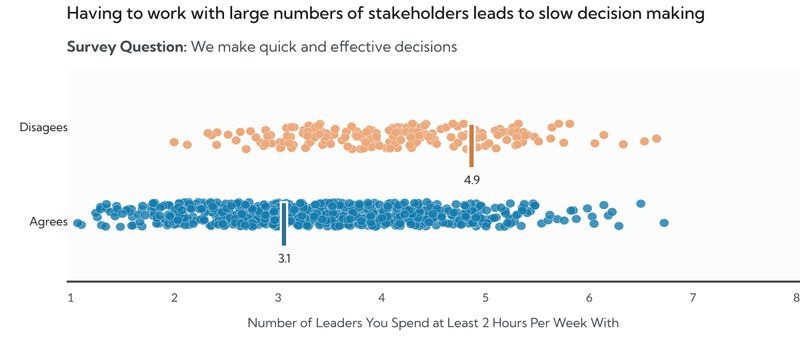
Traditional productivity metrics often equate longer working hours with higher output. This assumption ignores the quality and structure of work.
Advanced workplace analytics redefines productivity as the efficiency of time allocation and the effectiveness of collaboration. For example, an employee spending most of their time in meetings may appear active but may have limited capacity for deep, focused work that drives meaningful outcomes.
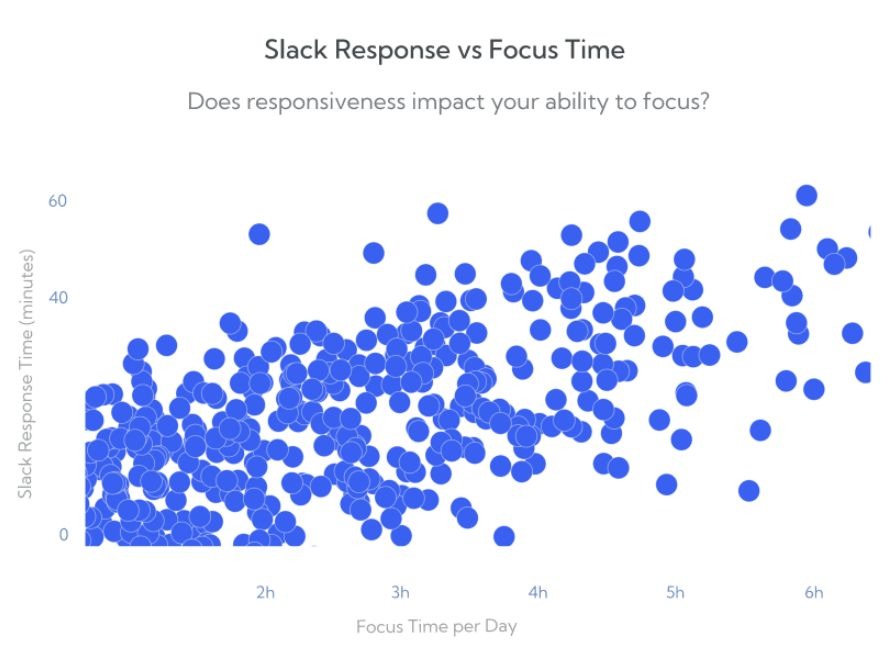
Key contextual indicators include:
Engagement and well-being are often treated as abstract or subjective concepts, but they have measurable behavioral correlates. For example, a sustained increase in after-hours work often indicates workload imbalance or unrealistic expectations. Similarly, a decline in participation across collaborative channels can signal disengagement.
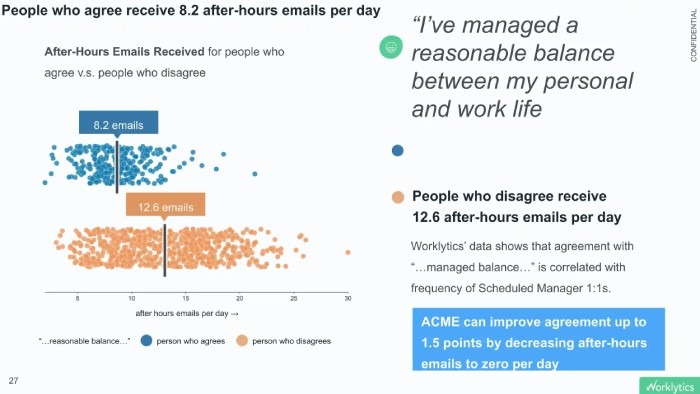
Advanced analytics captures these patterns by analyzing how employees interact with their work environment over time. This approach provides continuous monitoring rather than relying on periodic surveys, which can miss rapid changes in employee sentiment.
Organizational inefficiencies are frequently embedded in how teams are structured rather than how individuals perform. Traditional organizational charts do not reflect actual collaboration patterns, which often evolve organically and differ significantly from formal reporting lines.
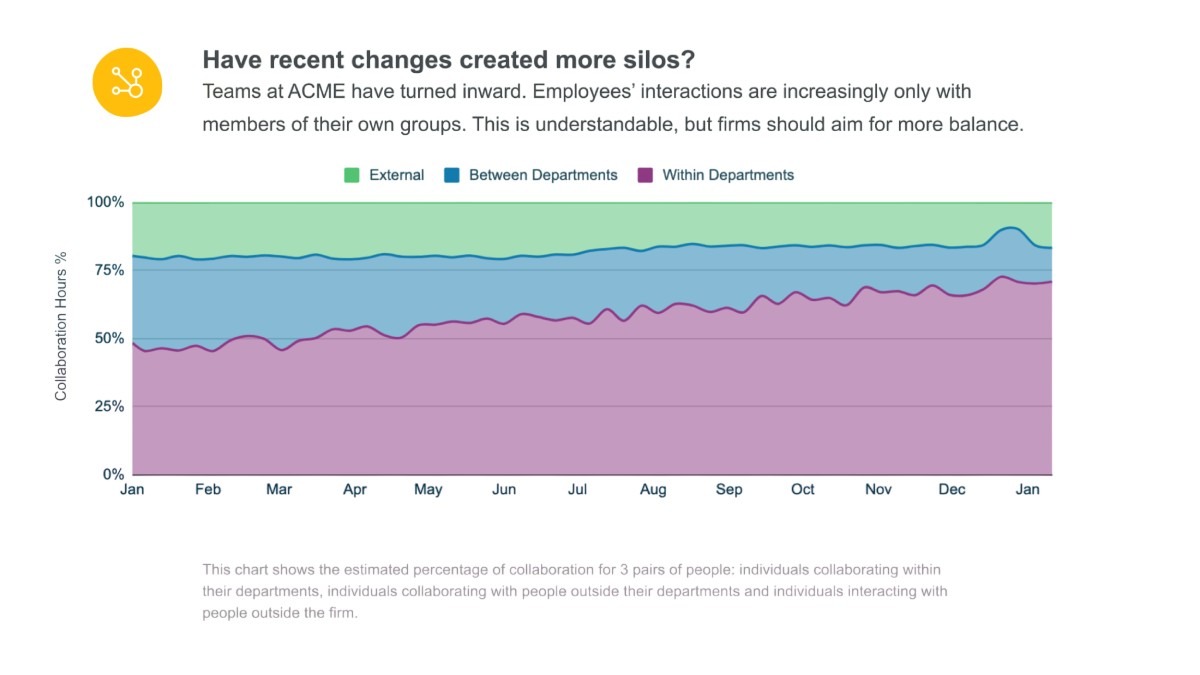
Network science addresses this gap by mapping real interaction patterns. It identifies whether teams are operating in silos, whether certain individuals are overloaded with communication responsibilities, and whether information flow is evenly distributed.
AI adoption is often evaluated based on whether tools are deployed, but deployment does not guarantee usage or impact. The critical factor is whether employees integrate these tools into their workflows in a way that improves efficiency.
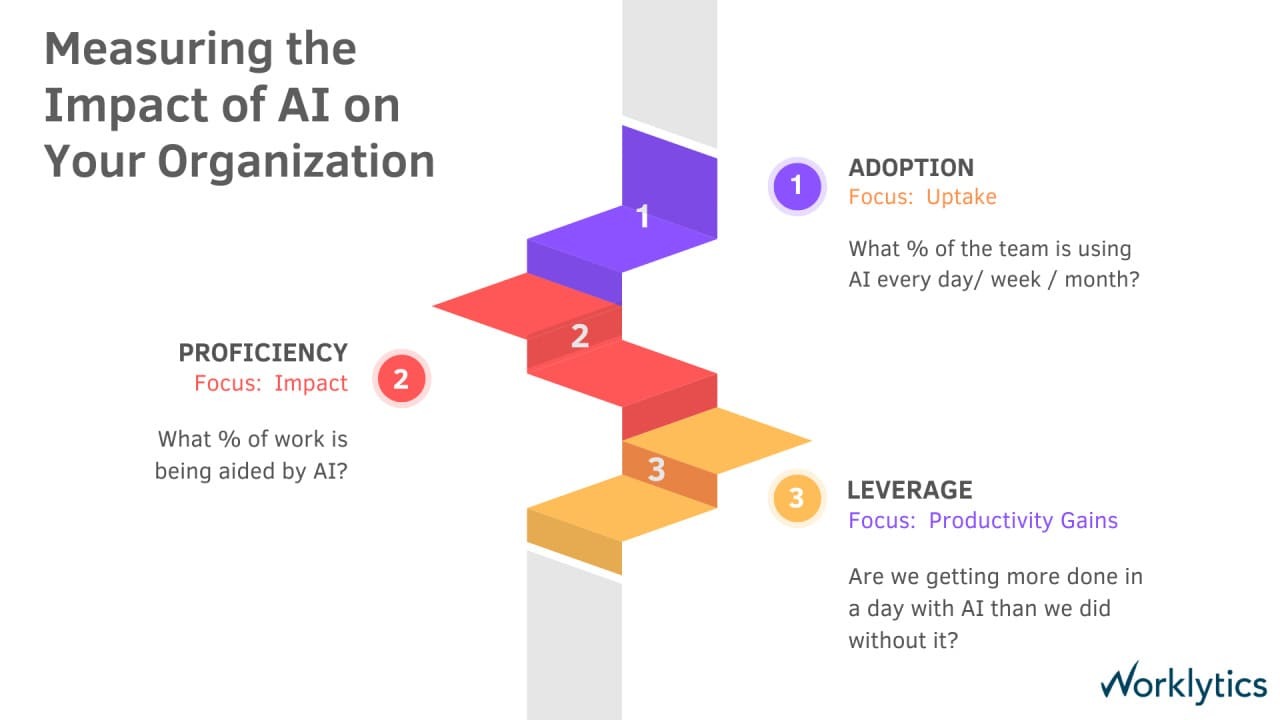
Advanced analytics tracks this integration by measuring how frequently AI tools are used, in what contexts they are applied, and whether their usage correlates with improved productivity or reduced workload.
Meetings and management practices are central to how work is coordinated, yet they are rarely analyzed in depth. Excessive meetings can fragment work schedules, while ineffective management structures can create uneven workload distribution.
Advanced analytics evaluates meeting effectiveness by examining factors such as frequency, duration, and participant overlap. It also assesses manager effectiveness by analyzing engagement distribution within teams and the consistency of communication patterns.
Cohort analysis groups employees based on shared characteristics and tracks their behavior over time. The value of this method lies in its ability to isolate changes that occur after a specific event or condition.
For example, analyzing a cohort of employees who joined during the same onboarding period can reveal whether their meeting load increases disproportionately over time. If it does, this suggests that onboarding processes may be introducing inefficiencies rather than resolving them.
This method is particularly effective because it controls for variability across groups. Instead of comparing unrelated individuals, it compares those who share a common baseline, making observed changes more meaningful.
Network science shifts the analytical focus from individual metrics to relationships between individuals. It treats the organization as a system of interconnected nodes, where each interaction contributes to overall performance.
This approach is essential because many workplace outcomes depend on collaboration rather than isolated effort. For example, innovation often emerges from cross-functional interaction rather than individual work.
By analyzing network properties such as centrality and density, organizations can identify structural inefficiencies that are not visible through traditional metrics.
Worklytics uses this methodology to map collaboration patterns, providing a realistic representation of how work flows through the organization.
Predictive analytics identifies patterns that consistently precede specific outcomes. These patterns are used to generate signals that indicate the likelihood of future events.
For example, a combination of increasing after-hours work, declining response rates, and reduced collaboration diversity may indicate a high risk of burnout. Identifying this pattern early allows organizations to intervene before the issue affects performance or retention.
Worklytics enables predictive insights by analyzing historical and behavioral data, allowing organizations to transition from reactive to proactive management.
Traditional reporting describes outcomes, while advanced analytics explains the behavioral mechanisms behind those outcomes.
Yes, because it focuses on work patterns rather than industry-specific outputs.
By analyzing metadata and interaction patterns instead of content.
Aligning insights with actionable decisions, as data alone does not create change.
Advanced workplace analytics provides a structured way to understand how work actually happens within an organization. By combining cohort analysis, network science, and predictive modeling, it reveals patterns that are otherwise invisible.
This enables organizations to move beyond reactive management and implement targeted, data-driven improvements. Platforms like Worklytics make this approach practical by integrating data, applying advanced methodologies, and delivering actionable insights.
Organizations that rely solely on descriptive metrics operate with limited visibility. Advanced workplace analytics expands that visibility by connecting behavior to outcomes and forecasting future trends. This capability is essential for improving productivity, engagement, and long-term organizational performance.