Hybrid work has transformed how organizations operate, with teams collaborating across homes, offices, and time zones using digital tools. While this flexibility offers clear advantages, it has also introduced new productivity challenges, including excessive meetings, fragmented focus, and unclear communication practices.
Leaders often struggle to understand how work actually happens across distributed teams. Traditional productivity tracking methods such as timesheets or employee monitoring fail to capture meaningful collaboration patterns and can damage trust.
Hybrid work introduces complexity in communication, collaboration, and leadership visibility. In a traditional office environment, managers could observe team interactions and workflows naturally. In distributed settings, those signals disappear.
Organizations now rely heavily on digital collaboration platforms, which generate vast amounts of data about how teams communicate, schedule meetings, and collaborate.
When analyzed correctly, this data reveals important patterns that influence productivity:
The result is a clearer understanding of how hybrid teams operate and where productivity improvements can be made.
The following sections examine the most common productivity barriers in hybrid environments and how organizations can solve them.
One of the most common productivity challenges in hybrid organizations is excessive meetings. Asynchronous collaboration often gets replaced with scheduled calls to ensure everyone stays aligned.
However, too many meetings create several negative effects:
Meeting overload also impacts cognitive performance. Knowledge workers require long uninterrupted blocks of time to think critically, solve problems, and produce high-quality output.
When calendars are packed with back-to-back meetings, these blocks disappear.
Improve meeting effectiveness by analyzing collaboration patterns and meeting behaviors across calendar and communication tools with Worklytics Dashboards. Instead of relying on assumptions, leaders gain data-driven visibility into how meetings affect productivity and focus time.
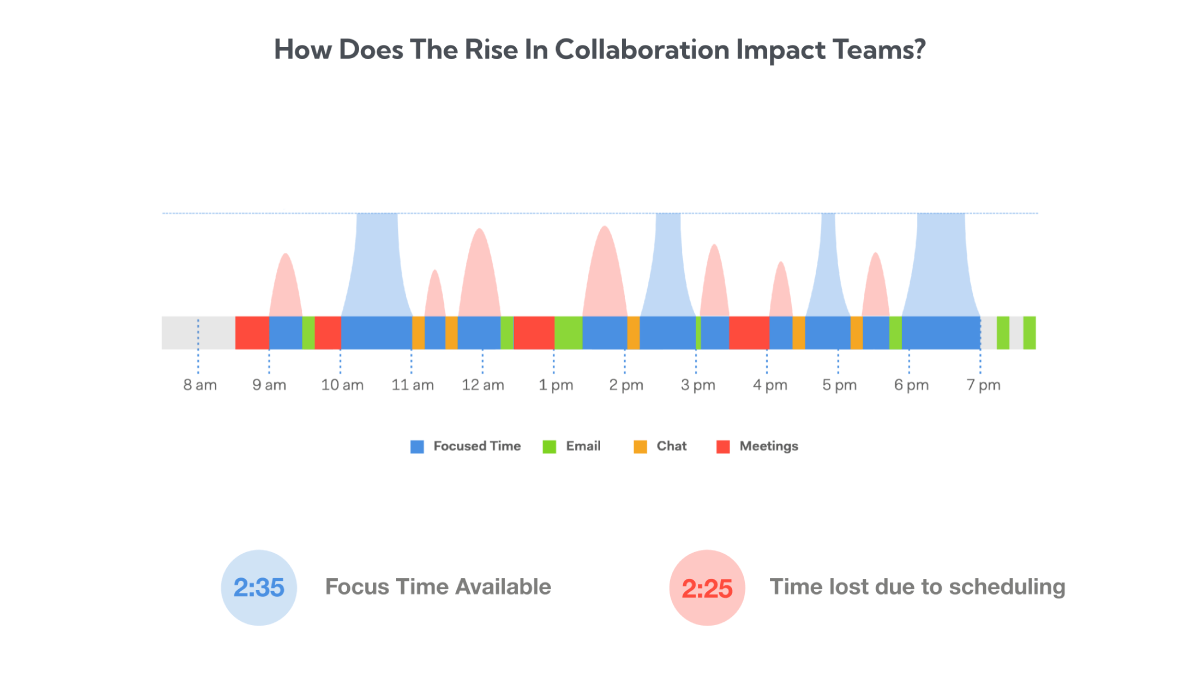
Worklytics visualizes meeting trends across departments so leaders can quickly identify inefficiencies and improve how teams collaborate.
Using these insights, organizations can:
By optimizing meeting habits with real collaboration data, companies reduce wasted time and create more space for meaningful work. Over time, these improvements lead to higher productivity, stronger collaboration, and better employee satisfaction.
Another major productivity barrier in hybrid work is fragmented focus.
Employees often switch between multiple collaboration tools such as Slack, email, task managers, and video conferencing platforms. Constant notifications interrupt concentration and reduce the ability to perform deep work.
Frequent interruptions create several productivity issues:
Without visibility into these patterns, leaders struggle to identify how digital workflows affect productivity.
Monitor these trends in real time and adjust workflows based on actual collaboration data from workplace tools such as calendars, messaging platforms, and meeting software and provide meaningful Insights.
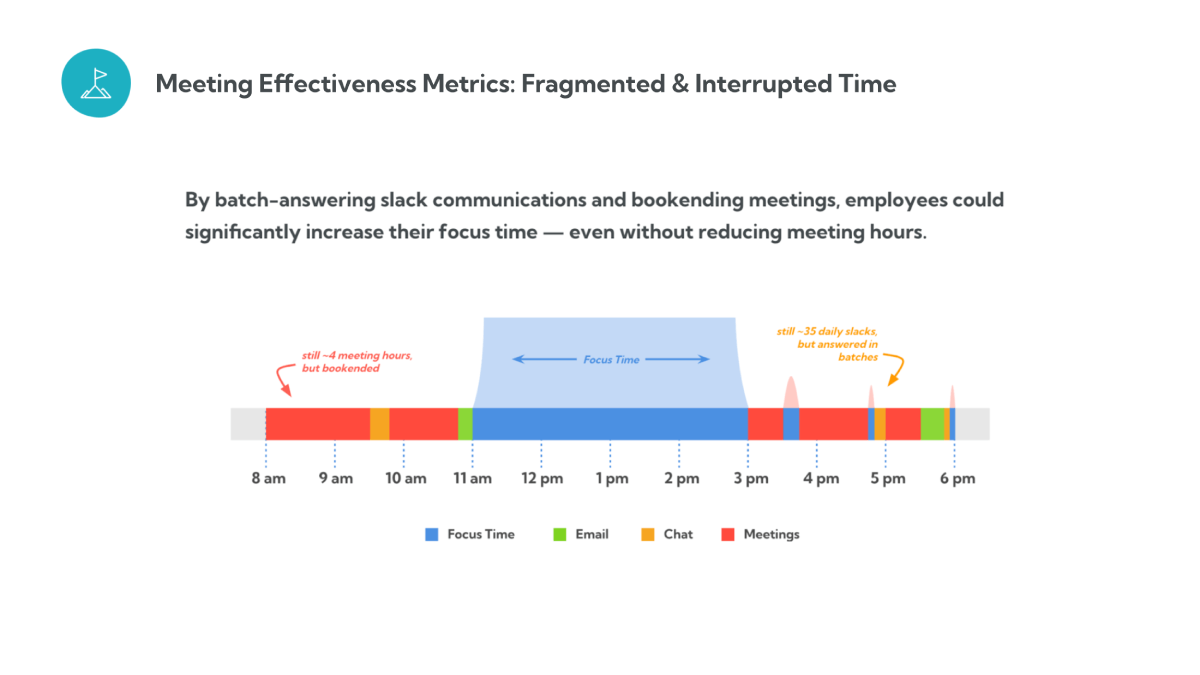
This visibility allows organizations to move beyond surface-level productivity metrics and understand the operational drivers behind meeting overload, fragmented schedules, and inefficient collaboration patterns.
With these insights, leaders can:
What makes Worklytics particularly valuable is its ability to translate complex collaboration data into actionable productivity insights.
As a result, organizations gain a scalable way to continuously optimize hybrid work practices, improve meeting effectiveness, and create healthier work patterns that support both productivity and employee well-being.
Leadership quality plays a critical role in addressing productivity challenges. In hybrid environments, employees rely heavily on managers for guidance, feedback, and communication alignment.
When leadership visibility decreases, several problems arise:
Effective managers serve as connectors who facilitate collaboration and ensure employees remain aligned with organizational goals.
Improving leadership effectiveness is critical in hybrid work environments where managers play a central role in maintaining alignment, engagement, and team productivity. When teams operate across locations and time zones, consistent communication and strong collaboration practices become essential.
Leadership analytics platforms such as Worklytics enable this by aggregating anonymized collaboration data from over 20 common workplace tools.

Key indicators of effective leadership include:
Regular one-on-one meetings are particularly valuable in hybrid teams because they reinforce relationships, provide feedback opportunities, and keep employees aligned with priorities.
Worklytics supports this through leadership effectiveness analytics, helping HR and leadership teams identify strong management practices and areas where coaching may be beneficial.
Hybrid work often reduces spontaneous interactions that previously occurred in physical offices. Without intentional collaboration strategies, organizations may experience:
This fragmentation makes it difficult for employees to discover expertise within the organization or collaborate on complex projects.
Organizations can analyze collaboration networks across workplace tools to understand how teams actually interact and share information.
Key collaboration metrics include:
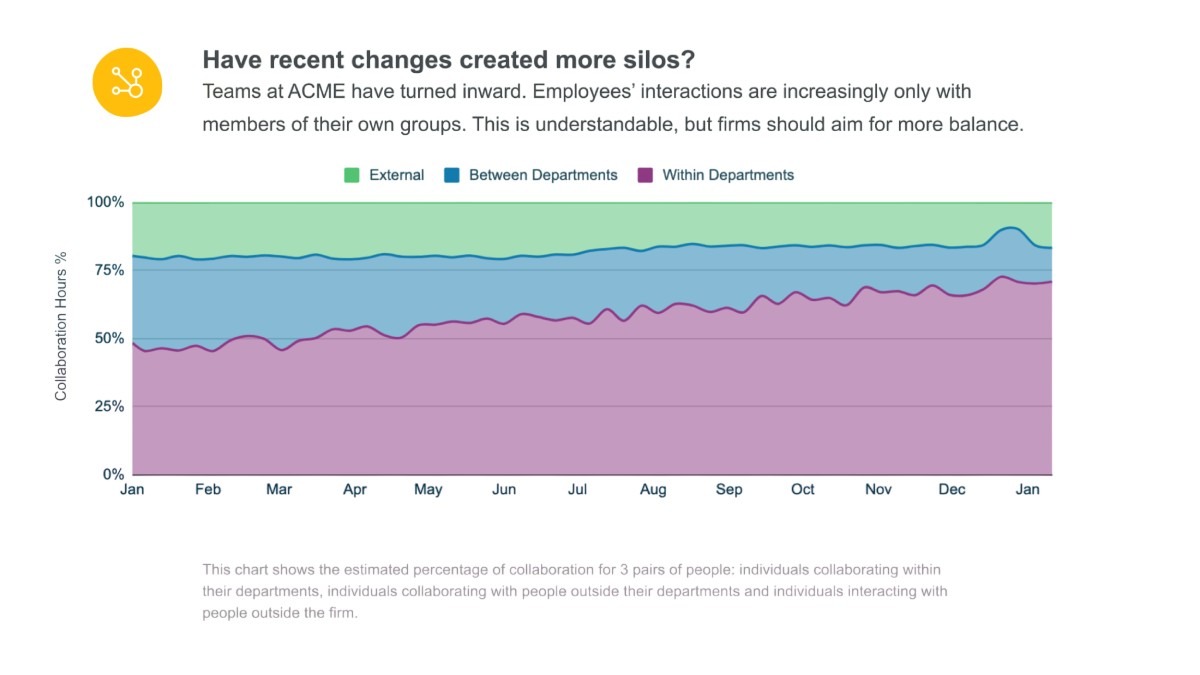
Tracking these patterns helps organizations identify collaboration gaps early. For example, when cross-team communication is limited, projects often slow down because teams lack access to the right expertise.
To strengthen collaboration, leaders can introduce initiatives such as:
These actions improve information flow, reduce organizational silos, and help teams coordinate work more effectively. When collaboration networks expand, teams can solve problems faster and deliver projects with greater efficiency.
Employee engagement often declines when teams operate remotely without strong communication and leadership support.
Common causes of disengagement in hybrid environments include:
Disengaged employees tend to participate less in collaboration activities and contribute fewer ideas.
Organizations can analyze behavioral patterns across communication and collaboration platforms to gain clearer insights into employee engagement. These patterns reveal how actively employees participate in team interactions and contribute to collaborative work.
Engagement indicators include:
Platforms such as Worklytics help surface these patterns by analyzing anonymized collaboration data across workplace tools. Because the insights are aggregated and privacy-focused, organizations can monitor engagement trends without tracking individual behavior.
With a clearer understanding of engagement levels, leaders can implement targeted strategies such as:
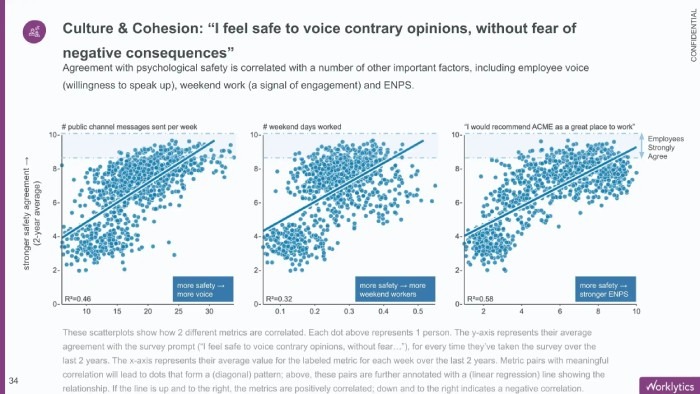
When engagement improves, productivity tends to increase as well because employees feel more connected to their work, their teams, and broader organizational goals.
Burnout is one of the most serious productivity challenges in modern workplaces.
Hybrid work has blurred the boundaries between work and personal life. Employees may feel pressure to remain online longer, respond quickly to messages, or attend meetings outside traditional working hours.
This leads to:
Burnout often develops gradually and may go unnoticed until it begins affecting performance and retention.
Worklytics identifies early burnout signals by analyzing workday intensity and collaboration patterns, enabling organizations to reduce turnover before it impacts the bottom line.
Key indicators include:
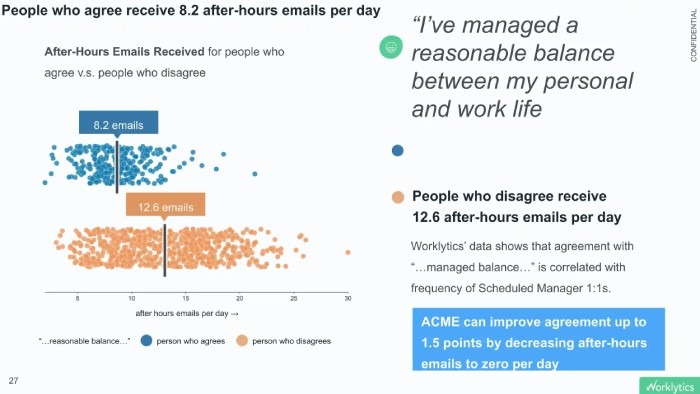
Workday intensity measures how much time employees spend performing digital work relative to the total span of their workday.
When these metrics exceed healthy levels, organizations can intervene early by adjusting workloads or improving collaboration practices.
These insights allow leaders to protect employee well-being while maintaining strong productivity.
Organizations that successfully address hybrid work productivity challenges follow a structured approach.
Organizations first collect baseline metrics on collaboration patterns, meeting load, and focus time.
Analytics reveal which teams experience excessive meetings, limited focus time, or weak collaboration networks.
Leaders introduce changes such as meeting optimization policies, improved manager communication practices, or asynchronous collaboration guidelines.
Worklytics dashboards allow organizations to measure how productivity metrics change over time and adjust strategies accordingly.
Because insights update in real time, organizations can quickly evaluate the impact of new policies and workflows.
The most common challenges include meeting overload, fragmented focus, weak leadership visibility, collaboration gaps, low employee engagement, and employee burnout.
Organizations can use workplace analytics platforms such as Worklytics to analyze collaboration patterns across workplace tools. This approach focuses on workflows rather than individual surveillance.
Excessive meetings reduce time available for focused work. Knowledge workers require long uninterrupted periods to solve problems and produce high-quality work.
Worklytics analyzes collaboration data such as one-on-one meeting frequency, cross-team interactions, and communication patterns to identify strong leadership behaviors and areas for improvement.
Yes. Metrics such as workday intensity, after-hours communication, and workload distribution can identify burnout risks early so organizations can intervene before productivity declines.
Hybrid work has created a new set of productivity challenges that organizations must address to remain competitive. Meeting overload, fragmented focus, leadership gaps, collaboration barriers, disengagement, and burnout all reduce organizational effectiveness when left unmanaged.
However, these challenges can be solved with data-driven insights.
Worklytics provides organizations with a comprehensive view of how work actually happens across digital collaboration tools. By analyzing meeting patterns, focus time, collaboration networks, engagement signals, and AI adoption, leaders gain the visibility needed to improve productivity without compromising employee trust.
In the hybrid workplace, productivity is no longer measured by time spent at a desk. It is measured by how effectively teams collaborate, focus, and innovate.
Organizations that leverage workplace analytics platforms like Worklytics will be better positioned to build healthier, more productive hybrid teams.