As AI technologies rapidly permeate the enterprise, achieving meaningful adoption – not just superficial implementation – has become a strategic priority. In 2024, global AI adoption in companies surged to 72% (up from 55% in 2023), reflecting growing enthusiasm.
Yet high adoption rates alone don’t progress if leadership isn’t actively steering how AI is used and scaled.
When leaders fail to model usage, set expectations, or communicate a clear purpose for AI, adoption stalls and skepticism grows. Conversely, when leaders actively demonstrate how AI fits into the company’s priorities and incorporate it into their own workflows, teams follow with greater confidence and consistency.
Leadership determines whether AI becomes embedded in daily operations or remains an unused feature. This article examines how leadership directly impacts AI adoption outcomes and what leaders must do to build an environment where AI delivers measurable organizational value.
Leadership plays a pivotal role in turning AI investments into real business improvements. It starts at the top: executives must set a clear vision for how AI fits into the company’s strategy and culture.
Executive sponsorship and proactive change management are consistently cited as key success factors in AI-driven transformations. When leaders visibly back an AI initiative – communicating the “why” and addressing concerns – it creates organizational momentum.
This includes transparent communication about data usage and privacy to build trust, and securing manager buy-in early so that mid-level leaders become champions rather than blockers.
Equally important is recognizing that AI adoption is a team sport, not a solo act. The most successful AI transformations use a distributed leadership model rather than relying on a single “AI leader”.
Put simply, AI adoption flourishes when leadership at every level models the change – from the C-suite to frontline supervisors. Leaders need to lead by example, using AI tools in their own workflows and decisions. If a chief marketing officer experiments with AI-driven analytics, or a sales manager uses an AI assistant for forecasting, it signals to their teams that these technologies are valuable and acceptable to use. Leadership involvement isn’t just about sponsorship; it’s about personal participation and advocacy at all levels.
To reap value from AI, leadership must actively drive and nurture the change. It’s no coincidence that organizations seeing the greatest benefits from AI have engaged senior leaders.
Conversely, without strong leadership support, even the best AI tools can languish. Frontline employees take cues from their leaders. Research confirms that employees are 2.5× more likely to use AI at work when their leaders actively support and encourage it. Leadership involvement builds the trust and excitement needed for staff to embrace new AI-driven workflows. If leaders stay on the sidelines, adoption often stalls in the trenches.
Effective leadership in AI adoption is not just about cheerleading from the C-suite – it’s about tangible actions that address culture, skills, and mindset. Many executives underestimate how much guidance their workforce needs. For example, 83% of executives surveyed believed they communicated a clear AI vision, yet only 37% of frontline employees felt the message was getting through. This gap highlights that leaders must go beyond announcements and actively engage with teams throughout the AI adoption journey.
Defining metrics is only half the battle. Leadership’s real impact is in acting on these insights and cultivating an environment where AI-powered innovation thrives. Here are concrete ways leaders can drive successful AI integration:
Leaders must demonstrate the behaviors they expect from teams. When managers actively use AI tools in their work, it signals confidence and drives higher adoption. Visible leadership engagement reduces resistance and sets expectations. Share concrete success stories to normalize AI use, and involve key managers early so they can advocate for the initiative. Managerial commitment often determines whether AI adoption scales or stalls.
Culture is a primary determinant of AI success.Leaders should promote learning, experimentation, and openness to failure. Reinforce that AI augments work rather than replaces jobs to prevent fear-based resistance. Create psychological safety by allowing low-risk experimentation and recognizing innovative uses of AI. When adoption gaps appear, address them directly by identifying obstacles and sharing best practices across teams. Treat adoption challenges as opportunities for improvement, not failures.
Effective AI adoption requires clear investment in employee skills and structured change management. Provide training, coaching, and resources that build confidence, whether through formal programs or internal mentorship. Establish mechanisms such as AI ambassadors or cross-functional committees to capture feedback and resolve issues. Communicate transparently about the purpose of AI deployments, evolving roles, and data policies. Reinforcing privacy and ethical standards builds trust and increases willingness to adopt new tools.Align AI with Business Goals and Track Impact
AI initiatives must tie directly to defined business objectives. Set clear goals and KPIs for each AI project to measure performance and guide decisions. Integrating AI initiatives with existing systems, such as greenhouse integrations, ensures hiring data, workflows, and performance metrics stay connected and measurable across the organization. Regularly review outcomes and adjust or discontinue projects that do not deliver value. When AI produces measurable gains, communicate these results to reinforce organizational momentum. Treat AI projects with the same strategic rigor as any major business investment to ensure meaningful, sustained impact.
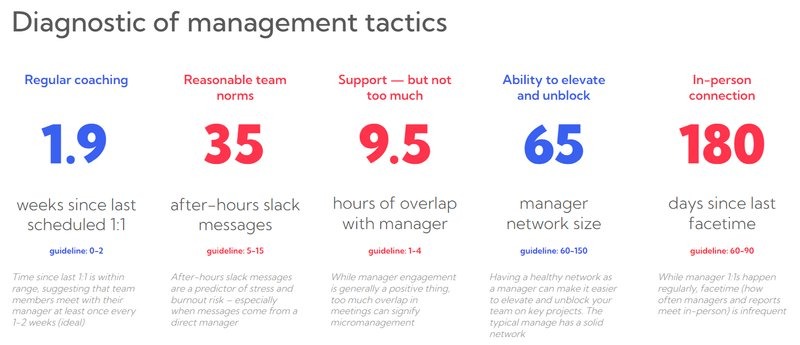
Manager engagement with team members
Worklytics analyzes calendar events, meeting metadata, and collaboration patterns to quantify how often managers interact with their direct reports. It identifies whether managers are providing adequate touchpoints, support, and visibility, revealing teams that may be operating with limited leadership guidance.

Quality and frequency of 1:1 interactions
By detecting recurring 1:1 meetings and their cadence, Worklytics highlights whether managers maintain the foundational routines expected in high-performing teams. Low or inconsistent 1:1s flag potential issues in communication, alignment, or employee development.
Cross-functional collaboration visibility
Through analysis of collaboration networks, Worklytics maps who a manager and their team interact with across the organization. This reveals whether a team is siloed, overly dependent on a single group, or successfully engaging with key stakeholders required for healthy organizational flow.
Manager benchmarking and cohort comparison
Leaders can compare managers across teams, departments, or job functions using standardized behavior metrics. Worklytics identifies standout leaders, norms within high-performing cohorts, and managers who may need targeted coaching.
Organization-wide AI usage detection
Worklytics integrates with AI-enabled tools (Copilot, ChatGPT Enterprise, Google Workspace AI, GitHub Copilot) to detect when employees use AI features, how often, and within which workflows. It provides a detailed breakdown by department, role type, and team structure.
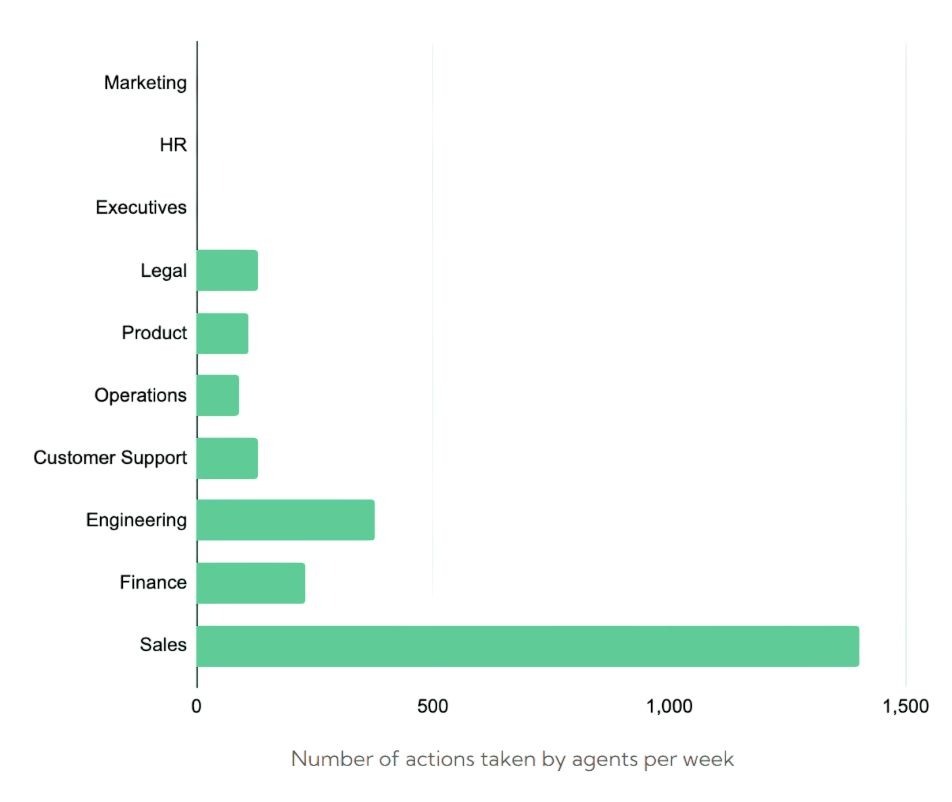
AI adoption trendline monitoring
Worklytics tracks the progression of AI adoption week over week or month over month. Leaders can measure the impact of training programs, tool rollouts, or policy changes by observing whether usage spikes, stagnates, or declines.
Correlation between AI usage and performance outcomes
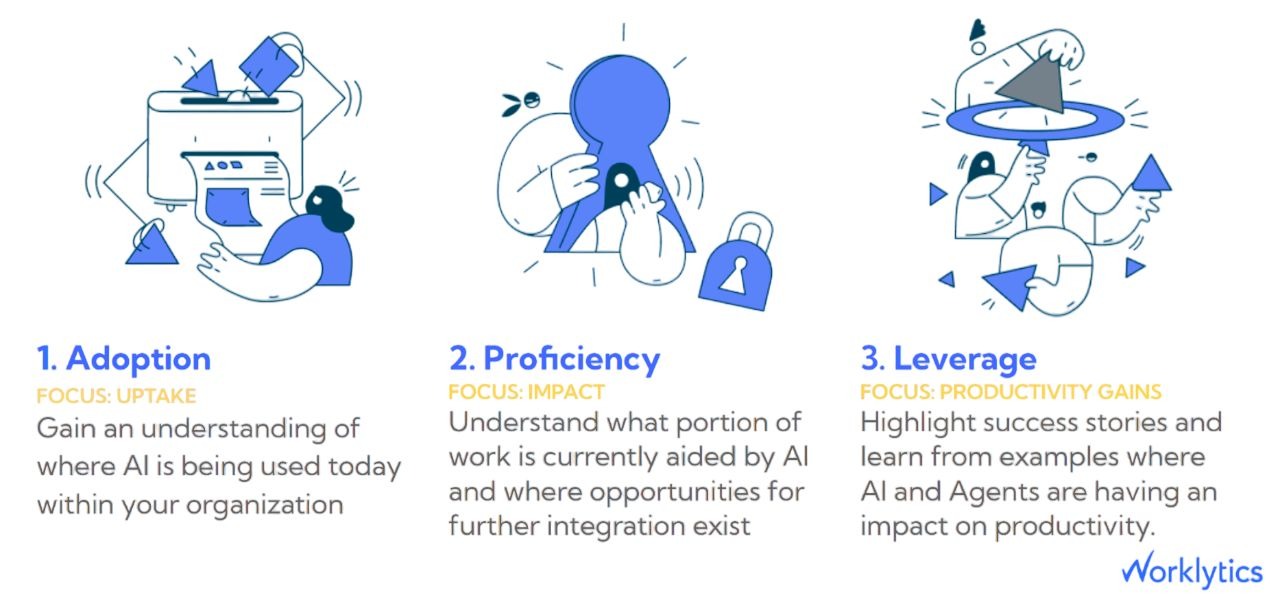
By combining AI-usage data with collaboration, productivity, and workload metrics, Worklytics shows whether AI adoption is leading to faster output, improved efficiency, reduced workload, or decreased meeting time. This helps quantify ROI and identify the strongest use cases.
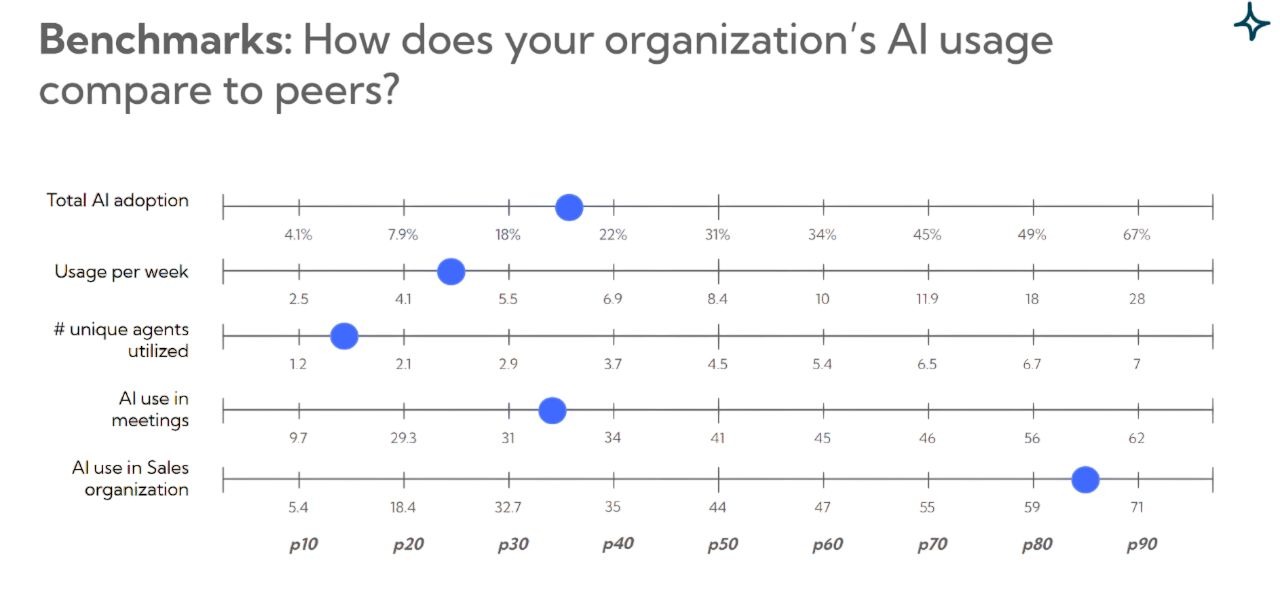
Adoption benchmarking across teams, roles, and locations
Worklytics allows leaders to compare AI engagement across job families (engineering, sales, HR), geographic regions, business units, or tenure cohorts. This reveals adoption patterns that inform training strategy and resource allocation.
Ready to lead your organization’s AI adoption to new heights? Worklytics can equip you with the data and tools to make it happen. Learn more about Worklytics’ leadership analytics solutions and book a demo to see how real-time insights can empower your AI adoption