TL;DR:
Productivity is essentially the ratio of outputs to inputs – how much value your organization produces for each unit of resource (labor hours, capital, etc.) invested.
This is distinct from “efficiency,” which is about minimizing inputs; productivity is about maximizing output with given resources.
For a company, higher labor productivity directly boosts performance and growth.
Equally important, measuring productivity highlights where your organization might be lagging.
Moreover, today’s work environment makes traditional productivity cues less relevant. Leaders can no longer rely on passive face-time as a proxy for output – and they shouldn’t.
In fact, obsessing over old-school metrics like hours online has led to what Microsoft researchers dubbed “productivity paranoia,” where managers fear remote employees are slacking, often prompting invasive monitoring.
There is no single silver-bullet metric for enterprise productivity. Instead, leading organizations track a portfolio of metrics that, together, capture how well the business is using its time and resources. The exact KPIs may vary by industry and company, but below are some of the most common and useful productivity metrics:
Tip: Pick metrics that align with your business model and goals. For example, a software company might monitor deployment frequency or tickets resolved per engineer, whereas a manufacturing firm will focus on units produced per hour and machine downtime. Avoid vanity metrics that don’t correlate with real results. It’s better to track a few meaningful KPIs than to overload on dozens of stats no one can act on.
While measuring productivity is essential, measuring the wrong way can be counterproductive. Here are some pitfalls to avoid:
By avoiding these pitfalls and using productivity metrics thoughtfully, you can foster a culture of continuous improvement. The goal is to illuminate opportunities to work smarter, not to micromanage or reduce people to numbers. Productivity measurement should be about enabling success, not instilling paranoia.
Measuring enterprise productivity requires visibility into how work actually happens across teams, tools, and time. Worklytics is designed to provide that visibility by translating everyday work activity into objective, organization-wide productivity insights.
Worklytics integrates directly with the systems enterprises rely on to operate, including collaboration, calendar, engineering, and project management platforms. Rather than treating each tool as a silo, Worklytics aggregates activity data across the work environment to measure productivity consistently across teams and functions. For large organizations, consolidating information from collaboration platforms, HR systems, project management tools, and business applications often requires a well-designed analytics foundation. Data warehouse consulting helps enterprises build centralized, governed data environments that unify information from multiple sources, improving data quality and enabling more accurate productivity reporting, benchmarking, and organization-wide decision-making.
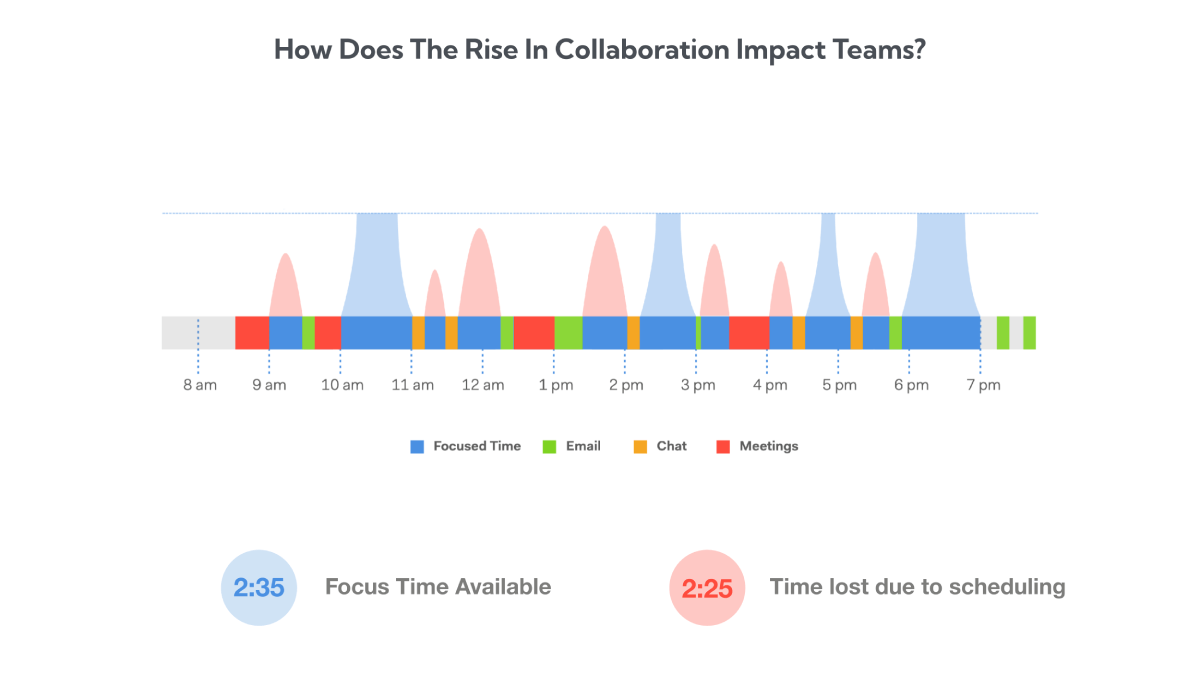
This cross-tool approach allows organizations to understand how time is distributed between focused work, collaboration, meetings, and coordination. Leaders can identify where productivity is constrained by structural issues such as excessive meetings, fragmented workflows, or inefficient collaboration patterns. By measuring productivity across the full system of work, Worklytics supports enterprise-level analysis rather than isolated team snapshots. We’ve found that connecting scheduling, customer records, job history, and ERP software helps technicians access the right information before they even reach the site.
A core feature of Worklytics is its ability to quantify how employee time is allocated across different modes of work. The platform measures indicators such as focus time, meeting load, collaboration intensity, and responsiveness. These signals help organizations assess whether employees have sufficient uninterrupted time to execute core work and whether collaboration is enabling or hindering productivity.

By analyzing these patterns over time, Worklytics enables organizations to detect trends that directly affect enterprise productivity, including growing meeting overhead, increasing after-hours work, or declining execution capacity. These insights allow leaders to intervene at the process or policy level, where productivity gains are most sustainable.
Worklytics enables benchmarking across teams, departments, and time periods, providing a clear view of productivity distribution within the organization. Leaders can identify which operating models support higher output and which introduce friction.
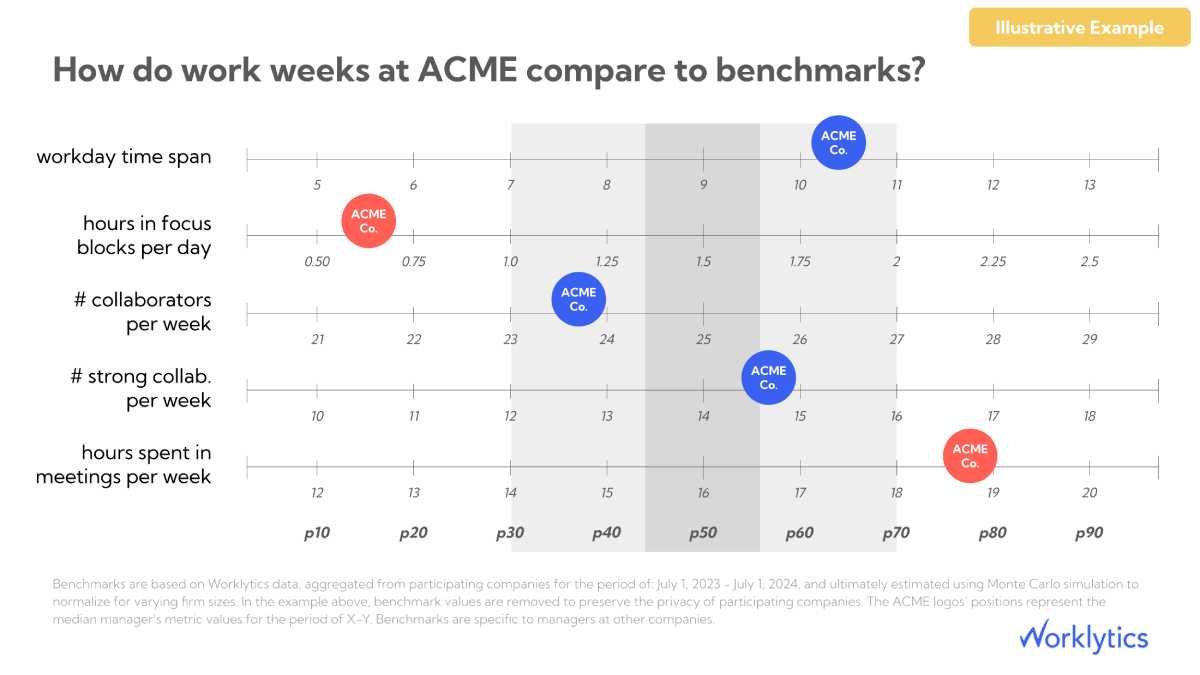
Trend analysis allows organizations to track whether productivity is improving or degrading as the business scales, restructures, or adopts new tools. This longitudinal view is critical for enterprise productivity, where changes often take months to materialize and cannot be evaluated through short-term output alone.
Worklytics is built with enterprise privacy requirements as a foundational principle. All productivity data is aggregated and anonymized, with no individual-level reporting and no access to message or document content. Only metadata is analyzed to understand work patterns at scale.
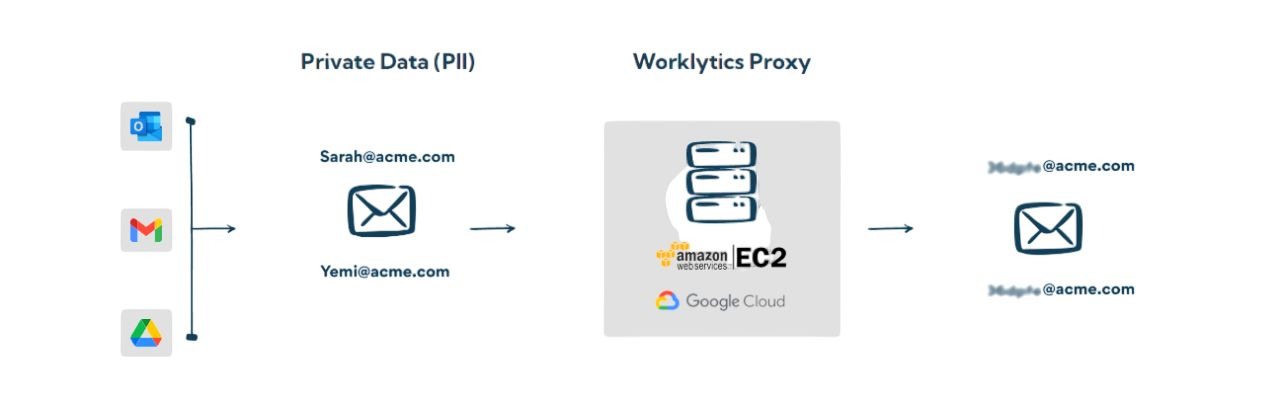
This design ensures that productivity measurement remains focused on systems and workflows rather than individual surveillance. As a result, organizations can deploy productivity analytics broadly without eroding trust or introducing compliance risk. Worklytics supports major enterprise privacy and data protection standards, making it suitable for global organizations.
Worklytics is not limited to reporting metrics. Its dashboards are designed to support decision-making by connecting productivity patterns to organizational outcomes. Leaders can evaluate the impact of operational changes such as meeting policy adjustments, tooling consolidation, or workload rebalancing, and observe how productivity responds.

This creates a continuous improvement loop where productivity is actively managed rather than periodically reviewed. Instead of relying on intuition or anecdotal feedback, organizations can use Worklytics data to make targeted, evidence-based changes that improve enterprise productivity over time.
Worklytics enables organizations to measure enterprise productivity where it actually lives: in how work flows across teams, tools, and time. By focusing on execution capacity, collaboration efficiency, and focus preservation, the platform provides a practical foundation for improving productivity at scale.
Rather than measuring effort or monitoring individuals, Worklytics equips enterprises with the data needed to optimize how work gets done, sustainably and responsibly.
Interested in leveraging Worklytics? The platform can be up and running quickly by integrating with your existing cloud apps, and its privacy-protected analytics ensure you get insights without compromising trust. In an era where insight beats intuition, Worklytics provides the visibility you need to drive productivity to new heights.
Q: What is enterprise productivity and why does it matter?
A: Enterprise productivity measures how effectively an organization converts labor and resources into business output. It directly impacts profitability, scalability, and operational efficiency. Without measurement, inefficiencies compound and performance erodes. Organizations that actively measure productivity consistently outperform those that do not.
Q: What metrics should be used to measure enterprise productivity?
A: Productivity should be measured using a balanced set of metrics that cover output per employee, execution speed, quality of work, and workforce utilization. No single metric is sufficient. Together, these indicators reveal whether work is efficient, effective, and sustainable.
Q: How should productivity be measured for knowledge workers?
A: Knowledge work should be measured through outcome-based indicators rather than activity. Relevant metrics include completed deliverables, progress against objectives, quality of output, and business impact. Proxy metrics are acceptable when they clearly correlate with results.
Q: Is tracking hours or employee activity an effective productivity measure?
A: No. Time-based or activity-based tracking does not measure productivity and often distorts behavior. Productivity should be evaluated through results and outcomes, not presence or visible effort. Excessive monitoring undermines trust and does not improve performance.
Q: How is Worklytics different from traditional productivity tools?
A: Worklytics measures productivity at the system and team level, not the individual level. It aggregates and anonymizes data, analyzes work patterns rather than content, and delivers actionable insights without employee surveillance. This approach enables productivity improvement while preserving privacy and trust.