Artificial intelligence is changing the way organizations operate, but every company moves at a different pace when learning how to use it. This progression is often visualized through the AI learning curve, a graph that represents how quickly an organization develops its understanding, skills, and effective use of AI over time.
Accelerating this curve creates significant advantages. Teams can incorporate AI into daily work sooner, leaders gain insight more quickly, and the entire organization becomes better equipped to innovate and respond to change. Companies that climb the AI learning curve faster unlock more value and gain a clear competitive edge over those that fall behind.
Early movers in AI are already reaping outsized benefits. Industry research shows that organizations proficient in AI – those that master fast adoption – are setting “the new rules” of their industries.
By 2028, companies with an AI-first strategy are projected to achieve 25% better business outcomes than peers, as this approach accelerates AI adoption and fosters continuous learning across the organization. The window between an AI capability being a competitive advantage and it becoming merely competitive necessity is shrinking dramatically. In short, the longer your company takes to climb the AI learning curve, the harder it will be to catch up later.
Delaying AI adoption has tangible costs. Despite heavy investments in AI, three-quarters of companies have yet to see real value from these initiatives.
Many pilots never scale, and promised efficiencies go unrealized.
Without decisive action, laggards risk falling significantly behind more AI-proficient competitors. Why is this happening? According to Boston Consulting Group, roughly 70% of AI implementation challenges stem from human factors – things like skills, culture, and processes – rather than technology itself.
In other words, adopting AI is not just a tech upgrade; it’s an organizational change. Companies that fail to address the people side of the AI learning curve will continue to struggle to unlock value, no matter how advanced the algorithms they deploy.
Implementing AI at scale often runs into organizational headwinds. One major barrier is cultural resistance or fear among employees and middle management.
Studies indicate that about 52% of workers who use AI do so quietly – they are reluctant to admit using AI for important tasks, fearing it might be seen as “cheating” or make them look replaceable.
Indeed, 53% worry that using AI at work could signal their job might be automated. This stigma can discourage broader AI uptake. If the prevailing attitude is that AI usage is something to hide or be ashamed of, people will be slow to learn and incorporate these tools into their daily work.
Another common obstacle is the lack of clarity and support from the organization. In many companies, early AI adopters operate in a gray area without clear guidelines. Employees might ask: Is it okay to use ChatGPT to draft a client email? What data am I allowed to input? Uncertainty around AI policies and best practices will paralyze progress. Similarly, if employees don’t have access to approved AI tools, they may resort to unsanctioned apps.
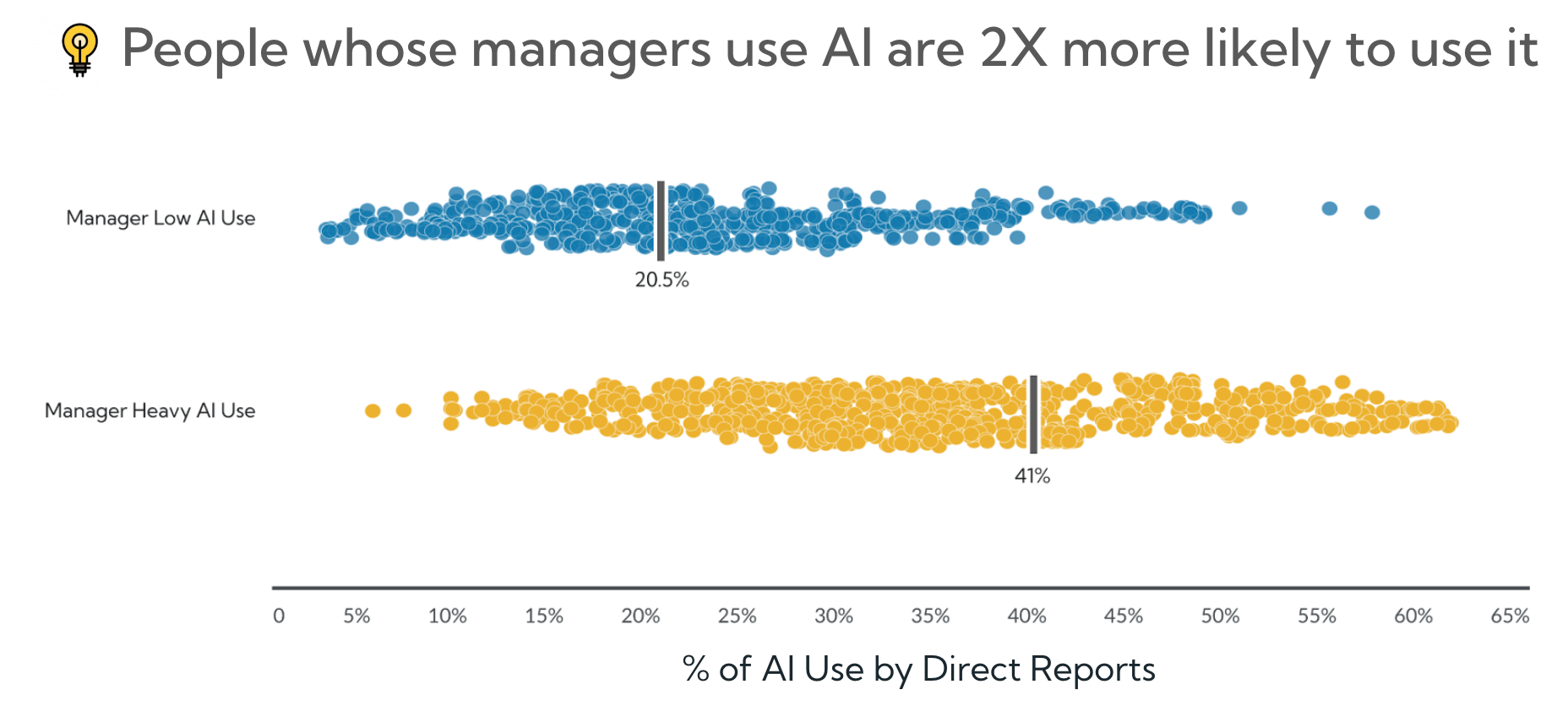
Middle managers can be another sticking point. Often, the “frozen middle” is hesitant to change tried-and-true workflows in favor of unfamiliar AI processes. They are busy, under pressure to deliver results, and a new technology’s learning curve can feel daunting.
Without support and incentives, managers may stick to old methods – inadvertently sending the signal to their teams that AI isn’t a priority. This resistance can bottleneck AI adoption even when front-line employees are eager to innovate. Bridging this gap requires strong leadership from the top and a concerted effort to change mindsets at all levels.
Accelerating your organization’s AI proficiency is fundamentally about cultivating a learning organization. It involves cultural change, capability building, and continuous adaptation. Here are key strategies executives can employ to overcome barriers and hasten AI learning across the enterprise:
Transforming into an AI-smart company starts at the top. Executives must champion AI usage as a strategic priority and communicate a clear vision that AI augmentation can improve operational efficiency. This means explicitly framing AI as a tool to empower employees and not replace them
For example, Shopify’s leadership has gone so far as to integrate AI proficiency into performance reviews, holding employees accountable for how effectively they use AI in their workflows. Such steps send a powerful signal that using AI is expected, not optional, and that the company rewards those who embrace new tools.
To accelerate the AI learning curve, give teams room to experiment with AI solutions in their day-to-day tasks without fear of reprisal if something goes wrong.
Encourage a “gardener’s mindset” by nurturing the early AI initiatives already emerging within your organization. Often, your employees are already finding clever ways to use tools like chatbots or code generators to simplify their work. Identify these early adopters and support them.
Empower your AI enthusiasts (those “power users”) to share their successes and tips with others. This could be through internal demo days, AI fairs, or a simple Slack channel where people post AI hacks and prompt ideas.
Employees should feel that using AI is a creative, collaborative endeavor – and that management celebrates smart failures as learning opportunities. The companies that accelerate AI tend to “experiment better” than others by running many quick, controlled trials and sharing what they learn from each. In short, make experimentation part of the job. Over time, this builds organizational muscle memory for evaluating and integrating new AI capabilities.
AI skills are becoming basic workplace skills. Treat training as an ongoing investment. Give everyone a clear understanding of how AI tools work and where they’re useful. Then offer role-based training so each team can apply AI to their own tasks.
Encourage peer learning, too. Identify early adopters who can share what works for them. A quick demo from a colleague often accelerates learning more than a formal class.
Finally, make it clear that time spent learning AI is valued. Give employees space to improve their skills and let managers recognize that progress in their evaluations.
People follow what leadership rewards. Recognize teams that try new AI workflows, share what they learn, and deliver improvements. Highlight real success stories that show the impact of AI, even small ones. Social recognition often drives adoption more effectively than financial bonuses.
You can also run light, low-friction innovation challenges or AI days where employees present ideas or small prototypes.
Over time, add simple AI usage goals to team metrics. Keep them realistic and paired with support. The aim is to encourage progress, not pressure employees into forced use.
Adoption stalls when employees lack access to the right tools. Provide approved AI platforms so people don’t resort to unsecured workarounds. Make the setup fast. Long approval cycles kill momentum.
AI agents vary in strengths and features. Focus on finding the one that aligns best with your team and how your organization works.
Give clear and simple guidelines. Employees should know what data is safe to use, which tasks are encouraged, and which ones require caution.
Back this with responsive support. When someone hits a technical blocker, make help easy to access. Show that the organization is committed to enabling safe, confident AI use.
Track how teams are using AI: who uses it, how often, and for which tasks. Use these insights to spot slow adoption areas or training gaps. Organizations that monitor usage data see faster improvement because they know where to intervene.
Ask employees what’s working and what’s not. Regular feedback will show whether training, tools, and policies are helping. Tie adoption back to outcomes like productivity or quality so teams see the real value.
Treat AI adoption as an evolving process. Keep what works, simplify what doesn’t, and let data guide your next steps.
Accelerating the AI learning curve in your organization is no longer a luxury – it’s a necessity for staying competitive and innovative. It requires a blend of visionary leadership, supportive culture, skill-building, and iterative improvement. The most successful organizations will be those that transform into learning organizations, where experimenting with AI and upskilling is part of the company DNA. As an executive, you have the opportunity to set this tone from the top and equip your people with the mindset and tools they need to thrive in an AI-powered world.
Most organizations struggle to answer basic questions about AI use: Who is using AI, how often, for what work, and whether it is making a difference. Worklytics gives you concrete answers.
By connecting to the tools your teams already use, such as communication platforms, collaboration systems, AI assistants, and coding copilots, Worklytics builds a real-time view of AI adoption across every department. You will see which teams are embracing AI and which ones are lagging, allowing you to target coaching, training, and enablement where it will matter most.
Worklytics does not rely on self-reported surveys or anecdotes. It measures actual work patterns, giving leaders a reliable baseline for AI maturity and progress.
Worklytics turns AI usage data into clear dashboards designed for executives. You can monitor trends, track adoption goals, and visualize how your organization is progressing week by week.
Whether it is understanding how often your marketing team uses AI content tools, seeing adoption spikes after a new training initiative, or identifying offices with low engagement, Worklytics makes insights immediately visible. Leaders no longer need to guess whether AI programs are working. They can see it in real time.
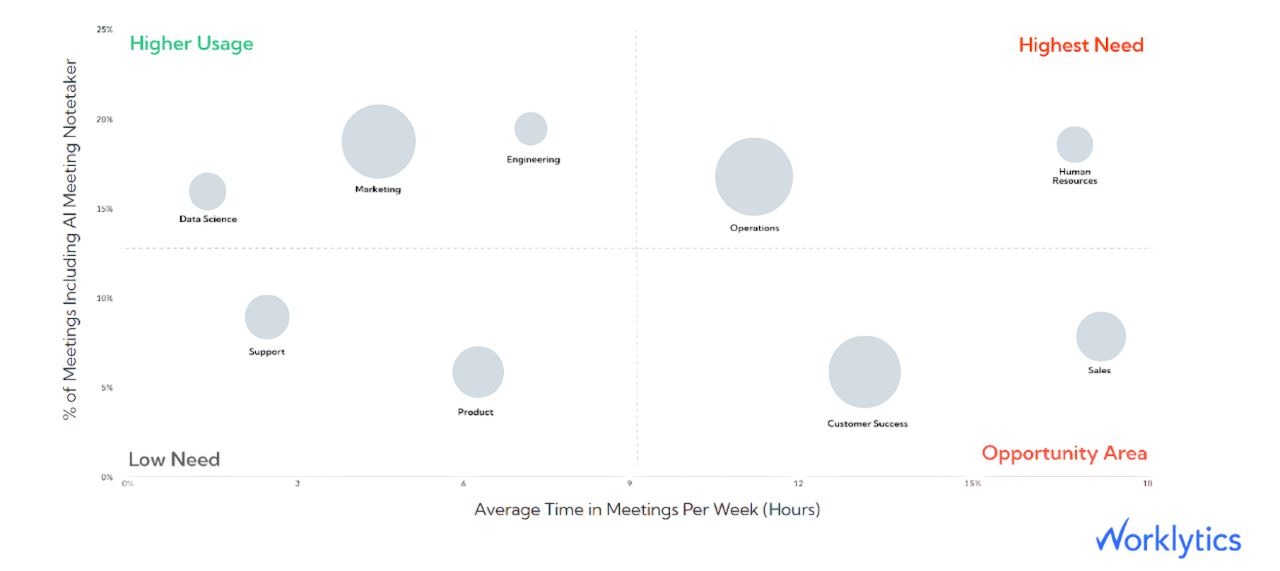
AI adoption is not only about averages. Worklytics highlights your AI power users, the individuals and teams getting exceptional value from AI.
Spotting these people is crucial. They often become internal champions who teach others, test new workflows, and accelerate adoption across the organization. With Worklytics, you can recognize them, learn from their patterns, and scale their practices across the workforce.
This not only improves skill levels but also reinforces a culture where AI fluency is celebrated and rewarded.
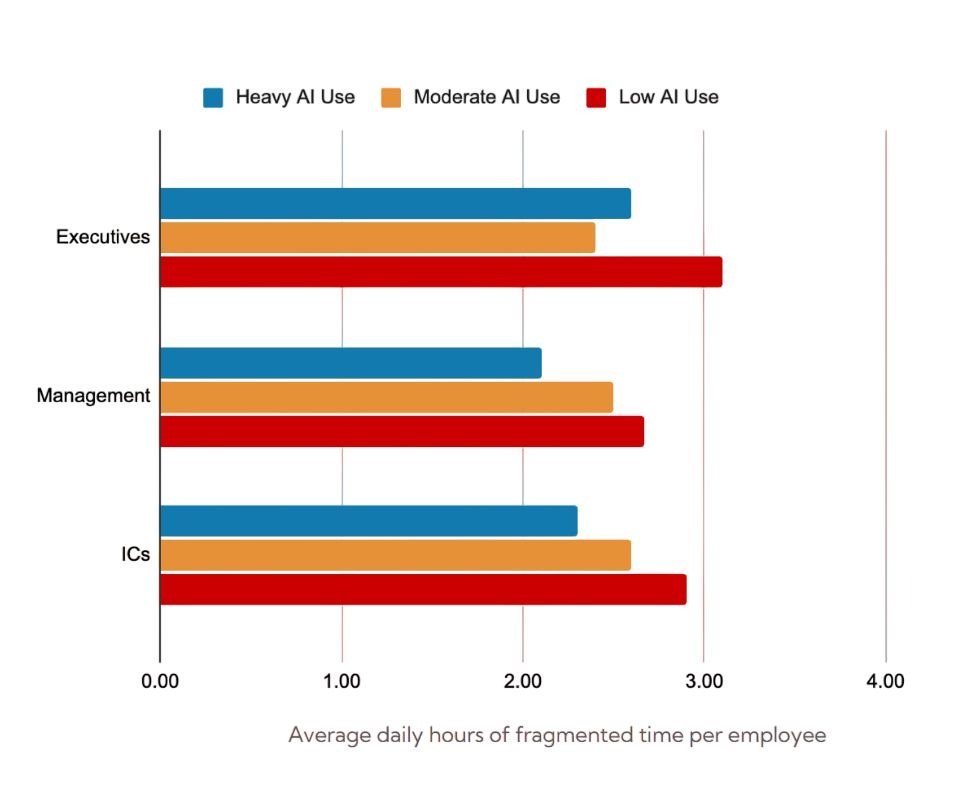
One of the biggest challenges in AI transformation is proving ROI. Worklytics solves this by showing how AI usage correlates with actual work outcomes.
You can answer questions such as:
By connecting AI usage with productivity indicators, Worklytics reveals the real impact of your AI investments. Leaders get evidence, not assumptions, to guide strategy and justify future investment.
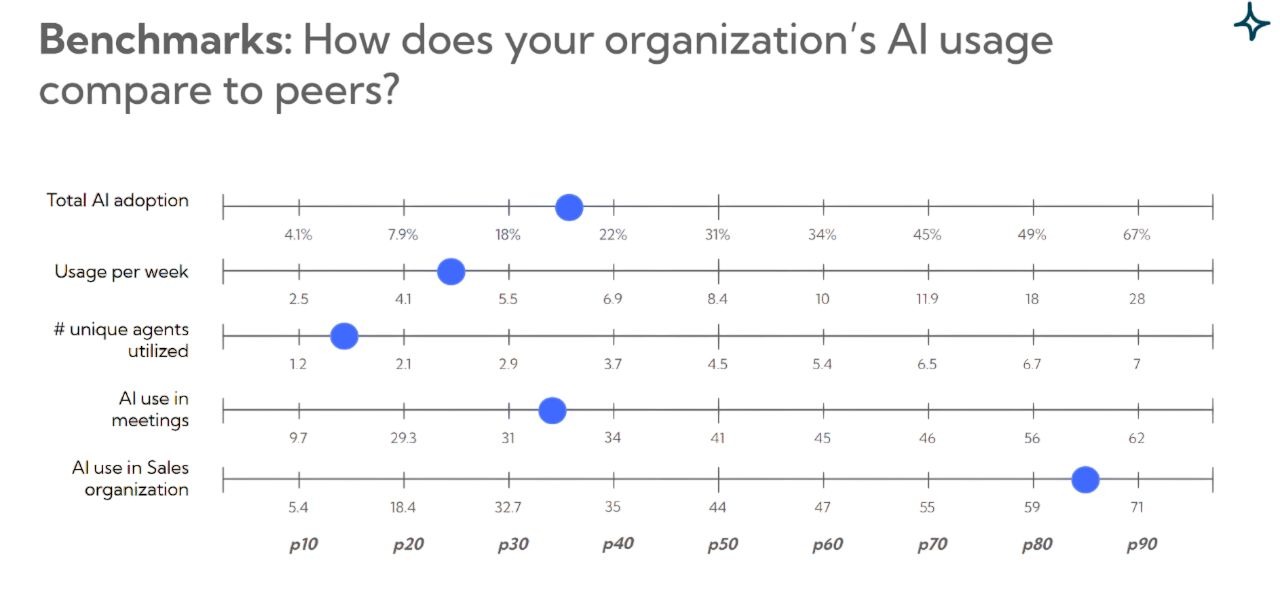
Worklytics also gives you context. Its AI adoption benchmarks let you compare your progress with peer organizations. Are you leading the pack, falling behind, or gaining ground
Benchmarking helps set realistic targets and ensures you are not operating in a vacuum. It turns AI maturity into a measurable strategic position that you can improve quarter by quarter.
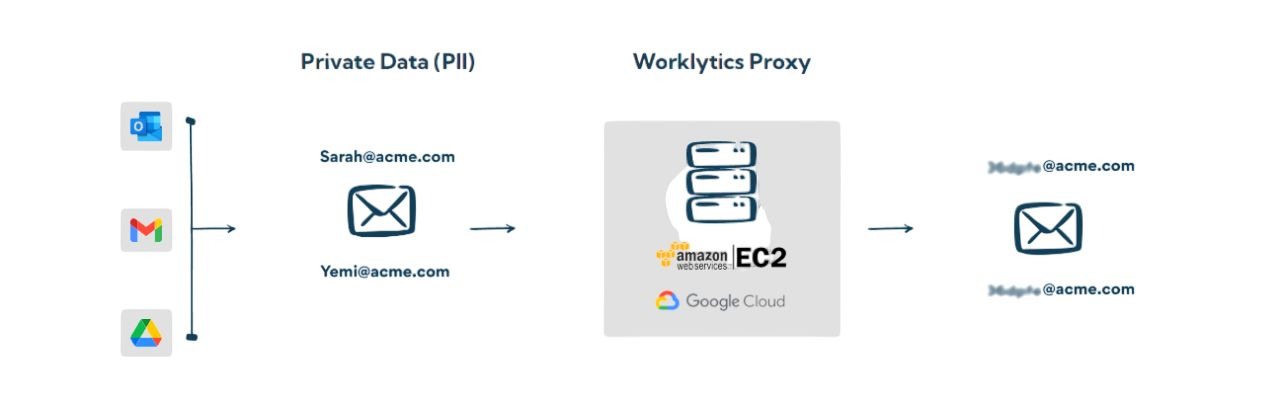
Monitoring AI usage can be sensitive. Worklytics is built with privacy and ethical analytics at its core. It applies strong anonymization and aggregation practices so leaders get the insights they need while employees maintain trust.
This balance is essential. Adoption grows fastest when employees feel supported, not supervised.
Worklytics becomes the compass for your AI journey. It reveals where adoption thrives, where it stalls, and where leadership intervention is needed. When paired with strong training, culture, and leadership initiatives, Worklytics creates a continuous cycle of improvement:
insight → action → improvement → validation → scale
This is how organizations become true AI leaders.
The AI revolution is already reshaping how work gets done. The organizations that win will be those that learn faster, experiment boldly, and measure relentlessly. With Worklytics, you can turn AI ambition into measurable progress and real performance gains.
Your AI transformation will only accelerate if you can measure how your teams actually use AI, where proficiency is growing, and where support is needed. Worklytics gives you the visibility to turn training and cultural initiatives into real performance gains. See the data behind your AI adoption and request a Worklytics demo today.