Google’s Work Insights (often dubbed Google Workspace™ Insights) was a reporting tool that provided data-driven analytics on Google Workspace™ adoption and work patterns within organizations.
It enabled enterprise administrators to gauge how teams were using apps like Gmail, Drive, Meet, and more, highlighting metrics such as time spent in meetings and cross-team collaboration trends. Crucially, Work Insights maintained user privacy by only showing aggregated data (requiring a minimum of 10 users per report) and never exposing individual activities. This made it a popular solution for large organizations to monitor digital transformation and collaboration without infringing on personal privacy.
As of 2024, many Google Workspace™ customers have discovered that Work Insights is being deprecated. Administrators reported that key dashboards disappeared, and Google sent notices advising to "review WorkInsights usage and upcoming changes".
In other words, Google has quietly decided to retire the Work Insights tool. This deprecation leaves enterprise IT and people analytics teams seeking alternative ways to obtain similar insights into how their workforces use Google Workspace™.
Fortunately, there are several alternatives to Google Work Insights that can help organizations of all sizes continue to gain visibility into how work gets done. These alternatives range from built-in Google Workspace™ admin reports to dedicated third-party platforms for workforce analytics. Below, we break down the best options and what each offers.
The deprecation of Work Insights has opened the door to specialized people analytics and workforce productivity platforms. Platforms often fall under categories such as Workforce Analytics, People Analytics, or Organizational Network Analysis (ONA) tools. They expand on what Work Insights offered, often integrating data from multiple systems (not just Google Workspace™) and providing more sophisticated analysis and visualizations.
Key advantages of third-party platforms include:
Unlike Work Insights, which was limited to Google’s own apps, many analytics platforms can connect to a variety of systems. For example, a platform might combine Google Workspace™ data to provide a truly holistic view across Slack, Microsoft 365, Jira, and CRM systems. Modern solutions like this allow you to see patterns that would be missed if each tool is analyzed in isolation.
Third-party tools typically provide a richer set of metrics – not just active user counts, but things like network diagrams of collaboration, sentiment or focus measures, meeting quality indicators, response time metrics, and more. For instance, an ONA platform can map out which departments communicate frequently and which are siloed, or how much time teams spend in internal meetings versus with clients. These insights go beyond what Work Insights’ predefined charts offered.
Many of these platforms come with customizable dashboards, filters, and the ability to drill down into data. You can segment by department, geography, role, etc., and often tailor the KPIs to what matters for your organization (e.g. tracking the impact of a hybrid work policy on meeting lengths). This flexibility is useful for enterprise needs where one-size-fits-all reports may not be enough.
In evaluating any Workplace Insight alternative, consider the following:
The best solutions will score well on all these aspects, enabling you to continue driving decisions with data about your digital workplace, even in Work Insights’ absence.
As Google phases out Work Insights, enterprises need a solution that not only replaces the lost functionality but improves on it in ways that meaningfully impact organizational decision-making. Worklytics stands out as the strongest alternative because it replicates Work Insights’ visibility while expanding it with deeper analytics, cross-platform integration, and real-time operational intelligence. It is built for enterprise scale, designed for privacy by default, and delivers insights that support HR, IT, operations, and executive leadership.
Below are the core strengths that make Worklytics a comprehensive and future-proof replacement.
Worklytics integrates with over 25 enterprise applications, giving organizations a consolidated analytics environment that Work Insights could not offer. It captures activity signals from Gmail, Calendar, Drive, Meet, and Chat, and connects to tools outside the Google ecosystem, such as Slack, Microsoft 365, Zoom, Jira, GitHub, and other collaboration systems.
This breadth of integration gives enterprises a complete and accurate picture of how work happens across teams. Instead of reviewing fragmented datasets from separate tools, Worklytics centralizes the full digital footprint of collaboration. This allows leaders to identify patterns that would otherwise go unnoticed, such as cross-tool overload, redundant workflows, or gaps in communication across distributed teams.
While Google’s native reporting can lag in updates and lacks flexibility, Worklytics delivers real-time or near real-time data through interactive dashboards built for enterprise workloads. Leaders can immediately monitor shifts in meeting volume, response times, focus hours, or collaboration intensity without waiting for delayed reports.
Dashboards can be segmented by department, location, manager, tenure, or role. Thousands of users can be analyzed without performance issues, and manager-level scorecards can be generated automatically. This level of responsiveness enables organizations to address issues quickly, such as rising meeting pressure or diminishing collaboration between key teams.

Worklytics provides a ready-to-use library of more than 200 workforce metrics, covering areas that Work Insights only partially addressed. These include:

Because Worklytics automatically generates and updates these metrics, enterprises avoid the overhead of building models or queries manually. Organizations can immediately access insights that typically require dedicated analysts to produce.
Worklytics maintains strict privacy controls to ensure employee trust and regulatory compliance. It analyzes metadata only (timestamps, headers, meeting details, etc.) and never accesses the content of emails, documents, or messages.
Privacy features include:
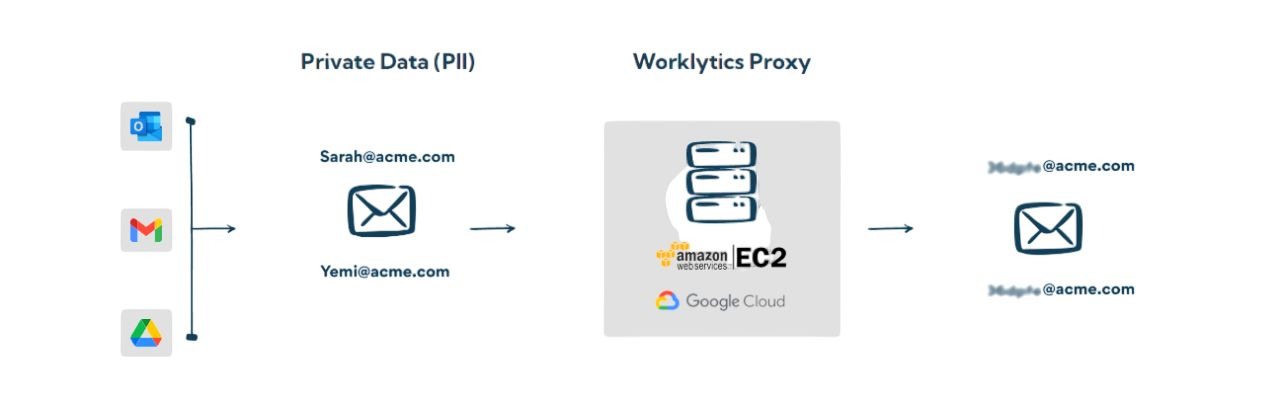
These safeguards allow enterprises to gain deep organizational insights while maintaining the confidentiality standards required at scale.
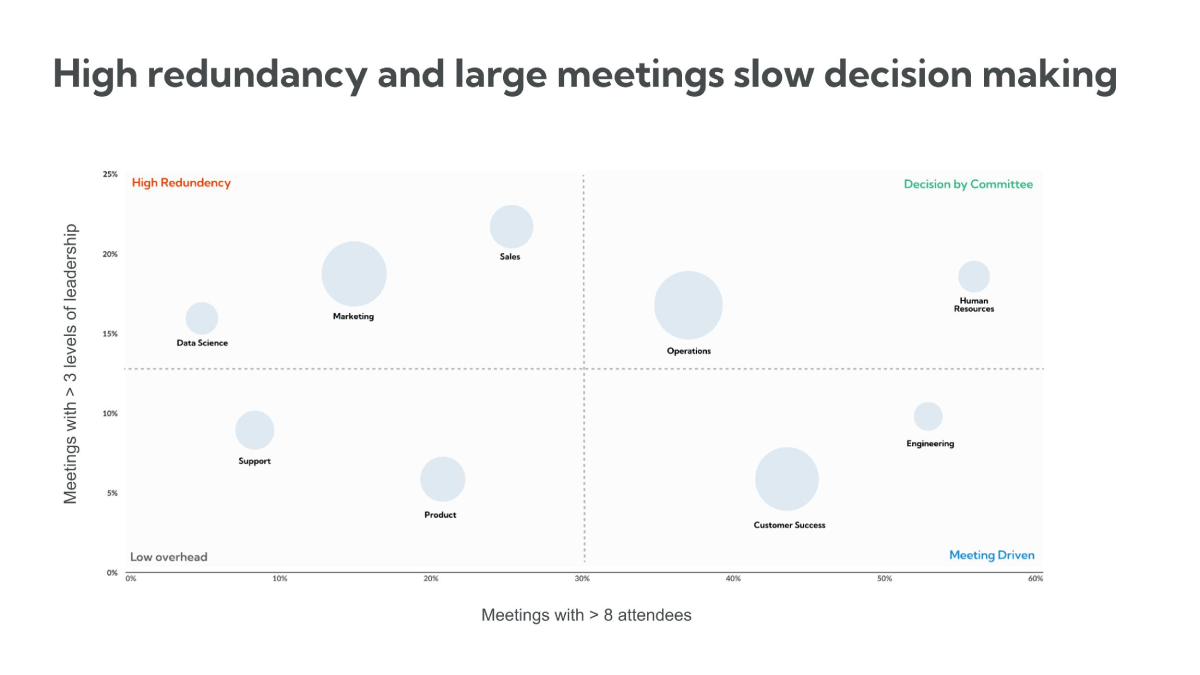
Worklytics goes beyond reporting. Its analytics engine surfaces conditions that materially affect performance, employee experience, and operational efficiency. It highlights:
These insights enable organizations to intervene early and align their teams more effectively. Many enterprises use Worklytics to guide hybrid work policies, improve meeting culture, strengthen cross-functional collaboration, and measure the impact of organizational changes over time.
Worklytics delivers immediate continuity for organizations losing Work Insights, but it also provides a more advanced foundation for long-term workforce analytics. Rather than combining multiple admin reports or building internal dashboards from scratch, enterprises get a platform that is secure, scalable, and already aligned with the complexity of modern collaboration data.
Its broad integrations, real-time visibility, deep metrics library, and strong privacy protections make it the most complete solution for organizations that depend on Google Workspace™ as a core part of their digital workplace. With Worklytics, enterprises can maintain the visibility that Work Insights once offered while
Worklytics is built to deliver immediate continuity and long-term analytical strength for enterprises that depend on Google Workspace™. Its deep integrations, extensive metrics library, and strong privacy controls provide a level of insight that Work Insights never reached. If your organization wants a complete understanding of collaboration, workload, and digital behavior, Worklytics is the most strategic path forward.
Start exploring Worklytics today and see how its privacy-safe analytics can help you unlock clearer, faster, and more actionable insights across your entire organization.