Recent privacy regulations including the EU AI Act, California's Assembly Bill 1221, and Colorado's algorithmic bias laws require organizations to track employee GenAI usage with robust compliance frameworks. With workforce GenAI adoption reaching 75% in 2024 and 69% of companies actively investing, organizations face fines up to 35 million euros without proper tracking systems that balance transparency with employee privacy.
• Global GenAI adoption surged from 22% to 75% between 2023-2024, creating unprecedented compliance challenges across multiple jurisdictions
• EU AI Act mandates employee training and transparency requirements starting February 2025, with violations carrying penalties up to 7% of global annual turnover
• 82% of leaders identify risk management as their biggest GenAI challenge, highlighting the gap between adoption speed and regulatory readiness
• Privacy-first dashboards using data anonymization and aggregation can be deployed within 30 days to track usage metrics without compromising individual privacy
• California and Colorado have introduced state-level AI regulations requiring 30-day advance notice, bias assessments, and restrictions on automated decision-making
New privacy policy changes across the EU, U.S. and Asia have thrust employee GenAI adoption tracking into the spotlight. By measuring how staff use generative-AI tools, HR and legal teams can stay ahead of enforcement while protecting worker trust.
The surge in workplace GenAI adoption has collided with an unprecedented wave of privacy regulations worldwide. Companies now face a critical challenge: how to track and manage employee AI usage while remaining compliant with evolving legal frameworks.
Consider the scale of change: AI adoption surged to 72% in 2024, up from 55% in 2023. Meanwhile, over 69% of companies are actively investing in GenAI or evaluating its workforce impact. This rapid adoption has caught regulators' attention.
The EY 2024 Work Reimagined Survey reveals workforce GenAI use has surged to 75%, up from 22% in 2023. Yet this explosive growth occurs against a backdrop of regulatory uncertainty. 82% of leaders now say this is a pivotal year to rethink key operational strategies, particularly around AI governance and compliance.
The disconnect between adoption speed and regulatory readiness creates a perfect storm. Organizations must now implement robust tracking mechanisms not just to optimize productivity, but to prove compliance when regulators come knocking.

The regulatory landscape for workplace AI has transformed dramatically, with multiple jurisdictions introducing stringent requirements that directly impact how organizations monitor and manage employee GenAI usage.
The European Union's AI Act, which took effect on August 1, 2024, represents the world's most comprehensive AI regulation. Starting February 2025, companies deploying AI systems for workforce management must comply with new obligations including mandatory employee training on AI fundamentals, applications, and risks.
In California, Assembly Bill 1221 proposes sweeping restrictions on workplace surveillance tools, requiring 30-day advance notice before implementation and banning facial recognition technologies entirely.
The Colorado AI Act has become the first state legislation specifically addressing algorithmic bias, imposing duties on developers and deployers of high-risk AI systems to avoid discrimination.
The stakes are substantial. Under Article 99, violations can result in fines up to 35 million euros or 7% of worldwide annual turnover, whichever is higher. In the U.S., the EEOC actively pursues cases against companies using discriminatory AI tools in employment decisions.
These regulations share common themes: transparency requirements, consent obligations, and strict limits on automated decision-making. Organizations must now maintain detailed records of AI tool deployment, usage patterns, and impact assessments to demonstrate compliance across multiple jurisdictions.
The rush to adopt GenAI without proper compliance frameworks exposes organizations to cascading risks that extend far beyond regulatory fines.
A KPMG survey reveals that 82% of leaders expect risk management to be their biggest GenAI challenge in 2025. This concern is justified. Many organizations have deployed AI tools without realizing they've created compliance blind spots. The phenomenon of "guerilla IT" - where employees use unauthorized tools without security guardrails - has proliferated as companies struggle to keep pace with demand.
The CFPB recently warned that companies using "black box" AI tools must follow Fair Credit Reporting Act rules. As CFPB Director Rohit Chopra stated: "Workers shouldn't be subject to unchecked surveillance or have their careers determined by opaque third-party reports without basic protections."
High-profile failures underscore the reputational risks. Amazon had to scrap an AI hiring tool that discriminated against women, illustrating how non-compliant AI can damage both brand reputation and employee trust.
The emotion AI market is expected to grow to nearly $450 billion by 2032, yet these technologies raise serious privacy concerns. When employees discover their emotions or productivity are being monitored without proper consent or safeguards, the resulting trust deficit can persist for years.
Non-compliance creates operational chaos when discovered. Organizations may need to halt AI deployments entirely, retrain systems, or rebuild processes from scratch. The cascading effect touches every department, from HR scrambling to update policies to IT racing to implement new security controls.
Demonstrating compliance requires specific, auditable metrics that prove your organization manages AI responsibly while respecting employee privacy.
Light vs. Heavy Usage Rate segments users based on AI intensity, helping identify departments or roles with elevated compliance risk. This metric proves you understand where AI impacts decision-making most significantly.
AI Adoption per Department reveals where AI is taking hold versus lagging. Regulators want evidence that high-risk areas like HR or finance receive appropriate oversight.
Context strengthens your compliance story. GitHub Copilot adoption has reached 1.3 million developers on paid plans across 50,000 organizations. Comparing your metrics against industry standards demonstrates due diligence.
The Perceptyx report shows that globally, 70% of employees say their organization has at least somewhat integrated GenAI into workflows, yet only 15% report full integration. Understanding where you fall on this spectrum helps calibrate compliance efforts.
The 2025 Work Trend Index introduces the concept of "human-agent ratio" - a new business metric optimizing the balance between human oversight and agent efficiency. This type of metric directly addresses regulatory concerns about automated decision-making.
Tracking these metrics requires sophisticated analytics that maintain privacy while providing actionable insights. Modern platforms aggregate anonymized activity signals to surface usage trends without compromising individual privacy.
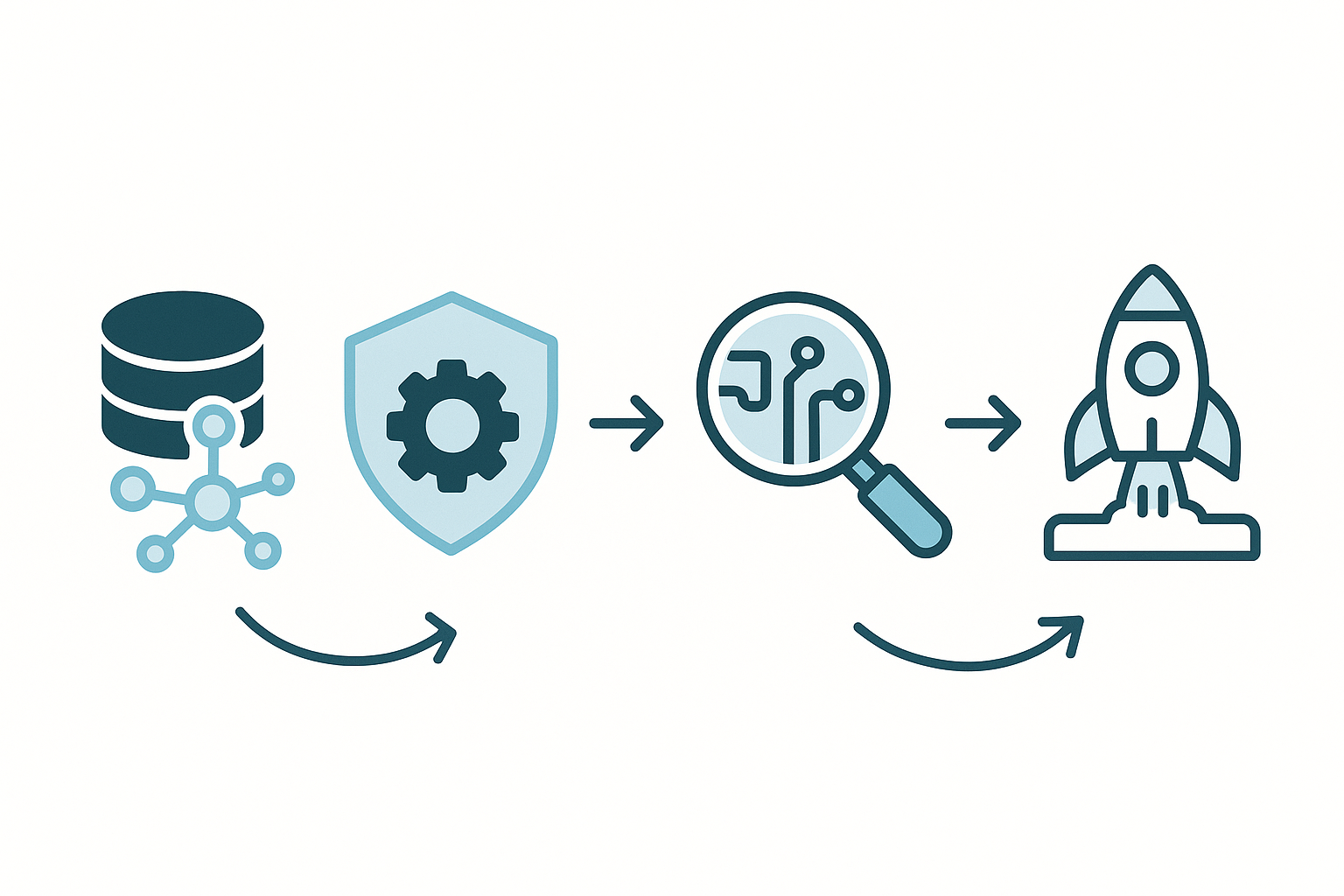
Creating a compliant GenAI tracking system doesn't require months of development. With the right approach, organizations can deploy privacy-first dashboards that satisfy both regulatory requirements and business needs.
Worklytics demonstrates how to balance insight generation with privacy protection through data anonymization and aggregation techniques. Start by conducting a comprehensive data mapping exercise to identify all GenAI touchpoints across your organization.
The emotion AI technologies market, expected to reach $450 billion by 2032, shows why privacy-preserving techniques matter. Implement pseudonymization to replace direct identifiers with coded references while maintaining analytical value.
Data minimization principles require limiting collection to what is "adequate, relevant, and necessary." Configure your dashboard to collect only essential metrics, avoiding the temptation to gather everything possible.
Key implementation steps include:
• Conducting a Data Mapping and Justification Exercise
• Integrating Privacy and Security by Design at the Edge
• Building Minimization Into Model Training and Outputs
Before going live, validate that your dashboard meets regulatory requirements. Ensure all data flows are documented, consent mechanisms are in place, and audit trails are comprehensive.
The dashboard should provide clear visibility into usage patterns while maintaining individual privacy. Aggregate data at team levels with minimum group sizes to prevent individual identification.
Sustaining compliance requires more than technology - it demands comprehensive governance frameworks and continuous employee education.
Taylor Wessing emphasizes that employers must ensure employees operating AI systems possess sufficient AI competence, as mandated by Article 4 of the AI Act.
The California Privacy Protection Agency has released new regulations requiring mandatory risk assessments for high-risk data processing activities and annual cybersecurity audits starting in 2028. These audits must be conducted by independent professionals and retained for at least five years.
Microsoft's approach offers a blueprint: they've launched 30 responsible AI tools with over 100 features supporting responsible development. As of December 31, 2023, 99% of their employees completed responsible AI training modules.
Microsoft's Frontier Governance Framework manages potential national security and public safety risks through continuous capability monitoring. This proactive approach helps organizations stay ahead of emerging risks.
Regular audits should assess not just technical compliance but also employee understanding and adoption of AI governance principles. Track completion rates, test comprehension, and gather feedback to refine your program continuously.
The convergence of explosive GenAI adoption and stringent privacy regulations has created an unprecedented compliance challenge. Organizations that fail to implement proper tracking and governance face substantial risks - from multi-million euro fines to irreparable trust damage.
Success requires a balanced approach: robust tracking systems that respect privacy, comprehensive governance frameworks that evolve with regulations, and continuous training that empowers employees to use AI responsibly.
Worklytics protects employee privacy through multiple layers of security and anonymization. Their privacy-first approach demonstrates that organizations can achieve deep insights into AI adoption patterns without compromising individual privacy or regulatory compliance.
The path forward is clear: implement privacy-first tracking, establish strong governance, and invest in continuous education. Organizations that master this balance will not only avoid regulatory pitfalls but also build the trust foundation necessary for sustainable AI transformation.
Key regulations include the European Union's AI Act, California's Assembly Bill 1221, and the Colorado AI Act, all of which impose strict requirements on AI usage and compliance.
Organizations can demonstrate compliance by tracking core usage metrics, comparing industry benchmarks, and implementing risk-based monitoring to ensure responsible AI management.
Non-compliance can lead to financial and legal exposure, reputational damage, and operational disruptions, as organizations may face fines and need to halt AI deployments.
Worklytics provides privacy-first analytics that help organizations track AI adoption while ensuring data is anonymized and aggregated to protect employee confidentiality.
Building a dashboard involves data mapping, implementing privacy by design, and testing to ensure compliance with regulatory requirements while maintaining user privacy.
2. https://my.idc.com/getdoc.jsp?containerId=US52489724
4. https://www.worklytics.co/tags/privacy-security
5. https://www.lexology.com/library/detail.aspx?g=f5fc1a17-970b-4b8b-b546-31c9b614d3d3
8. https://kpmg.com/kpmg-us/content/dam/kpmg/pdf/2025/kpmg-q1-2025-ai-pulse-survey.pdf
9. https://www.eprivacy.eu/en/privacy-seals/eprivacyseal-ai
11. https://datasociety.net/wp-content/uploads/2025/10/The-Privacy-Trap.pdf
12. https://worklytics.co/resources/privacy-compliant-dashboard-employee-ai-adoption-2025
13. https://go.perceptyx.com/generative-ai-report-web
16. https://www.shrm.org/advocacy/california-privacy-protection-agency-releases-new-ai-regulations
17. https://onlinelibrary.wiley.com/doi/full/10.1111/jwip.12330