Organizational Network Analysis without surveillance is achievable through privacy-first approaches that analyze anonymized collaboration metadata rather than tracking individual activities. Privacy-first ONA fundamentally differs from traditional monitoring by prioritizing data anonymization and aggregation from the ground up, while 86% of employees believe employers should legally disclose monitoring tools, making transparent, privacy-respecting analytics essential for maintaining workforce trust.
• Privacy-first ONA analyzes collaboration patterns through anonymized metadata, never accessing message content or personal information
• Organizations can implement privacy-first ONA within 30 days using pre-built connectors for 25+ platforms
• Data is anonymized at the source with minimum group thresholds of 8 employees, making individual tracking technically impossible
• Highly connected organizations are 20-25% more productive, while privacy-first approaches maintain the trust needed for these connections• Unlike surveillance tools that face GDPR fines up to €20 million, privacy-first systems exceed regulatory requirements through architectural design
Employee surveillance is surging, but privacy-first employee monitoring proves you can get data-driven insights without betraying trust.
The workplace analytics landscape has reached a critical inflection point. Over two-thirds of workers now experience some form of electronic monitoring, cutting across all earnings levels, education backgrounds, and industries. This widespread adoption of monitoring technologies coincides with another crucial statistic: 58% of the workforce now engages in remote work, fundamentally changing how organizations understand and manage their distributed teams.
The tension between organizational insight and employee privacy has never been more pronounced. Workers are increasingly aware of and concerned about workplace monitoring. 86% believe employers should legally be required to disclose when they use monitoring tools. This demand for transparency reflects a broader challenge facing organizations: how to gather the data needed to improve collaboration and productivity without crossing ethical boundaries or eroding the trust that makes teams effective.
Privacy-first employee monitoring represents a fundamentally different approach to this challenge. Rather than tracking individual activities, these systems focus on anonymized, aggregated patterns that reveal organizational dynamics without exposing personal behaviors. This shift from surveillance to sensing transforms workplace analytics from a tool of control into an instrument of collective improvement.
The promise of increased productivity through employee monitoring software often delivers the opposite result. When organizations deploy invasive surveillance tools, commonly referred to as "bossware," they trigger a cascade of negative consequences that undermine the very goals they seek to achieve.
Research shows that monitoring used for control purposes leads employees to engage in counterproductive behaviors, including time theft, cyberloafing, and deliberate inattentiveness. The psychological impact runs deeper than simple resistance. Extreme monitoring can be so severe that it curtails individual liberty and constitutes a form of imprisonment, fundamentally altering the employment relationship.
The erosion of trust represents perhaps the most damaging outcome of surveillance-based monitoring. One immediate consequence of using remote employee monitoring software is the breakdown of trust between management and staff. This trust deficit creates a vicious cycle: decreased trust leads to reduced communication and collaboration, which prompts management to increase monitoring, further deteriorating the workplace culture.
Beyond the human cost, organizations face significant legal risks. Surveillance tools that capture keystrokes, record screens, or monitor personal communications may violate data protection regulations like GDPR and CCPA. The financial penalties can be substantial, but the reputational damage from being labeled as an organization that surveils its employees often proves even more costly in terms of talent acquisition and retention.
The productivity paradox of bossware reveals itself in the data. While these tools promise to boost output by ensuring constant activity, they actually encourage performative work. Employees game the system to appear busy rather than focusing on meaningful contributions. This shift from outcome-based evaluation to activity tracking fundamentally misaligns employee efforts with organizational goals.
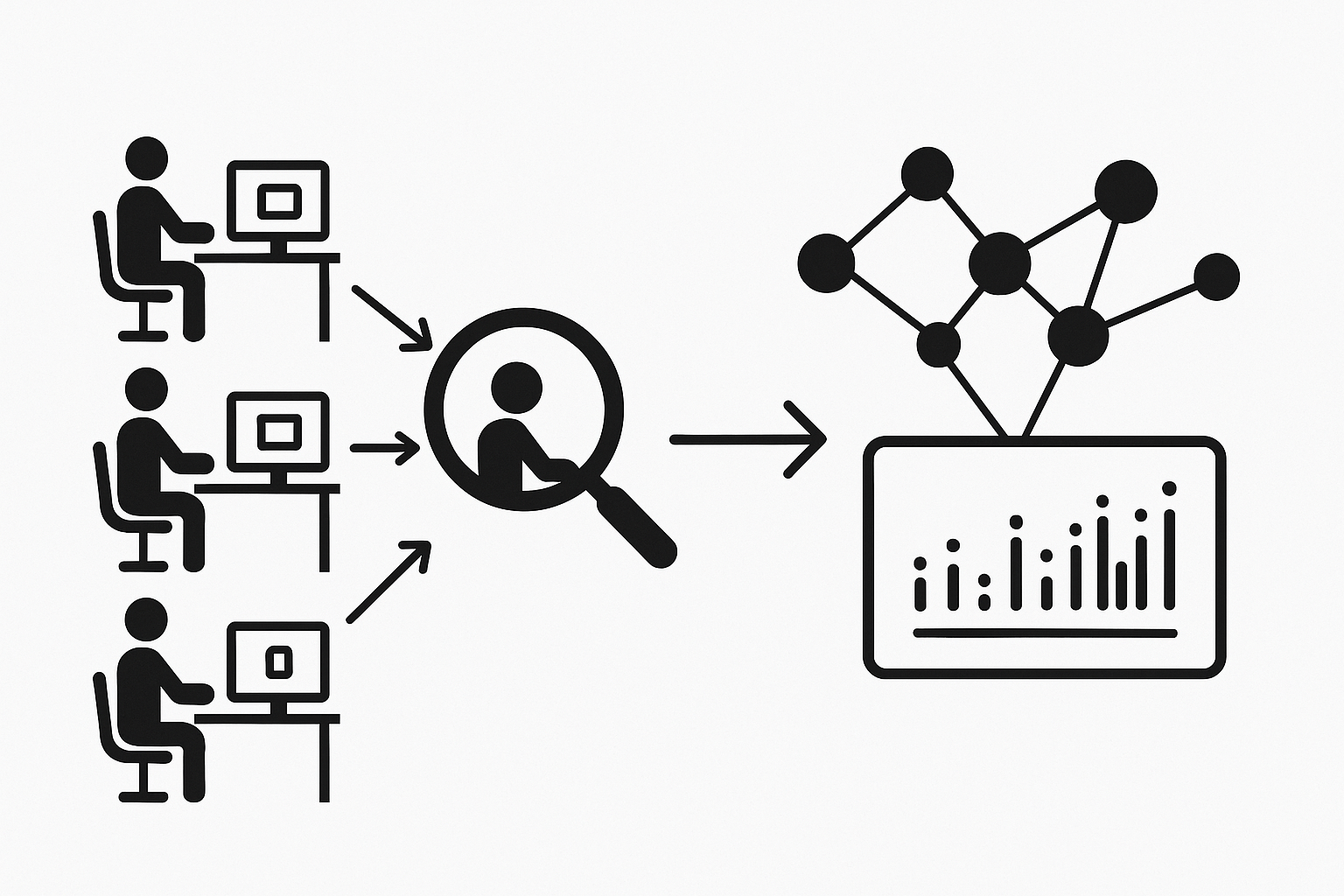
Privacy-first Organizational Network Analysis represents a paradigm shift in how organizations understand their workplace dynamics. Unlike traditional monitoring approaches that track individual behaviors, privacy-first ONA fundamentally differs by prioritizing data anonymization, aggregation, and consent management from the ground up.
The core distinction lies in what data is collected and how it's processed. While bossware captures screen recordings, keystrokes, and personal communications, privacy-first ONA analyzes only collaboration metadata, the patterns and connections between work interactions without accessing any content. Personal identifiers are stripped automatically when data is first ingested, and any analyses provided are only at the group or team level, with a minimum group size of eight employees.
Organizational Network Analysis is a powerful tool that uncovers informal communication patterns, identifies key influencers, highlights silos, and fosters collaboration, all without compromising individual privacy. This approach transforms surveillance from a tool of control into a mechanism for organizational improvement.
The technical architecture of privacy-first ONA embodies privacy by design principles. Systems like the Worklytics Privacy Proxy ensure that no personally identifiable information ever leaves the company's firewall. Data flows through multiple layers of anonymization before any analysis occurs, making it technically impossible to trace insights back to individual employees.
Consent and transparency form the foundation of this approach. Employees understand exactly what metadata is being analyzed, how it's being protected, and what insights the organization seeks to gain. This transparency transforms monitoring from something done to employees into a collaborative effort to improve the workplace.
The aggregation requirements ensure that insights always reflect team dynamics rather than individual behaviors. By maintaining minimum group thresholds and focusing on network patterns rather than personal activities, privacy-first ONA provides the organizational intelligence needed for improvement while respecting individual boundaries.
Key takeaway: Privacy-first ONA analyzes collaboration patterns through anonymized metadata rather than tracking individual activities, ensuring organizational insights without surveillance.
The regulatory landscape for workplace analytics has evolved dramatically, with data protection authorities worldwide imposing stricter requirements on employee monitoring technologies. Privacy-first analytics doesn't just comply with these regulations; it exceeds them through fundamental design choices that make privacy violations technically impossible.
GDPR principles require that businesses shall not collect categories of personal information other than those disclosed in their privacy notices. Privacy-first ONA satisfies this requirement by limiting data collection to work-tool metadata and anonymizing it at the source. Different jurisdictions have varying requirements relating to identifying legal bases for processing, providing privacy notices, obtaining consent, and transferring personal data, all of which privacy-first systems address through their architecture.
The California Consumer Privacy Act introduces additional complexities, particularly around automated decision-making technology. The CPPA has introduced cybersecurity audit requirements for businesses processing significant volumes of personal information. Privacy-first analytics sidesteps these requirements by never processing personal information in the first place. All data is anonymized before analysis begins.
Recent enforcement actions highlight the risks of non-compliance. The DPA fined an employer €40,000 for excessive surveillance through software that recorded periods of inactivity and took regular screenshots. The penalties extend beyond fines: GDPR violations can result in penalties of up to EUR 20 million or 4% of global annual turnover.
Privacy by design principles embedded in these systems create multiple layers of protection. Data minimization happens automatically through metadata-only collection. Purpose limitation is enforced through aggregation thresholds. Transparency is built into the system architecture, with clear audit trails showing what data flows where. These technical safeguards make regulatory compliance a natural outcome rather than an added burden.
The global nature of modern organizations requires solutions that work across jurisdictions. Privacy-first ONA platforms maintain compliance through the strictest common denominators, ensuring that organizations can deploy consistent analytics practices worldwide without navigating a patchwork of regional requirements.
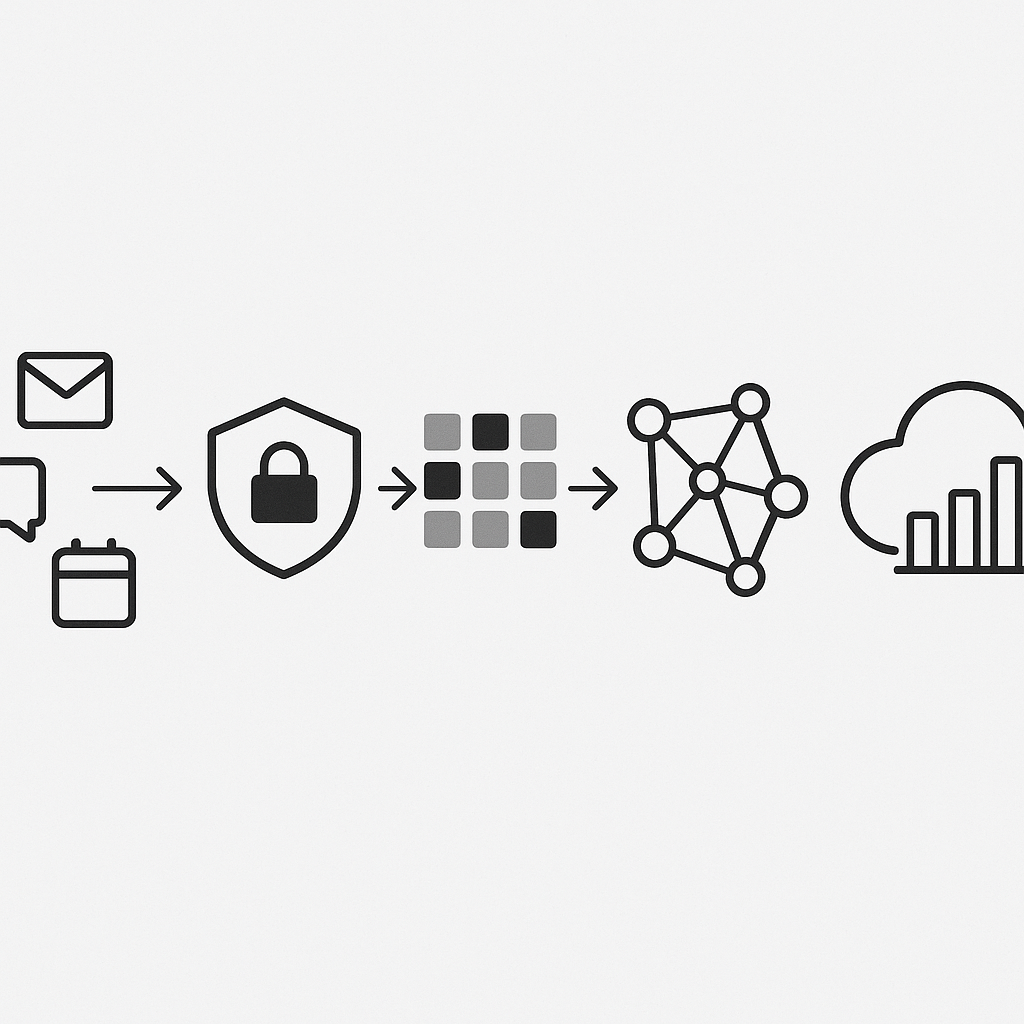
Organizations can implement privacy-first ONA within 30 days using pre-built connectors and automated data processing. This rapid deployment timeline makes privacy-safe analytics accessible to organizations of all sizes, transforming how quickly they can gain insights into collaboration patterns.
The implementation begins with data connector setup. Worklytics provides pre-built connectors for over 25 collaboration platforms, including Slack, Google Workspace, Office 365, Teams, and other common workplace tools. These connectors extract only metadata, including timestamps, participant counts, and interaction types, never accessing message content or personal information. The Worklytics Anonymization Proxy protects employee privacy by ensuring no personal information is ever at risk during this process.
Data processing occurs through multiple anonymization layers. First, all personal identifiers are hashed using one-way encryption. Next, the system applies aggregation rules, ensuring that no group smaller than eight people can be analyzed. Finally, the platform generates network graphs and collaboration metrics that reveal organizational patterns without exposing individual behaviors.
The technical deployment typically requires minimal IT resources. Cloud-based architectures mean no on-premise infrastructure is needed. API connections to existing collaboration tools can be established in hours, not weeks. Automated data pipelines handle the ongoing collection and processing, eliminating manual data preparation work.
Integration with existing analytics infrastructure happens seamlessly. Worklytics streams processed data to your data warehouse or visualization tools, allowing teams to incorporate ONA insights into their existing dashboards and reporting workflows. This approach ensures that privacy-first analytics enhances rather than replaces current business intelligence capabilities.
Consent is a cornerstone of lawful employee monitoring, requiring clear written policies explaining monitoring tools and purposes, obtaining signed consent forms, and regularly updating policies as new technologies emerge.
The communication strategy should begin before any data collection starts. Organizations must clearly explain what metadata will be analyzed, how anonymization protects individual privacy, and what organizational benefits the analysis seeks to achieve. This transparency transforms monitoring from a top-down imposition into a collaborative improvement initiative.
Implement data anonymization and obtain proper employee consent while following GDPR and local privacy laws. This includes establishing minimum group thresholds, typically eight employees, below which no analysis can occur. These thresholds must be communicated clearly so employees understand that their individual activities remain private.
Template communications should address common concerns directly. Explain that the system cannot and does not track individual productivity, cannot access email or message content, and cannot identify who is collaborating with whom at the individual level. Provide concrete examples of the insights gained: identifying overburdened teams, discovering collaboration bottlenecks, or measuring meeting load across departments.
Ongoing communication maintains trust throughout the deployment. Regular updates on what insights have been discovered and how they're being used to improve the workplace demonstrate the value of the approach. Employee feedback channels ensure concerns can be addressed promptly, maintaining the collaborative spirit essential to successful implementation.
The evidence overwhelmingly demonstrates that privacy-first approaches to workplace analytics deliver superior outcomes compared to surveillance-based monitoring. Manager effectiveness drives 80% of employee experience, making it the single most critical factor in organizational success, and privacy-first ONA provides the insights needed to support managers without undermining the trust that makes them effective.
The relationship between monitoring approach and workplace outcomes is clear. Those experiencing higher psychological safety were less likely to report negative sentiments regarding monitoring. This psychological safety emerges naturally from privacy-first approaches that respect individual boundaries while providing organizational insights. In contrast, invasive monitoring destroys psychological safety, creating environments where employees feel constantly scrutinized and judged.
Productivity gains from privacy-first analytics stem from focusing on the right metrics. Rather than tracking activity levels, these systems identify collaboration patterns that drive real value. High-trust workplace cultures lead to productivity gains precisely because employees feel empowered to work effectively rather than performatively.
The organizational benefits extend beyond individual productivity. Privacy-first ONA reveals systemic issues including silos between departments, collaboration bottlenecks, and meeting overload that surveillance tools miss entirely. By analyzing network patterns rather than individual behaviors, organizations can make structural improvements that benefit everyone.
Employee retention improves markedly under privacy-first approaches. While surveillance-based monitoring drives talent away, privacy-respecting analytics demonstrates organizational commitment to employee wellbeing. This creates a virtuous cycle: retained employees build stronger networks, improving collaboration patterns and organizational effectiveness.
The data quality itself improves with privacy-first approaches. When employees understand and trust the system, they're more likely to use collaboration tools naturally rather than gaming metrics. This authentic behavior produces more accurate insights, leading to better organizational decisions.
The future of workplace analytics lies not in more invasive monitoring but in more intelligent, ethical applications of algorithmic management that keep humans at the center of decision-making. AM tools contribute to emerging leadership practices that reflect inclusive, humanized, and multimodal modes of leadership, all underpinned by analytics-enabled leadership.
AI feedback has shown results comparable to human feedback when properly implemented, but only when it maintains human agency and respects worker autonomy. The most successful implementations use AI to augment rather than replace human judgment, providing managers with insights while preserving their decision-making authority.
Consultation between workers and management can deliver win-win outcomes when implementing algorithmic management systems. Workers expect improvements in job quality through learning opportunities, better working conditions, and reduced stress levels. Organizations anticipate gains in efficiency, productivity, and resource optimization. Privacy-first approaches make both sets of benefits achievable.
The evolution toward ethical algorithmic management requires careful attention to implementation details. By 2028, more than 20% of digital workplace applications will use AI-driven personalization algorithms to generate adaptive experiences for workers. These systems must be designed with privacy and autonomy as core principles rather than afterthoughts.
Algorithmic management tools are widespread, with adoption rates of 90% in the United States and 79% in European countries surveyed. This widespread adoption makes the distinction between surveillance-based and privacy-first approaches even more critical. Organizations must choose whether to use these powerful tools to control or to empower their workforce.
The path forward requires organizations to embrace transparency, worker participation, and continuous adaptation. Privacy-first ONA provides the framework for this evolution, demonstrating that organizations can gain the insights they need while respecting the humanity of their workforce.
The choice between surveillance and privacy-first analytics isn't just an ethical decision; it's a business imperative that determines organizational success in the modern workplace. Our mission is to help companies unlock the power of anonymous work data to improve employee experience without compromising privacy, and the evidence consistently shows this approach delivers superior outcomes.
Organizations implementing privacy-first ONA gain competitive advantages that extend far beyond compliance. They attract top talent who value employers that respect their privacy. They retain experienced employees who might otherwise leave surveillance-heavy environments. They build high-trust cultures that foster innovation and collaboration.
The insights gained from privacy-first analytics prove more valuable than surveillance data. Get access to hundreds of metrics that convert data into insight for smarter, faster decision-making, all while maintaining employee trust. These metrics reveal organizational dynamics that surveillance tools miss: collaboration patterns, knowledge flows, and network effects that drive real performance.
The most trusted companies are transparent with their employees, and privacy-first analytics embodies this transparency. Every aspect of the system, from data collection to anonymization to insight generation, can be openly discussed without revealing any individual's activities. This transparency builds the trust foundation necessary for continuous improvement.
The business case for privacy-first analytics strengthens as regulations tighten and employee expectations evolve. Organizations that adopt these approaches now position themselves ahead of regulatory curves while building the collaborative cultures needed for future success.
Worklytics offers organizations a proven path to privacy-first analytics. With pre-built connectors for over 25 collaboration platforms, enterprise-grade security, and automated anonymization, organizations can gain the insights they need without the risks of surveillance. The platform's commitment to privacy by design ensures that organizational improvement and employee trust grow together.
The future belongs to organizations that recognize employees as partners in improvement rather than subjects of surveillance. Privacy-first ONA provides the tools to build that future, transforming workplace analytics from a source of fear into an engine of collective progress. Learn more about implementing privacy-first ONA and discover how your organization can gain insights without sacrificing trust.
Privacy-first employee monitoring focuses on anonymized, aggregated data to provide insights into organizational dynamics without tracking individual activities, ensuring employee privacy and trust.
Privacy-first ONA differs by analyzing collaboration metadata rather than personal activities, using anonymization and aggregation to protect individual privacy while providing valuable organizational insights.
Surveillance-based monitoring can erode trust, lead to counterproductive behaviors, and expose organizations to legal risks due to potential violations of data protection regulations like GDPR and CCPA.
Worklytics ensures compliance by using privacy-first analytics that anonymize data at the source, adhere to GDPR and CCPA requirements, and avoid processing personal information, thus exceeding regulatory standards.
Implementing privacy-first ONA enhances trust, boosts productivity, and provides insights into collaboration patterns without compromising employee privacy, leading to improved organizational effectiveness.
3. https://worklytics.co/ona-data-analytics-software-worklytics
5. https://onlinelibrary.wiley.com/doi/10.1111/1468-2230.12922
6. https://worklytics.co/privacy
7. https://cppa.ca.gov/regulations/pdf/ccpa_updates_cyber_risk_admt_mod_txt_pro_reg.pdf
10. [https://gdprhub.eu/index.php?title=CNIL_(France](https://gdprhub.eu/index.php?title=CNIL_(France)
11. https://www.cms-lawnow.com/en/ealerts/2024/06/facts-are-better-than-fear
12. https://worklytics.co/how-it-works
14. https://www.apa.org/pubs/reports/work-in-america/2024/2024-work-in-america-report.pdf
16. https://ajis.aaisnet.org/index.php/ajis/article/view/4909
20. https://www.oecd.org/en/publications/managing-with-the-machines-2025_c100c5b5-en.html