
Measuring prompt usage in employee GenAI adoption programs reveals deeper engagement patterns than traditional seat-based metrics. Organizations tracking prompt-level data see 27% improvements in adoption indices and can identify power users versus casual participants. While 74% of companies report no tangible AI value yet, prompt metrics expose actual usage depth, skill progression, and true ROI beyond simple license counts.
• Traditional seat-based metrics miss critical usage patterns - 78% of AI users bring their own AI tools to work, creating measurement blind spots
• Key prompt-level KPIs include Prompts per Active Seat, Cost per Prompt, and Productivity Impact Score to track actual engagement depth
• The AI Adoption Facilitation Index combines Copilot feature-action counts with meeting-cadence data to isolate manager influence on team GenAI usage
• Organizations need unified dashboards to aggregate data across platforms like Microsoft Copilot, Slack AI, and GitHub Copilot
• Privacy-first measurement approaches using anonymized and aggregated data maintain trust while providing actionable insights
• Companies tracking prompt-to-outcome ratios can quantify time savings and capacity expansion from AI investments
Leaders fixated on license counts overlook the richer story hidden in prompt usage metrics - data that reveals depth of engagement and true ROI.
The rapid adoption of GenAI tools across enterprises is undeniable. AI adoption surged to 72% in 2024, up from 55% in 2023. Yet despite this momentum, 74% of companies report they have yet to show tangible value from their use of AI. The disconnect? Organizations are measuring adoption at the wrong altitude.
Traditional seat-based metrics tell you who has access to AI tools, but they reveal nothing about how deeply those tools are being used. License counts can't distinguish between someone who logs in once a month and a power user generating hundreds of prompts daily. They can't tell you whether teams are using AI for basic tasks or transforming entire workflows.
Prompt usage metrics expose the depth of engagement that seat licenses obscure. These metrics track how often, how long, and at what cost employees interact with GenAI tools. When paired with productivity measures, prompt metrics become a leading indicator of ROI - letting leaders spot power users, identify lagging teams, and catch wasted spend before it compounds.
As 79% of leaders worry about quantifying the productivity gains of AI, the shift from counting seats to counting prompts provides the granularity needed to prove value. Organizations that measure at the prompt level gain visibility into actual usage patterns, skill development trajectories, and the true marginal cost of AI work.
The gap between AI adoption statistics and actual business value stems from a fundamental measurement problem. While organizations celebrate high adoption rates, they're often tracking vanity metrics that mask the reality of how AI is actually being used - or not used - across their teams.
Consider this paradox: 78% of AI users are bringing their own AI tools to work, yet most companies rely on IT login data to measure adoption. This BYOAI phenomenon means official adoption metrics miss a significant portion of actual AI usage, creating blind spots in understanding true organizational proficiency.
Surface metrics like monthly active users or license utilization rates fail to capture the nuances that determine AI impact. As noted in tracking employee AI adoption, light versus heavy usage patterns reveal dramatically different outcomes. An employee who logs in daily but only generates a few prompts contributes to adoption statistics, but they're not achieving the transformative productivity gains that justify AI investments.
The problem compounds when organizations rely solely on seat licenses to gauge success. A department might show 100% license activation, but without prompt-level visibility, leaders can't see whether those users are stuck at basic queries or advancing to complex, multi-step workflows. "To really understand how your org is using AI, tool log-in data isn't enough," as AI maturity research emphasizes.
Perhaps most critically, surface metrics miss the human dynamics of AI adoption. Research from Wharton and GBK Collective highlights that "The challenge isn't replacement, it's readiness. Companies that invest in training, culture, and guardrails will be the ones that turn Everyday AI into long-term advantage." Without prompt-level insights, organizations can't identify which teams need support, which managers are effectively driving adoption, or where cultural resistance is limiting AI's potential.
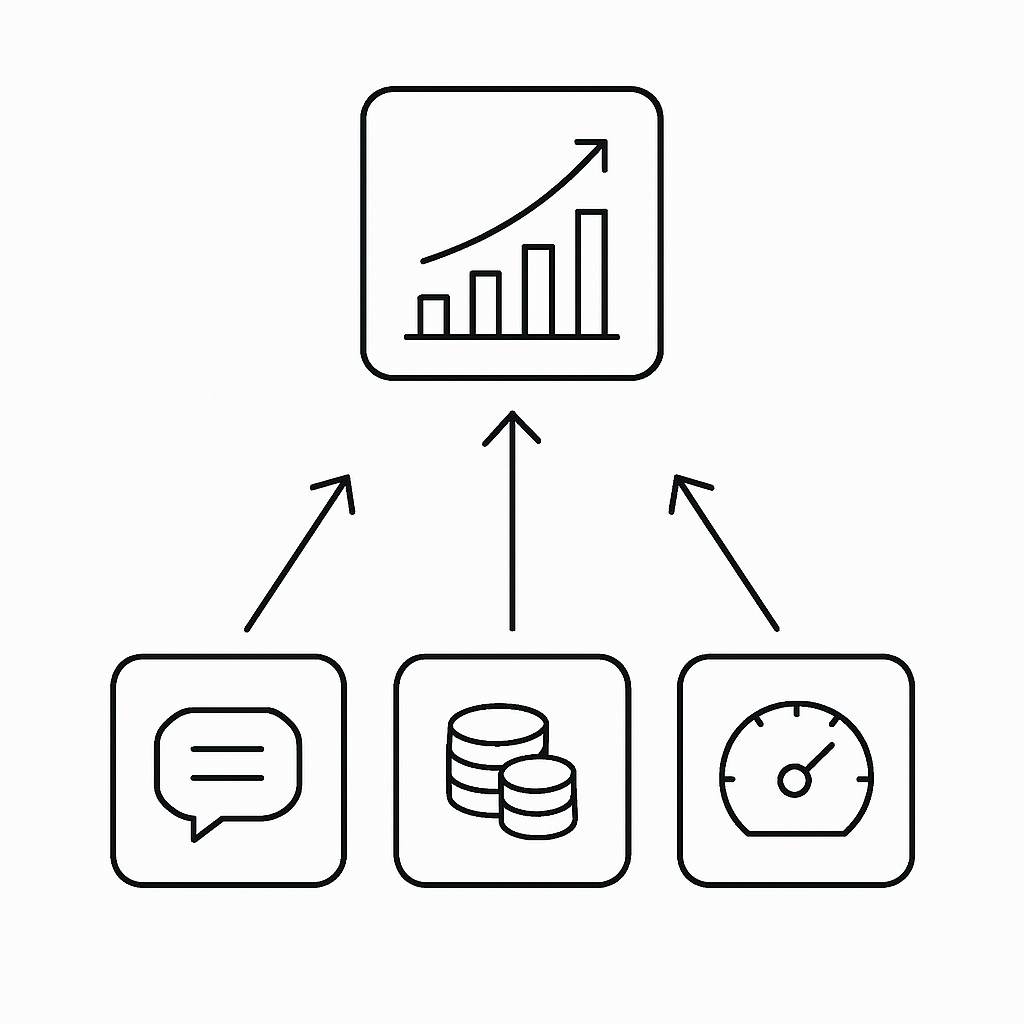
Moving beyond surface metrics requires a new framework of KPIs that capture the actual mechanics of AI usage. The top 10 KPIs for AI adoption dashboards provide a comprehensive view of engagement that traditional metrics miss.
Prompts per Active Seat stands out as a foundational metric, revealing the intensity of AI usage across your organization. This KPI exposes the difference between casual users and power users who are truly transforming their workflows. When combined with departmental breakdowns, it highlights pockets of excellence and areas needing intervention.
Cost per Prompt brings financial discipline to AI adoption by tracking the marginal expense of each interaction. As pricing models vary significantly - with GPT-4o costing ~$0.49 per million tokens versus Gemini 2.0 Flash at ~$0.17 - understanding your per-prompt economics becomes essential for ROI calculations.
Productivity Impact Score connects prompt usage to business outcomes by measuring the correlation between AI interactions and output metrics. This compound metric helps organizations move beyond activity tracking to understand actual value creation. Teams using this approach can identify the prompt volume thresholds where productivity gains plateau, preventing overinvestment in licenses that won't deliver incremental returns.
These prompt-level KPIs enable precision that seat-based metrics can never achieve. They reveal not just who is using AI, but how effectively they're using it - the critical distinction between adoption and proficiency. By tracking these metrics over time, organizations can identify usage patterns that predict success, benchmark performance against industry standards, and allocate resources to accelerate adoption where it will have the greatest impact.
Implementing prompt-level measurement requires both technical infrastructure and governance frameworks to capture data across the sprawling landscape of GenAI tools. As organizations deploy everything from Microsoft Copilot to Slack AI and GitHub Copilot, the challenge becomes aggregating disparate data streams into coherent insights.
Slack's AI analytics dashboard now provides insights into AI feature usage within channels and direct messages, while Microsoft's Copilot Analytics offers detailed prompt tracking with metrics refreshing every 30 minutes. However, these platform-specific dashboards create silos that prevent holistic visibility.
The technical approach varies by platform. GitHub Copilot tracks the timestamp of each user's most recent interaction, though retention is limited to 90 days. Meanwhile, Microsoft 365 Copilot Chat usage dashboards provide total active users and average prompts submitted per user, viewable across 7, 30, 90, or 180-day periods.
To overcome fragmentation, organizations need unified data capture strategies. Worklytics connectors enable this by automatically consolidating usage data from Slack, Microsoft Copilot, Gemini, Zoom and other platforms into a single dashboard. This approach preserves privacy through anonymized and aggregated data while providing the comprehensive view necessary for strategic decision-making.
Key governance considerations include establishing data retention policies that balance insight needs with privacy requirements. Microsoft's approach emphasizes understanding how metrics differ between dashboards, APIs, and exported reports - critical for ensuring consistent measurement across teams.
For organizations building custom solutions, API integration patterns provide programmatic access to prompt-level data, enabling real-time monitoring and integration with existing BI tools. This flexibility allows companies to embed AI usage metrics into their standard operational dashboards rather than managing yet another isolated reporting system.
The bridge between prompt counts and business value requires structured formulas that connect AI activity to measurable outcomes. Leading organizations are moving beyond anecdotal evidence to prove AI's impact through quantifiable metrics tied directly to prompt usage patterns.
The foundational formula for measuring AI-driven time savings is straightforward: Time Savings ($) = Hours Saved per Task × Task Volume × Fully Loaded Hourly Rate. When applied to prompt data, this calculation reveals the economic value of each AI interaction. For example, customer support teams using LLM assistants report 14% higher issues resolved per hour, translating directly to capacity expansion.
To make these calculations actionable, organizations must establish baseline metrics before AI implementation. Measuring AI strategy success means tracking four value pillars: time savings, capacity expansion, capability creation, and team time reallocation. Each pillar connects to specific prompt patterns - high-volume, repetitive prompts indicate time savings opportunities, while complex, creative prompts suggest capability expansion.
The compound effect becomes visible when prompt metrics are tracked over time. GitHub Copilot users experience 55% faster task completion, but this gain only materializes after users reach a threshold of prompt proficiency. By monitoring prompts per user alongside productivity metrics, organizations can identify this inflection point and accelerate others toward it.
Real ROI emerges when AI frees skilled workers for higher-value tasks. As adoption research shows, the highest returns appear when AI handles routine work, allowing experts to focus on strategic initiatives. Prompt metrics reveal this shift - declining prompts for basic queries coupled with increasing complex prompts indicate teams are climbing the value chain.
Organizations achieving meaningful productivity gains track prompt-to-outcome ratios religiously. They know exactly how many prompts correlate with completed projects, resolved tickets, or shipped code. This granular understanding transforms AI from an experimental tool into a predictable driver of business results.
TechFlow Solutions, a 6,000-person software development firm, demonstrates how prompt-level metrics can transform AI adoption outcomes. After struggling with inconsistent Copilot adoption across their 45 development teams, they implemented the AI Adoption Facilitation Index (AAFI) - a composite metric that isolates manager influence on team GenAI usage.
The AAFI formula combines Copilot feature-action counts with meeting-cadence data to create a single score: "AAFI = (Weighted_AI_Usage × Manager_Interaction_Score × Velocity_Factor) / Baseline_Expectation". This approach revealed that teams with high manager-AI engagement showed 3x higher prompt volumes than those where managers remained AI-skeptical.
TechFlow's intervention strategy focused on managers with low AAFI scores. Rather than blanket training programs, they provided targeted coaching to these leaders, demonstrating how prompt patterns in their specific workflows could accelerate sprint velocity. Managers learned to model AI usage in team meetings, share prompt templates for common tasks, and celebrate prompt innovations during retrospectives.
The results after two quarters were striking: "After two quarters of focused AAFI improvement efforts: Overall AAFI Improvement: 27% increase across all teams". More importantly, the bottom quartile of teams - previously generating fewer than 50 prompts per developer weekly - jumped to over 200 prompts, approaching the productivity levels of top performers.
This transformation illustrates how prompt-level insights enable precision interventions. By identifying the specific behavioral patterns that drive adoption, TechFlow avoided the common pitfall of one-size-fits-all AI training. As Worklytics research confirms, organizations that measure usage, invest in enablement, and learn from top performers see meaningful productivity gains that justify their AI investments.
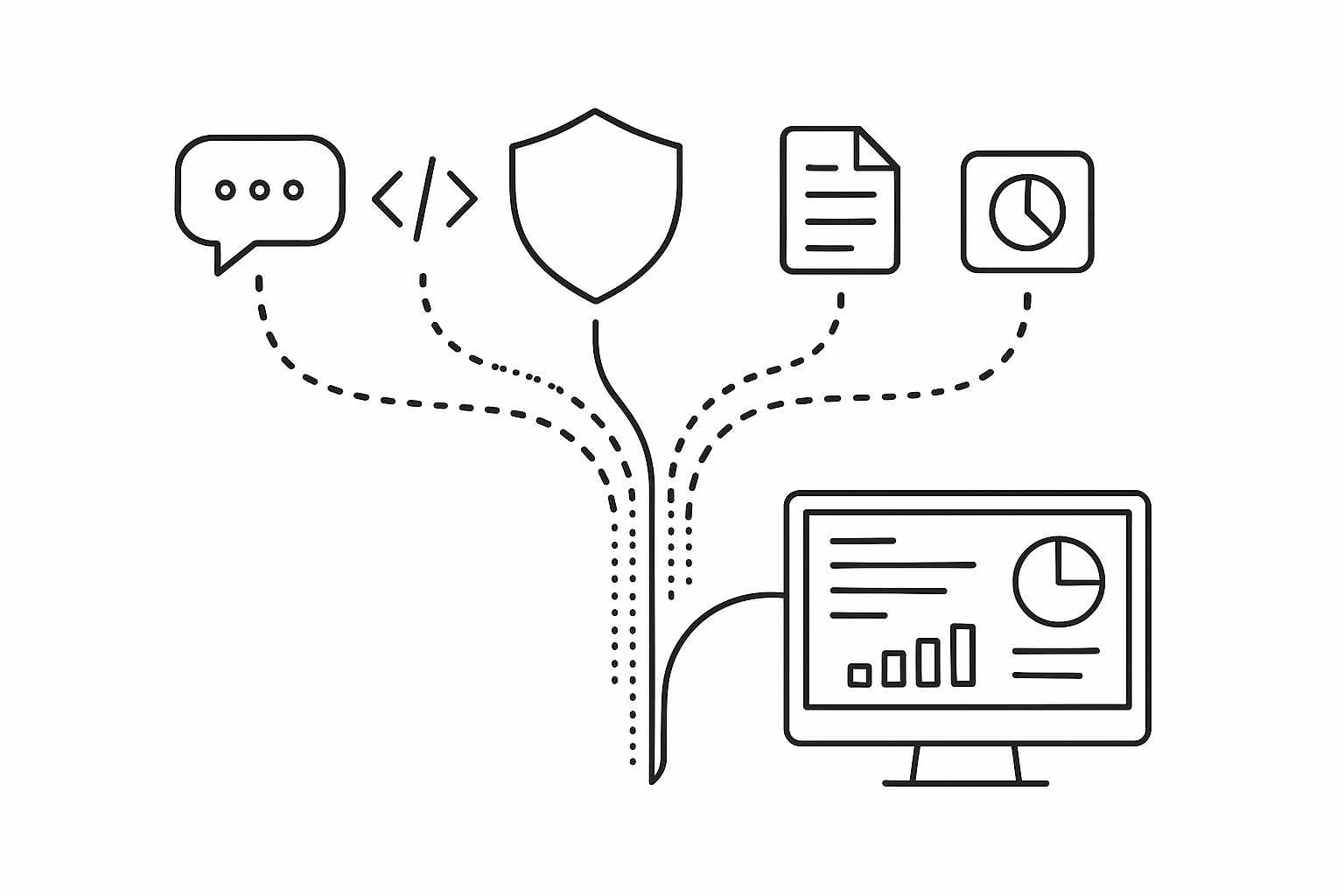
As organizations scale prompt-level measurement across thousands of employees, privacy and data governance become paramount. The challenge is capturing detailed usage patterns while respecting employee privacy and maintaining trust - a balance that determines whether AI adoption programs succeed or face resistance.
Worklytics addresses this challenge with a privacy-by-design approach that utilizes anonymized and aggregated data. This methodology provides insights without compromising individual privacy, ensuring that prompt metrics reveal team patterns rather than individual surveillance. The platform tracks adoption by team, tool, and role while maintaining strict data protection standards.
When evaluating AI adoption dashboards, organizations should prioritize platforms that offer centralized architecture for measuring GenAI solutions. This unified framework captures performance, usage, and business impact across the organization without creating security vulnerabilities. Key evaluation criteria include data retention policies, anonymization methods, and compliance with enterprise security standards.
Integration capabilities matter as much as privacy safeguards. Leading platforms connect seamlessly with existing tools - from Microsoft 365 Copilot and Slack to GitHub Copilot and Google Gemini - eliminating the need for custom integrations that might compromise security. This plug-and-play approach accelerates implementation while maintaining governance standards.
Beyond technical capabilities, effective dashboards provide actionable intelligence rather than raw data. Percentage of Work Activities with AI Assistance exemplifies this approach - a metric that extends beyond user counts to examine the penetration of workflow automation. Such insights enable targeted interventions without requiring granular individual tracking.
The most sophisticated platforms also enable benchmarking against industry peers while preserving confidentiality. Organizations can compare their prompt patterns, adoption velocities, and proficiency curves against anonymized industry data, identifying gaps and opportunities without exposing sensitive information.
The shift from seat-based metrics to prompt-level insights represents a fundamental evolution in how organizations measure and manage GenAI adoption. As we've explored throughout this analysis, the companies achieving real ROI from AI investments are those that look beyond surface statistics to understand the actual mechanics of AI usage.
Prompt usage metrics reveal what license counts cannot: the depth of engagement, the progression of skills, and the true cost-per-value of AI work. These insights enable precision interventions that accelerate adoption where it matters most. Organizations implementing these measurement frameworks report transformative results - from 27% improvements in adoption indices to dramatic increases in team productivity.
The path forward is clear. Organizations must move beyond asking "who has access?" to understanding "how effectively are we using AI?" This requires robust data capture across platforms, privacy-first analytics approaches, and the discipline to connect prompt patterns to business outcomes.
For organizations ready to make this transition, Worklytics provides a comprehensive solution. The platform enables you to track adoption and usage by team, tool, and role while benchmarking against industry standards. More importantly, it maintains the privacy-by-design principles essential for employee trust while delivering the granular insights necessary for strategic decision-making.
As AI adoption continues its exponential growth, the organizations that thrive will be those that measure what matters. In the age of GenAI, that means counting prompts, not just seats. The companies that embrace this shift today will be the ones leading their industries tomorrow.
Prompt usage metrics provide insights into the depth of engagement with GenAI tools, revealing how effectively these tools are being used beyond just access counts. They help identify power users and areas needing improvement, offering a clearer picture of ROI.
Traditional seat-based metrics only show who has access to AI tools, not how they are used. They fail to distinguish between casual and power users, missing insights into actual usage patterns and productivity gains.
Organizations can measure AI adoption effectively by tracking prompt-level KPIs such as Prompts per Active Seat, Cost per Prompt, and Productivity Impact Score. These metrics provide a detailed view of AI usage and its impact on business outcomes.
Worklytics offers a privacy-first analytics platform that consolidates usage data from various GenAI tools into a unified dashboard. This approach provides comprehensive insights while maintaining employee privacy, helping organizations measure and improve AI adoption.
Prompt metrics translate into business ROI by connecting AI activity to measurable outcomes like time savings and productivity improvements. By tracking these metrics, organizations can identify the economic value of AI interactions and optimize their usage for better returns.
1. https://worklytics.co/resources/measuring-ai-adoption-facilitation-index-manager-kpi-copilot-era
2. https://www.microsoft.com/en-us/worklab/work-trend-index/ai-at-work-is-here-now-comes-the-hard-part
3. https://worklytics.co/resources/top-10-kpis-ai-adoption-dashboard-2025-dax-formulas
4. https://worklytics.co/blog/tracking-employee-ai-adoption-which-metrics-matter
5. https://worklytics.co/blog/the-ai-maturity-curve-measuring-ai-adoption-in-your-organization
6. https://knowledge.wharton.upenn.edu/special-report/2025-ai-adoption-report/
7. https://pubsonline.informs.org/do/10.1287/LYTX.2025.02.10/full/
8. https://worklytics.co/measureai
11. https://learn.microsoft.com/en-us/viva/insights/org-team-insights/copilot-chat-dashboard
12. https://learn.microsoft.com/en-us/microsoft-365-copilot/copilot-adoption-resources
13. https://everworker.ai/blog/measuring-ai-strategy-success
14. https://skywork.ai/blog/how-to-build-roi-calculator-ai-tools-2025/
15. https://worklytics.co/blog/improving-ai-proficiency-in-your-organization-boost-usage-and-uptake