The importance of feedback in the workplace lies in its direct impact on performance, alignment, engagement, and retention because employees rely on continuous signals to understand expectations and adjust behavior.
Structured feedback systems outperform ad hoc approaches since they create repeatable processes that reduce ambiguity and improve consistency across teams.
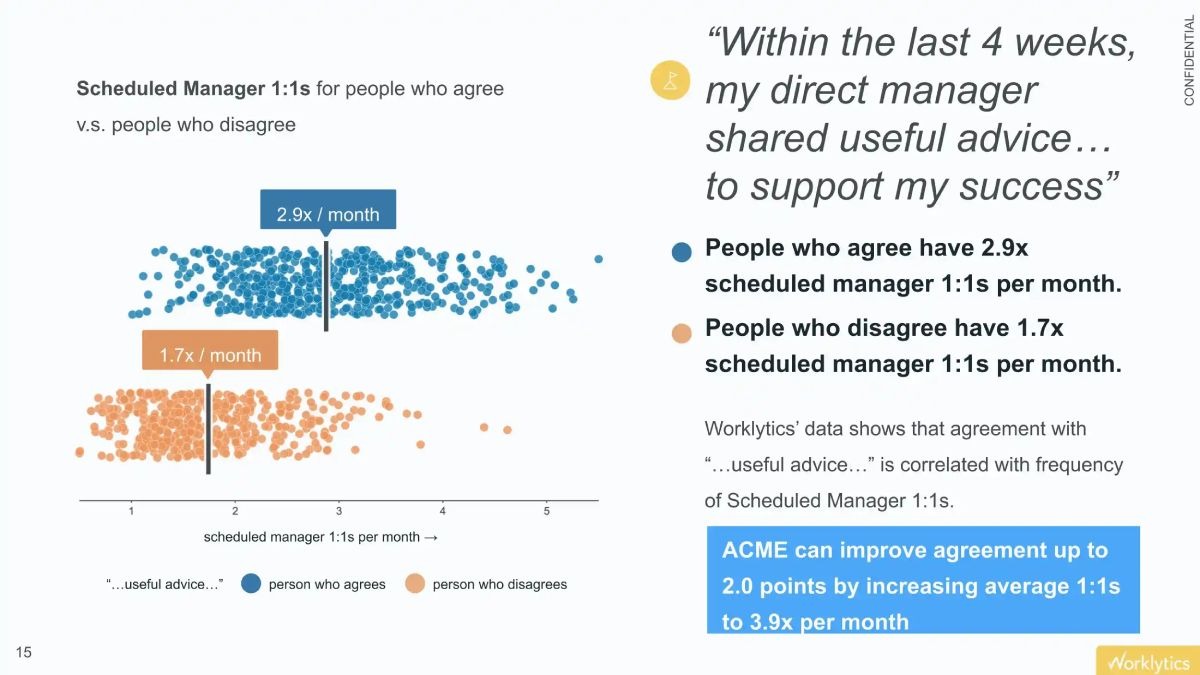
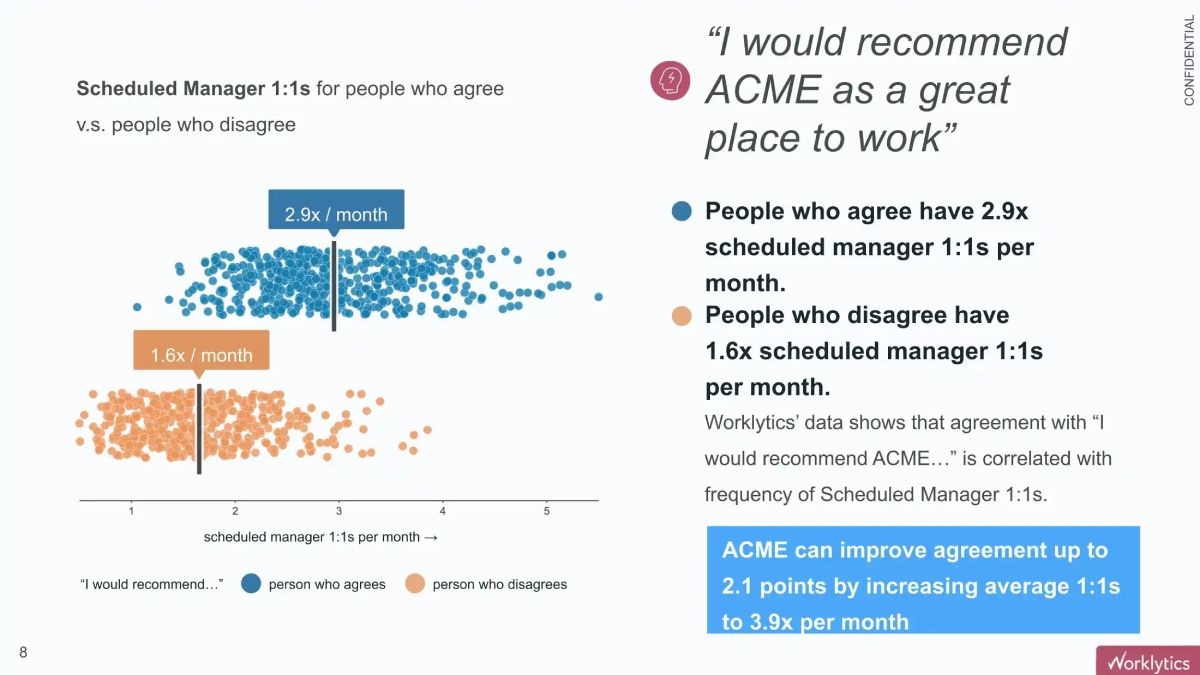
Regular 1:1s with managers significantly improve success, productivity, and alignment because they create a consistent channel for personalized feedback and expectation setting.
Organizations that operationalize feedback through data and behavioral insights achieve measurable gains in productivity, engagement, and retention because decisions are grounded in actual work patterns rather than assumptions
Platforms like Worklytics enable companies to measure feedback effectiveness across productivity, engagement, meeting quality, AI adoption, and manager performance by turning workplace activity into actionable insights.
Importance of Feedback in the Workplace
The importance of feedback in the workplace extends beyond performance reviews and occasional check-ins because modern organizations operate in fast-moving environments where static evaluation cycles fail to keep pace with change.
It is a core operational mechanism that shapes how organizations align goals, correct course, and scale performance across teams since feedback directly influences how work is interpreted and executed on a daily basis.
When implemented systematically, feedback becomes a continuous loop of insight and action rather than a reactive exercise because employees receive ongoing direction instead of waiting for delayed evaluations. Organizations that treat feedback as infrastructure rather than culture rhetoric consistently outperform peers in productivity, engagement, and retention since they reduce uncertainty and improve execution clarity at every level.
What Workplace Feedback Actually Does
Feedback serves three primary functions in a workplace system because organizations need structured mechanisms to manage performance, behavior, and information flow.
Performance calibration Feedback aligns individual output with organizational expectations because employees require clear benchmarks to evaluate whether their work meets required standards. Without it, employees operate on assumptions, which can lead to different work quality and execution since each individual interprets expectations differently.
Behavioral reinforcement and correction It identifies which behaviors should be repeated and which should be adjusted because consistent reinforcement is necessary to scale effective practices across teams. This is essential for maintaining operational consistency, especially in cross-functional environments where behaviors directly impact collaboration outcomes.
Information flow optimization Feedback reduces asymmetry between leadership intent and employee understanding because strategic decisions often lose clarity as they move through organizational layers. It ensures that strategic direction translates into operational clarity, which is critical for execution accuracy.
Regular 1:1s strengthen all three functions because they create a predictable cadence where feedback is delivered, clarified, and acted upon in real time, improving both alignment and productivity.
Sample Report of Worklytics in 1:1s
Why Feedback is Critical for Organizational Performance
1. Eliminates Performance Ambiguity
Most performance issues are not capability issues but clarity issues because employees cannot meet expectations that are not clearly defined.
Employees underperform when expectations are vague or misinterpreted since they rely on incomplete information to guide their actions.
Leadership support through feedback removes ambiguity by providing explicit direction on performance expectations, which reduces the likelihood of misaligned output.
Defining what “good” looks like in measurable terms ensures employees understand success criteria rather than guessing.
Identifying gaps early prevents small issues from compounding into larger performance problems over time.
Reinforcing alignment with business objectives ensures that individual work contributes to organizational goals.
Without consistent feedback, performance becomes reactive rather than controlled because corrections happen after problems occur instead of preventing them.
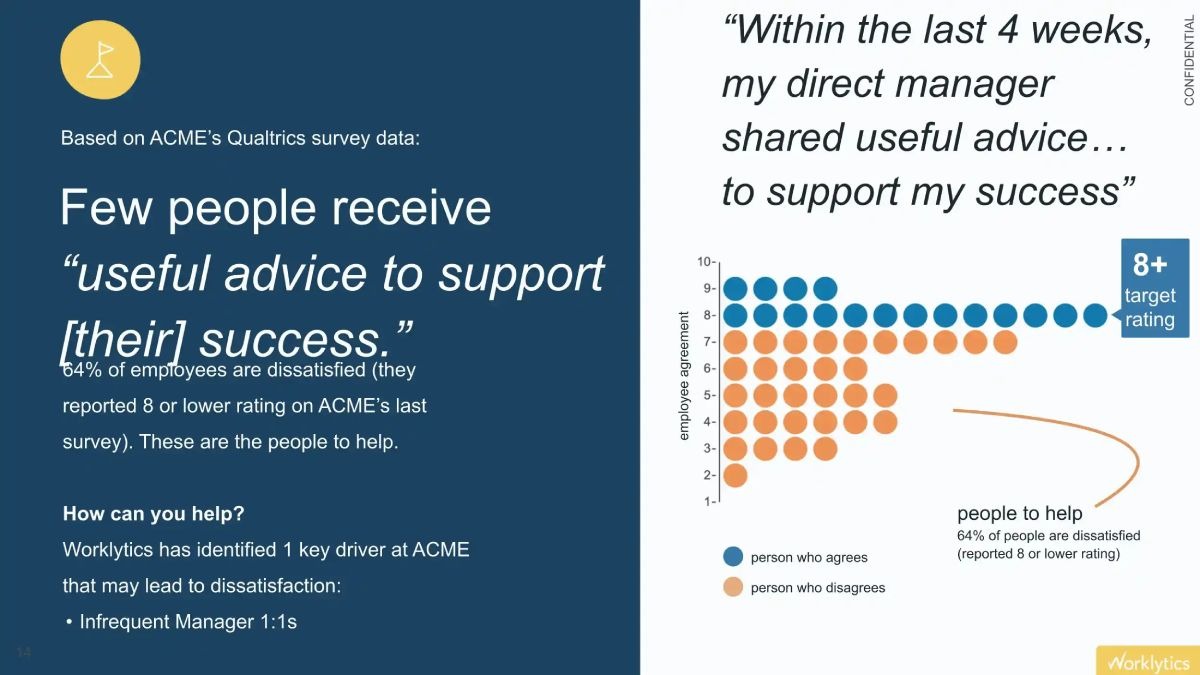
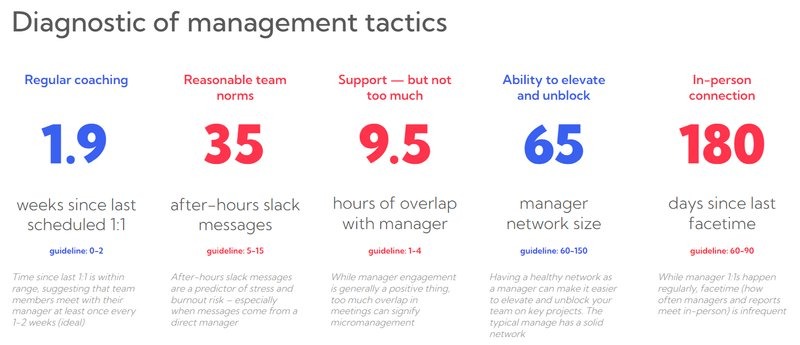
Sample Report of Worklytics in feedback
2. Accelerates Skill Development
Feedback compresses the learning curve because it replaces trial-and-error learning with targeted, experience-based insights. Instead of relying on repeated mistakes to learn, employees receive direct guidance that improves specific competencies.
This is particularly critical in fast-moving environments where skill requirements evolve rapidly due to technological and operational changes.
Skills evolve quickly, requiring continuous adjustment rather than static knowledge.
Roles expand beyond initial job descriptions, increasing the need for adaptive learning.
Cross-functional collaboration introduces new expectations that require ongoing feedback.
High-performing organizations treat feedback as a training mechanism, not just evaluation, because continuous improvement depends on real-time learning inputs.
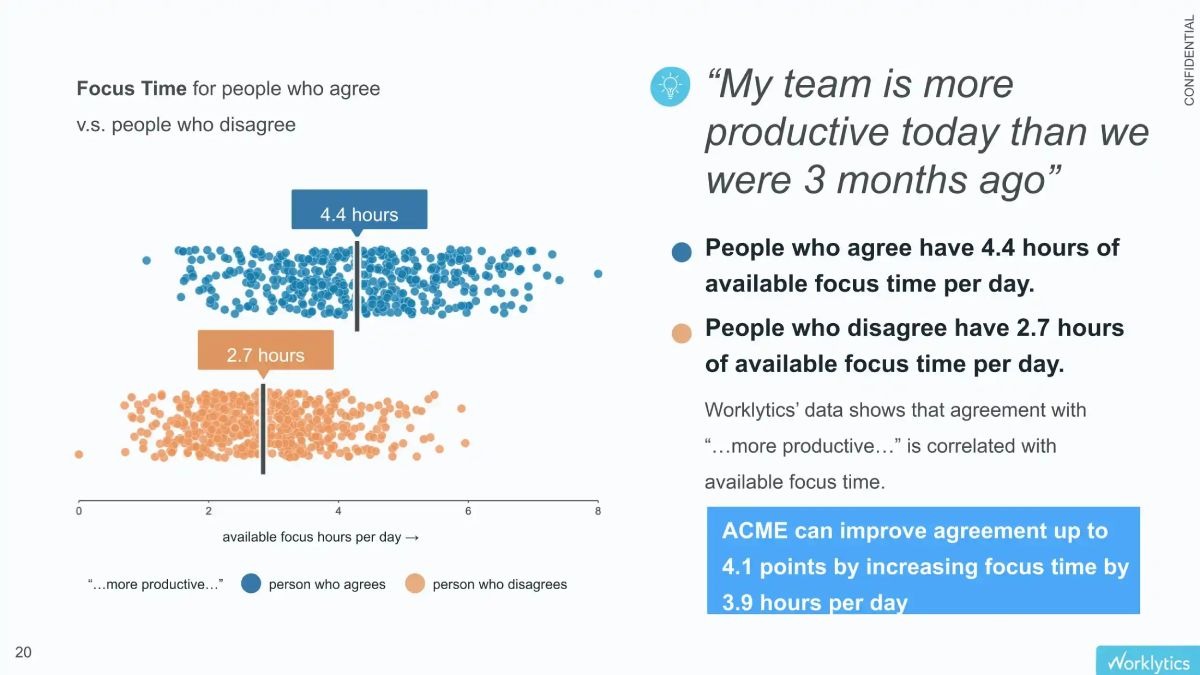
Sample Report of Worklytics in focus time
3. Improves Decision-Making Across Levels
Feedback enables better decision-making by providing context that would otherwise be unavailable to leadership because frontline employees often have the most accurate view of operational realities.
Contextual insights from frontline employees improve strategic decisions since they reflect real-world execution conditions.
Real-time signals on what is working and what is not allow organizations to adjust quickly rather than relying on delayed reports.
Data points that inform leadership strategy reduce reliance on assumptions and improve decision accuracy.
When feedback flows both upward and downward, organizations reduce blind spots and improve execution precision because information moves efficiently across all levels.
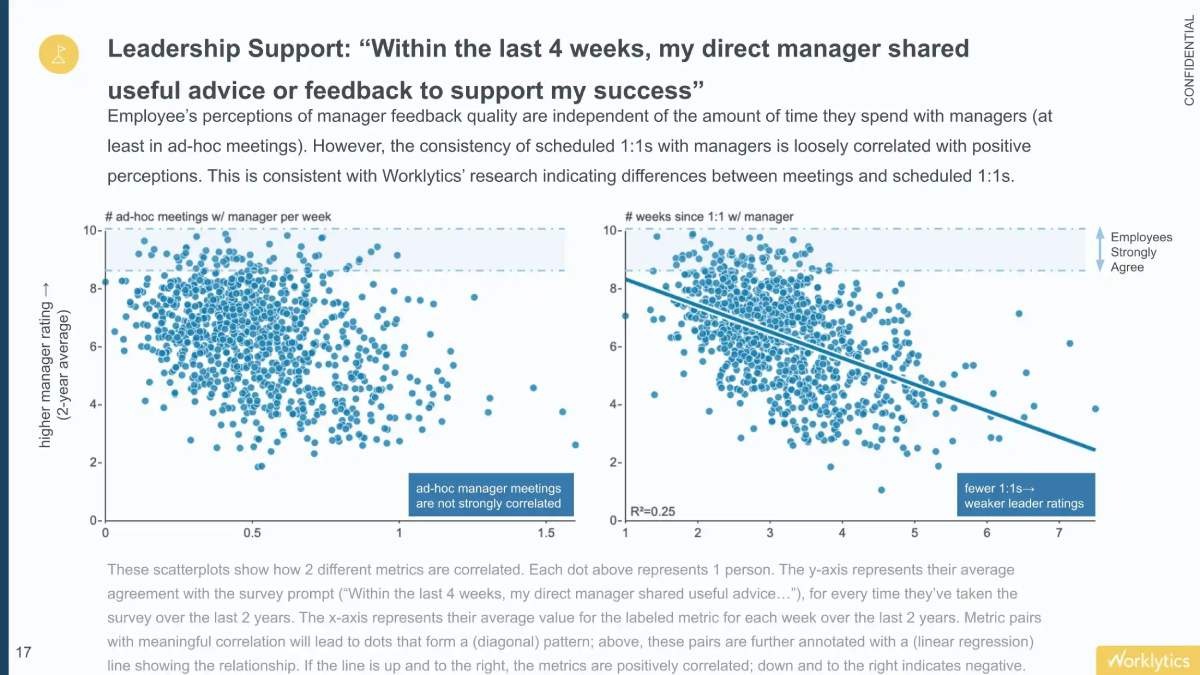
Sample Report of Worklytics in Leadership support
4. Strengthens Accountability
Feedback creates a system where expectations and outcomes are visible because transparency makes performance measurable and comparable. This reduces ambiguity in ownership and responsibility.
Misalignment between teams decreases because expectations are clearly communicated.
Redundant work is minimized since tasks and responsibilities are defined more precisely.
Responsibility gaps are reduced because accountability is explicitly tied to feedback.
Accountability is not enforced through authority alone but through visibility of performance and behavior, which feedback systems enable.
Feedback and Employee Engagement
Employee engagement is directly correlated with how often and how effectively feedback is delivered because engagement depends on clarity, recognition, and growth opportunities.
Employees who receive meaningful feedback are more engaged because they understand how their work contributes to larger goals and feel recognized for their contributions.
According to research from Gallup, employees who receive frequent feedback show higher engagement levels since consistent communication reinforces connection to work.
The Psychological Impact of Feedback
Feedback influences motivation through several psychological mechanisms because employees interpret feedback as signals of value and direction.
Recognition reinforces value and contribution because acknowledgment validates effort and results.
Clarity reduces anxiety about expectations since employees know what is required of them.
Growth signals investment in development, which increases long-term commitment.
A lack of feedback often leads to disengagement because employees cannot gauge their progress or relevance within the organization.
The Role of Feedback in Employee Retention
Retention is not primarily driven by compensation because employees often leave due to lack of growth and poor management rather than pay alone.
Feedback directly impacts retention by influencing how employees perceive their development and value within the organization.
Employees are more likely to stay when they:
Understand how they are performing because clarity reduces uncertainty about their role.
See a clear path for improvement since feedback highlights growth opportunities.
Receive consistent communication from managers, which builds trust and alignment.
Poor feedback systems lead to silent attrition because employees disengage before formally leaving.
Feedback and Workplace Productivity
Productivity is often misinterpreted as output volume rather than output efficiency because organizations tend to measure quantity instead of effectiveness.
Feedback improves productivity by ensuring that effort is directed toward high-impact activities rather than misaligned tasks.
Reducing rework caused by misalignment improves efficiency since errors are corrected early.
Prioritizing high-impact tasks ensures resources are allocated effectively.
Identifying workflow bottlenecks allows organizations to optimize processes.
However, measuring productivity requires more than observation because subjective assessments often fail to capture actual work patterns.
Bridging the Feedback Gap with Worklytics
Effective feedback requires more than just conversation; it requires context. Worklytics transforms workplace feedback from a subjective guessing game into a data-driven strategy.
Real-Time Performance Signals
Stop waiting for quarterly reviews. Analyze metadata from Slack, Jira, and GitHub to provide "just-in-time" feedback when it actually impacts outcomes.
1:1 Health Tracking
Ensure the feedback loop stays open. Worklytics monitors the frequency and quality of 1:1 meetings, flagging teams that are losing their vital connection points.
Objective Burnout Alerts
Feedback is a two-way street. Identify "After-Hours Work" spikes and "Focus Time" drops to proactively support employee wellbeing before burnout occurs.
Network Connectivity Analysis
Visualize how information flows. Identify silos and communication bottlenecks to ensure feedback reaches every corner of your organization.
Sample Reports
Building a Scalable, Data-Driven Feedback System
In the modern workplace, an effective feedback system is more than just a communication habit; it is a critical business infrastructure. To scale successfully, feedback must move beyond the annual review into a structured, continuous, and measurable ecosystem.
1. Establish Multi-Directional Feedback Channels
Static, top-down directives are no longer sufficient. Organizations must create a 360-degree loop to ensure alignment at every level.
Upward Feedback: Empowers employees to share insights on leadership efficacy, fostering psychological safety and identifying management blind spots.
Peer-to-Peer Recognition: Builds a culture of organic accountability and collaboration, often highlighting contributions that managers might miss.
Manager-to-Employee Alignment: Shifts the focus from "corrective" to "directive," ensuring individual goals stay synchronized with evolving company objectives.
2. Implement Standardized Frameworks
Without a common language, feedback is prone to bias and ambiguity. Standardizing the way we speak ensures quality and fairness across diverse teams.
The SBI Model (Situation, Behavior, Impact): Encourages precision by focusing on observable facts rather than personality traits.
Outcome-Orientation: Connects feedback directly to Key Performance Indicators (KPIs), making the "why" behind every critique clear.
Actionability: Every feedback loop must conclude with a "Next Step" to prevent the conversation from becoming a dead end.
3. Bridge the Gap with Workplace Analytics
The most significant weakness of traditional feedback is subjectivity. Perception is a starting point, but data is the anchor.
Integrating Worklytics: By layering feedback on top of passive workplace data (like Slack responsiveness, meeting load, and focus time), organizations can validate "feelings" with "facts."
Eliminating Bias: Analytics provide an objective baseline, ensuring that high-performers are recognized based on output and collaboration patterns rather than just visibility or "loudness."
4. Prioritize Timeliness and Continuity
Feedback has a "shelf life." The longer the delay between an event and the feedback, the less impact it has on behavior modification.
The "Just-in-Time" Approach: Utilizing real-time mechanisms allows for micro-adjustments that prevent small issues from becoming systemic failures.
Consistency over Intensity: Short, frequent check-ins (Pulse Surveys or 1:1s) are statistically more effective at maintaining engagement than high-stakes annual evaluations.
5. Transform Managers into Performance Coaches
A feedback system is only as good as its delivery. Managers must be trained to move from "evaluators" to "facilitators."
Psychological Safety: Training should focus on how to deliver constructive criticism without triggering a defensive "threat" response.
Active Dialogue: Encouraging a two-way conversation ensures employees feel heard, which is the primary driver of retention and engagement.
Conflict Resolution: Mastering difficult conversations prevents the "feedback freeze," where managers avoid giving necessary critiques to maintain a false sense of harmony.
FAQs
What is the importance of feedback in the workplace?
Feedback is essential because it aligns performance, improves skills, increases engagement, and ensures accountability.
How often should feedback be given?
Feedback should be continuous because frequent input is more effective than delayed evaluation.
What makes feedback effective?
Effective feedback is specific, timely, actionable, and supported by data because these attributes ensure usability.
How does feedback improve productivity?
Feedback improves productivity by reducing misalignment and prioritizing high-impact work.
How can organizations measure feedback effectiveness?
Organizations can measure effectiveness through engagement, productivity, and retention metrics, supported by tools like Worklytics.
What role does technology play in feedback systems?
Technology enables scalability and data-driven insights, making feedback more accurate and actionable.
Final Takeaway
The importance of feedback in the workplace lies in its ability to convert uncertainty into structured execution because employees rely on continuous input to perform effectively. Organizations that integrate feedback with data-driven tools like Worklytics move beyond subjective evaluation and achieve measurable improvements in productivity, engagement, and overall performance.
Share this post
Request a demo
Schedule a demo with our team to learn how Worklytics can help your organization.