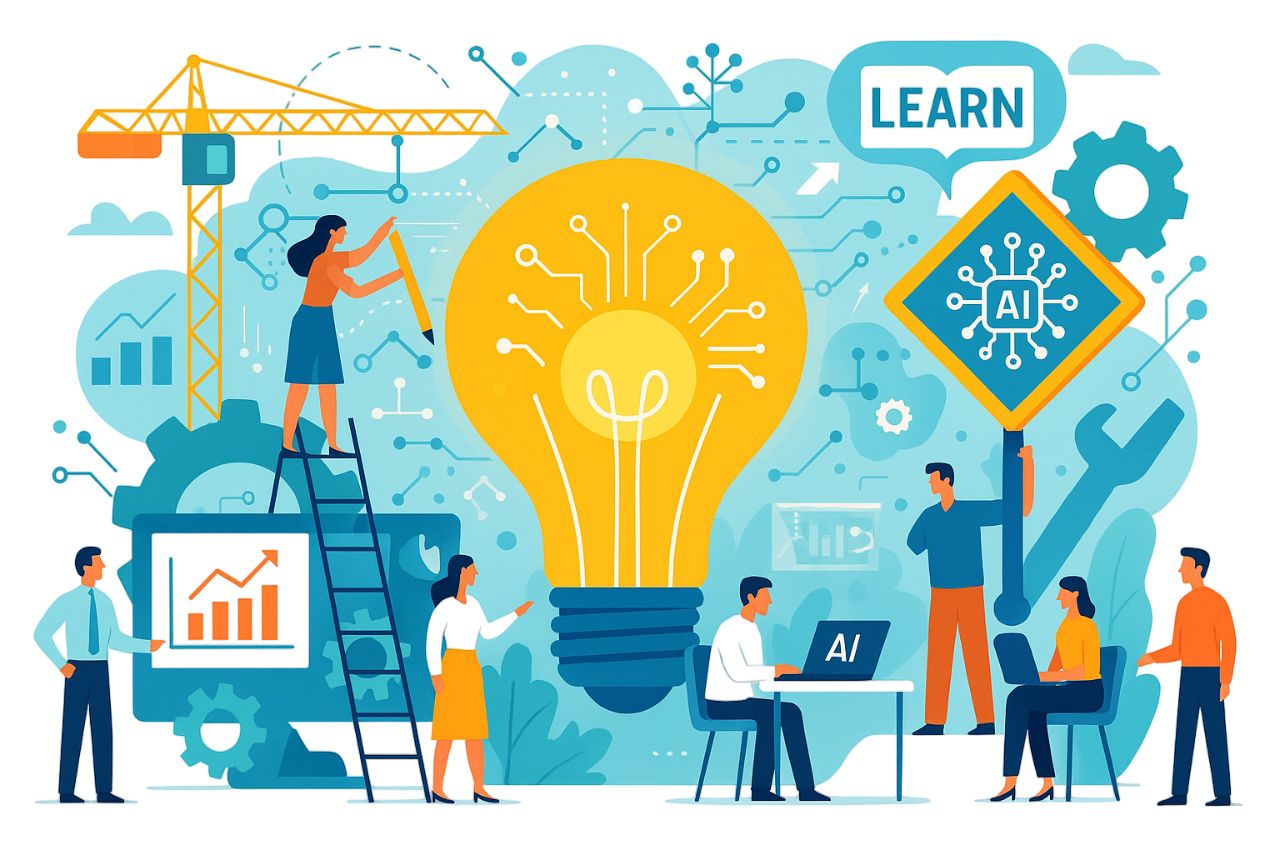
Artificial intelligence has quickly shifted from a niche technology to a core workplace competency. Organizations across industries recognize that building AI skills among their workforce is essential to staying competitive.
In fact, companies with leading digital and AI capabilities have been found to outperform lagging competitors by two to six times in returns.
Naturally, leaders want to know: how long will it take to get our teams proficient in AI? The honest answer is that it varies – but with the right strategy, you can start seeing results sooner than you might think.
In this blog, we’ll break down the timeline for building AI skills in an organization, the factors that influence it, and how to accelerate the process. We’ll also look at how measuring progress can ensure you get the most out of your AI upskilling efforts.
Developing AI skills across an organization does not follow a single fixed path. The timeline depends on a mix of technical foundations, training approaches, and cultural readiness. Several key factors determine how long it takes to develop AI skills across an organization:
Consider your starting point. If your employees already have a strong baseline in data analysis or coding, they will likely pick up AI concepts faster. On the other hand, if many people are starting from scratch (perhaps unfamiliar with basic tech concepts), the learning curve is steeper. Prior knowledge in areas like Python programming or data science can significantly speed up learning AI, whereas a workforce lacking that foundation might need extra time for preliminaries.
Are you aiming for basic AI literacy for everyone, or deep expertise for a few? The depth of training hugely impacts timelines.
Developing in-house AI developers or data scientists – who can build AI models from scratch – is a longer endeavor. Introductory courses covering simple AI concepts might take only weeks, whereas more advanced programs on topics like deep learning or natural language processing can span several months due to their complexity. It’s important to define what level of proficiency you need.
In many cases, you don’t need everyone to be an AI guru; you need a broad base of AI-aware employees and perhaps a smaller pool of specialists.
How you choose to train also affects the timeline. Structured training programs with clear curricula have set durations and keep learners on track.
For instance, a live cohort-based program might run on a schedule (say, 8 weeks of classes), ensuring participants reach the finish line together. Conversely, self-paced learning, while flexible, can drag on if employees struggle to find time or lose motivation.
The availability of quality resources (internal trainers, external experts, online platforms) will either accelerate or limit your progress.
One of the biggest wildcards is the human element: do your employees feel encouraged to learn and apply AI? An organization’s culture can significantly accelerate or slow the adoption of skills.
Companies that have established a supportive learning culture – giving employees time to learn, permission to experiment, and psychological safety to fail and learn from mistakes – will see faster uptake.
In contrast, if people fear using AI tools (worried about making mistakes or unsure if management approves), they’ll be hesitant, and progress will be slow.
Strong executive sponsorship, clear communication about the importance of AI skills, and integration of learning into performance goals can all shorten the learning timeline by getting everyone on board from day one.
You don’t need to wait long to see the benefits of AI training. In just a few weeks of upskilling, your team can start using AI for quick improvements in daily work. Employees can quickly pick up basic AI tools and apply them to simple tasks, seeing results in weeks, not months. This initial phase is all about getting fast, tangible wins that show AI’s value right away.
For example, within the first weeks, your team could:
These quick wins prove that even a short training period can make a difference. Team members see immediate improvements in productivity and confidence. By focusing on straightforward AI uses first, everyone gets comfortable with the technology. Early successes also make it easier to get buy-in from leadership and other employees, because they can clearly see the positive impact. In short, a few weeks of AI upskilling can lead to real results, building excitement and support for bigger AI initiatives ahead.
After the initial introduction, many organizations move into a second phase: developing intermediate AI skills and integrating AI into regular business processes. This is where the timeline often extends into several months of concerted effort.
At this stage, employees go beyond just knowing what AI is to learning how to apply it in more substantive ways. They might start working on real projects using AI, such as developing:
Training programs for this level often range from about 3 to 6 months in duration for individuals to gain proficiency. For an organization, it could mean running a multi-month internal academy or partnering with external courses that employees attend part-time.
Companies have found that structured programs can efficiently produce intermediate-level skills. This program was woven into employees’ normal work: it combined self-paced online exercises with intensive workshops and even an apprenticeship where learners worked alongside experts on actual projects.
In just a single 3-month cycle, hundreds of employees can significantly boost their tech skills and be ready to take on real client work involving AI.
What about becoming highly advanced in AI? In any organization, there will be a handful of roles that require deeper expertise – think of data scientists building custom AI models, machine learning engineers optimizing algorithms, or AI specialists creating new in-house tools.
Developing this level of skill is a longer-term investment. Advanced AI courses or degree programs can last 8 to 12+ months, and employees often undertake them while working (or during sabbaticals) because of the depth of the material (covering neural network architecture, advanced statistics, etc.).
How do you maintain and grow AI skills over the long run? A few approaches help:
Another reason the learning never really “ends” is that AI itself is a moving target. The tools and best practices of today might change next year. Just recently, surveys have highlighted an urgent need across businesses to continuously upskill: nearly nine out of ten companies anticipate needing new tech skills (largely AI-related) within the next 12 months. That’s essentially everybody, and it underlines the point that staying still is not an option.
Your organization might reach a great level of AI fluency after a year of effort – and that’s a huge accomplishment – but you will still need to refresh and update those skills as new AI capabilities emerge.
The payoff for this continuous approach is significant. Organizations that cultivate learning agility (where employees constantly learn and adapt) tend to be leaders in innovation.
Building AI skills across an organization might sound like a big task – and it is – but there are proven strategies to speed up the process and make it more efficient. Here are several tactics to consider:
One of the smartest ways to shorten the time it takes to build AI skills is to measure progress and adapt quickly. After all, how do you know if your training efforts are translating into real-world usage? This is where Worklytics comes in as a powerful ally. Worklytics is a people analytics platform designed to help organizations see how work actually gets done by analyzing data from the tools employees use (always in a privacy-conscious way). When it comes to AI adoption, Worklytics can provide clear, actionable insights that significantly enhance your upskilling program:
Worklytics shows exactly who is and isn’t using AI tools across teams, roles, and applications. You quickly see which groups are adopting AI and which ones are lagging. This lets you target support where it’s needed and spotlight high-performing teams so others can learn from them. Instead of guessing, you have a precise map of where to focus your enablement efforts.
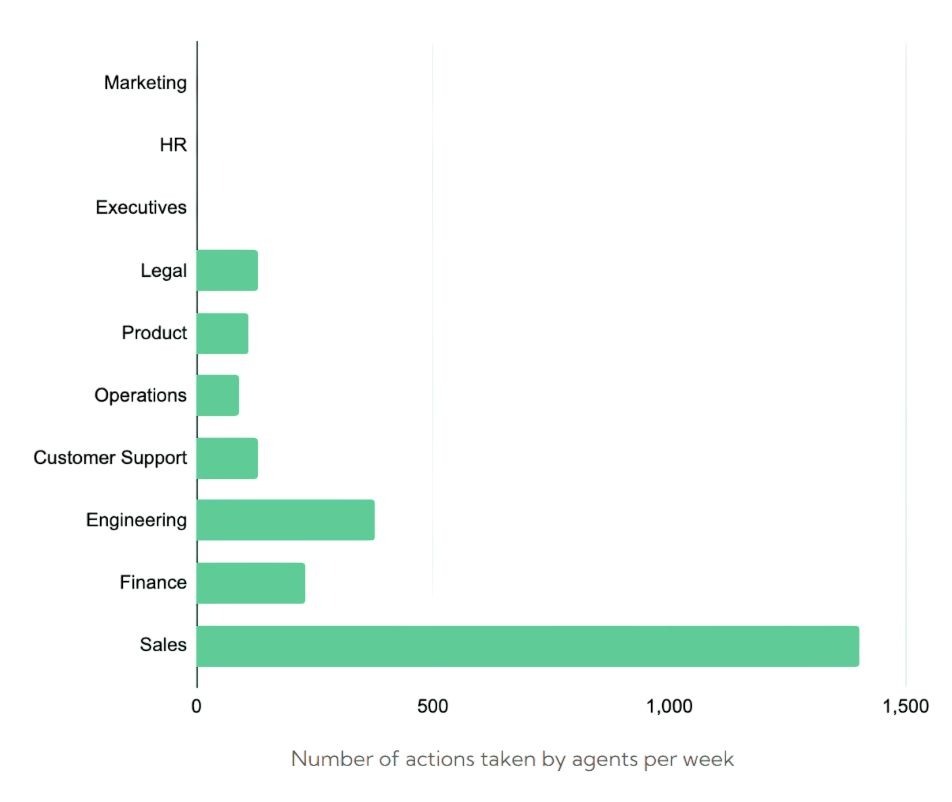
Usage data makes it easy to find individuals who are getting strong results with AI. These power users can become mentors, lead workshops, or help refine best practices. Without analytics, these experts often stay hidden. With Worklytics, you can surface them early and use their skills to accelerate company-wide learning.
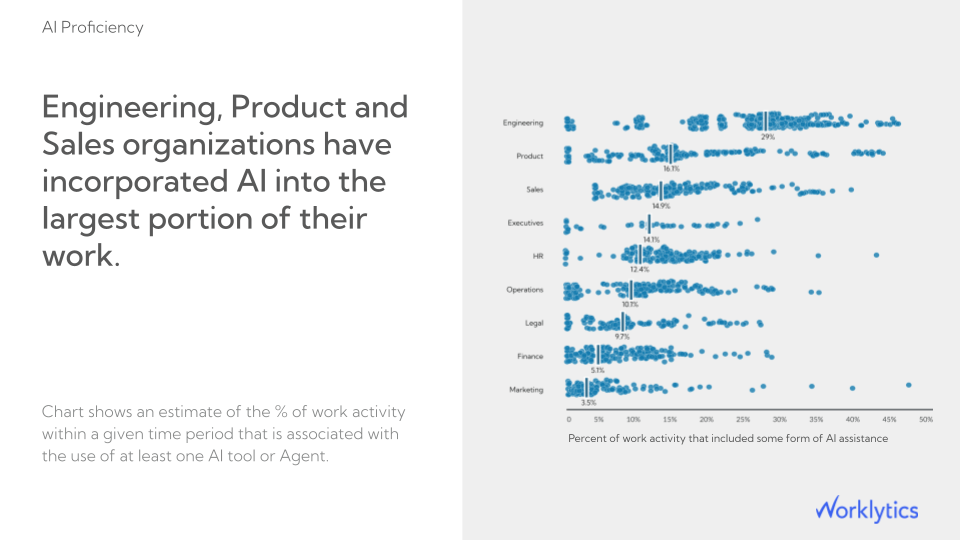
Worklytics connects AI usage to real productivity outcomes. You can measure time savings, workflow improvements, and changes in output quality to understand whether specific AI tools are actually delivering value. This gives you evidence to scale what works, fix what doesn’t, and justify further investment. When teams see measurable gains, adoption accelerates naturally.
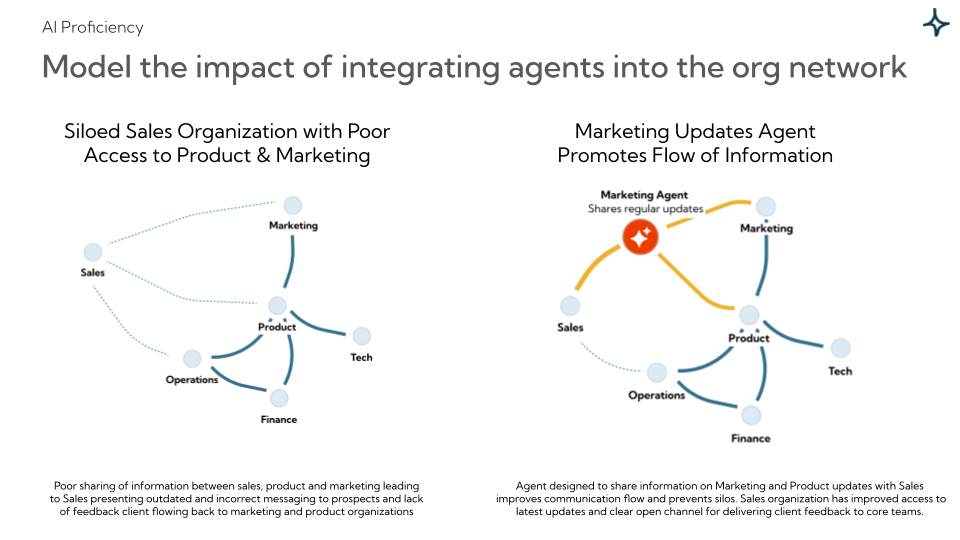
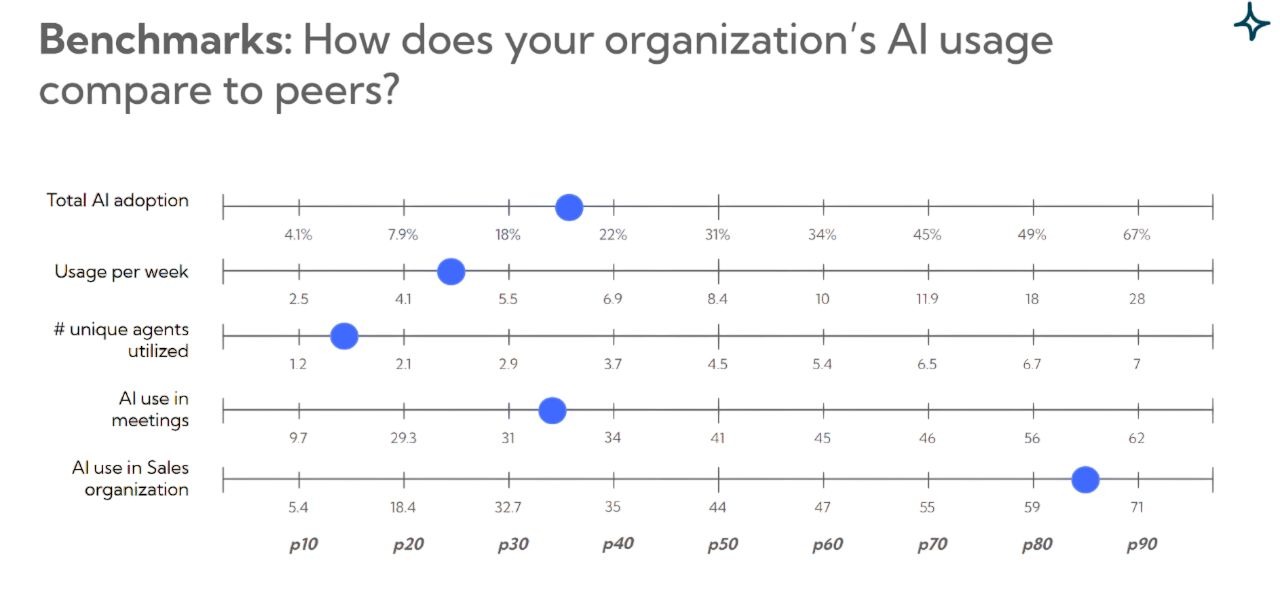
Worklytics provides anonymized benchmarking so you can see how your AI adoption compares to others in your industry. This helps you set realistic targets and understand whether you’re leading or lagging. With upcoming benchmarking features like the Copilot Adoption Dashboard, you’ll have even clearer insights into how you stack up and where to aim next.
Real-time dashboards let you watch adoption patterns as they happen. You can track weekly active AI users, compare teams, and spot bottlenecks early. If a training initiative isn't moving the numbers, you know immediately and can adjust. This replaces slow, anecdotal feedback with fast, actionable intelligence, turning AI skill growth into a measurable, trackable process.
Building AI skills happens in phases: quick wins in weeks, core literacy in a few months, and deeper proficiency over the first year. There’s no final endpoint because AI keeps evolving, but organizations can see meaningful improvements far sooner than they expect. Early gains, like automating routine tasks, prove value quickly and build momentum for deeper learning.
To accelerate the timeline, act immediately, start with focused pilot projects, and scale what works. Ensure leadership signals urgency, give employees clear guidance and tools, and use peer mentoring to spread skills organically. Keep training practical and tied to real work so adoption sticks. Above all, measure progress. Data on usage, gaps, and outcomes lets you adapt your strategy and keep skill-building on track.
Platforms like Worklytics help guide this process by showing where skills are developing, where support is needed, and which initiatives deliver ROI. With the right strategy and continuous learning, organizations can build AI fluency faster than expected and unlock meaningful gains in productivity, innovation, and competitiveness.