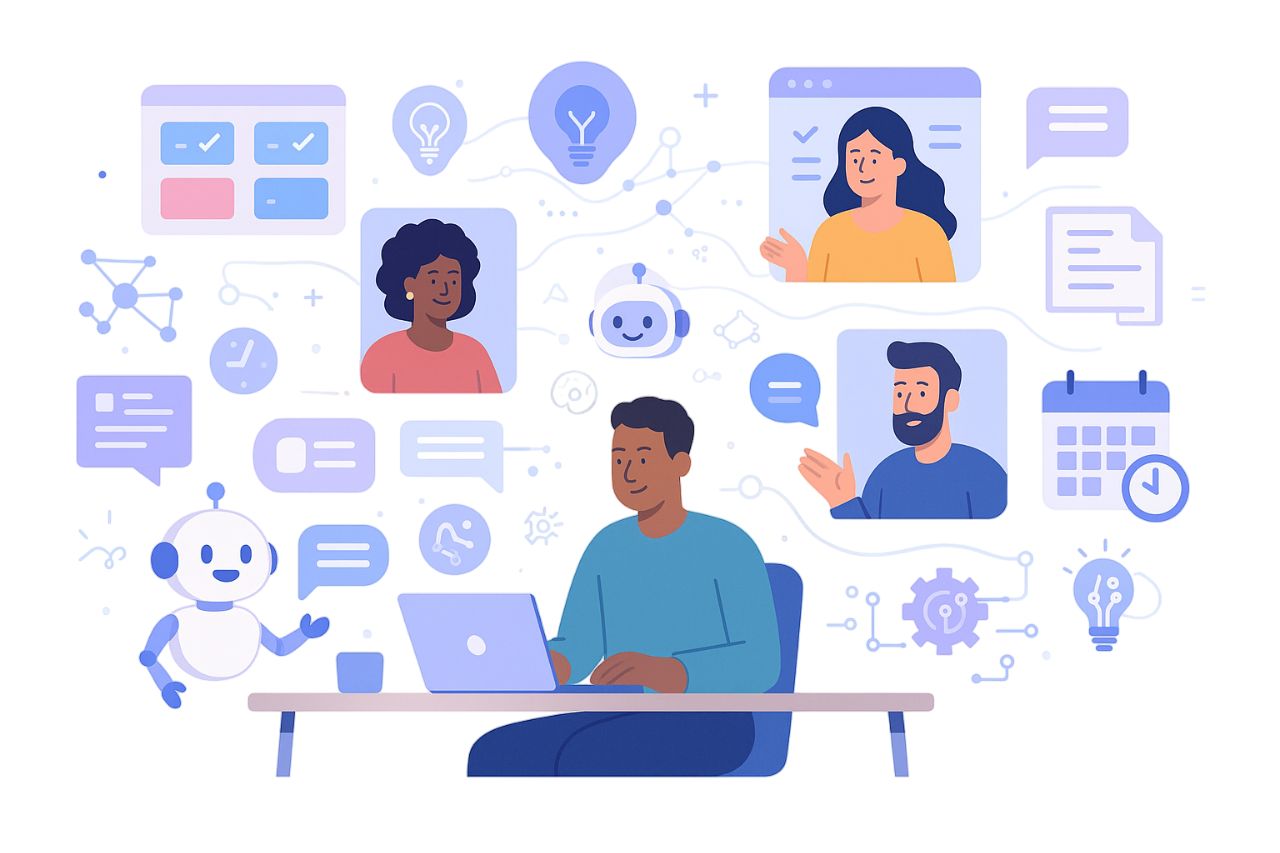
Artificial intelligence is reshaping the way organizations plan, conduct, and evaluate meetings. As companies increase their use of collaboration tools and digital workflows, meetings have become both a critical coordination mechanism and a major source of time loss. Many leaders recognize that meetings influence overall collaboration and team productivity, yet only a small percentage have reliable methods for evaluating meeting impact. This gap has created strong demand for solutions that apply AI not only to meeting tasks but also to measuring and improving meeting effectiveness.
The current shift toward AI-supported collaboration is changing how people gather information, make decisions, and share insights across teams. AI is beginning to reduce the time required for administrative tasks, strengthen clarity during discussions, and support more effective follow-through. It is also giving leaders the ability to understand meeting patterns at scale. This combination provides a measurable path to improved productivity that traditional meeting practices have never offered.
Meetings remain a central coordination mechanism, but the rise of hybrid and remote work has increased both frequency and duration across most organizations. Research from the Harvard Business Review shows that excessive meetings dilute focus, increase fragmentation, and reduce engagement among employees. This affects throughput, deadlines, and overall performance.
The core challenge is not the presence of meetings, but the absence of data. Most organizations cannot answer the following:
Without this visibility, improvement efforts become reactive and inconsistent. AI introduces structure, measurement, and clarity that support a data-driven approach to meeting optimization.
AI supports meeting productivity in several specific ways that reduce wasted time and improve clarity. These improvements occur before, during, and after the meeting, which creates a full productivity cycle that benefits both individual contributors and leadership.
AI helps prepare agendas, analyze past meeting content, and organize documentation. These capabilities reduce the time required to set up meetings and improve readiness among participants. When meetings start with clear priorities and a focused structure, they reach decisions faster and prevent side discussions from pulling the group away from the objective.
AI tools provide real-time transcription and summarization that increase visibility for participants. This reduces the cognitive load of note-taking and allows teams to focus on content rather than documentation. Real-time analysis can also identify action items or unresolved topics, which helps teams maintain a productive flow.
AI-generated summaries and task extraction help teams distribute responsibilities more accurately. Participants receive clear direction on next steps without the usual ambiguity that slows progress. This improvement increases the effectiveness of each meeting and accelerates execution.
AI does more than automate tasks. It generates data that reveals how meeting behaviors influence productivity across the organization. These insights allow leaders to understand the scale, purpose, and value of meetings. They can see whether certain teams are overloaded, whether recurring meetings produce consistent value, and how patterns shift over time.
This analytical capability is where AI delivers its strongest advantage, because it allows organizations to tie meetings directly to outcomes rather than treating them as routine calendar events.
Improving AI and meeting productivity requires the ability to measure meeting output, engagement, time cost, and behavioral trends. Without measurement, changes to meeting process become guesswork. AI-driven analytics provide clear, objective data that leaders can use to refine work habits and support more efficient collaboration.
AI helps identify when meetings are well structured and when they lack focus. It evaluates participation balance, meeting duration trends, agenda alignment, and whether conversations align with expected outcomes. These insights help teams adjust formats, update expectations, and remove unnecessary steps.
One of the most important benefits of AI is its ability to show where meeting overload is occurring. Leaders gain visibility into which roles and teams spend excessive hours in meetings, how often they switch contexts, and how these patterns influence output. This information supports resource planning and operational improvements.
Companies frequently roll out AI meeting assistants without understanding whether adoption improves performance. Measurement allows leaders to track usage levels, time savings, and changes in participation or engagement. They can evaluate whether the organization benefits from these tools and where additional training or adoption campaigns are required.
AI-enabled visibility allows organizations to track changes over quarters and years. Leaders are no longer limited to subjective feedback. They can measure how meeting culture evolves and use data to support strategic decisions about workflow design, talent management, and technology investments.
Leadership plays a central role in setting expectations for meetings. AI gives leaders the data they need to shape meeting norms and enforce standards that support productivity. When leaders understand meeting patterns, they can design policies that reduce fragmentation, improve collaboration, and support healthier workloads.
AI summaries and insights allow leaders to review information quickly and identify misalignment across projects or teams. This supports faster, more data-driven decisions that keep work moving forward.
AI highlights where collaboration is strong and where it is strained. Leaders can see which departments interact effectively and which experience delays or communication barriers. This information helps refine team structures and workflows.
When leaders understand meeting distribution, they can prevent over scheduling and reduce burnout risks. They can adjust staffing, rebalance responsibilities, and streamline approval processes based on real data.
AI gives leaders insight into how much time teams spend on activities tied to strategic goals. When meetings drift away from these priorities, leaders can intervene and realign efforts before productivity declines.
AI will continue to shape meeting productivity in several important ways. The most significant developments will not come from new meeting assistants or standalone tools. Instead, the greatest impact will come from unified analytics platforms that bring together meeting data, collaboration patterns, and AI adoption metrics. This gives organizations a full view of how work happens.
AI will also move beyond transcription and content generation. It will begin predicting meeting risks, identifying misalignment early, and helping teams plan work more effectively. Organizations that adopt AI measurement early will gain a competitive advantage because their leaders will have deeper insight into how collaboration influences performance.
Reports from sources such as the World Economic Forum show that AI-driven productivity will continue accelerating through this decade. Measurement will determine which organizations capture those gains and which struggle to adapt.
Improving meeting productivity begins with clarity. Leaders should understand current meeting patterns, identify inefficiencies, and quantify the time cost of unproductive sessions. AI supports this process by delivering the data needed to establish a baseline.
Once organizations have visibility, they can introduce AI-assisted improvements such as structured agendas, automated follow-through, and improved documentation. These enhancements increase productivity when supported by accurate measurement. Over time, leaders can refine meeting policies, restructure recurring sessions, and redesign collaboration norms.
AI also helps organizations evaluate cultural barriers that reduce meeting effectiveness. If certain teams experience consistent overload or misalignment, AI data highlights these issues so leaders can address them directly. This creates a continuous improvement cycle that strengthens outcomes across the organization.
Worklytics helps organizations understand how work happens and how meeting behavior affects performance. By analyzing behavioral data from calendars, communication platforms, and collaboration tools, it provides clear visibility into meeting effectiveness and the real operational impact of AI. This level of measurement is essential for improving ai and meeting productivity in a sustainable and scalable way.
Below are the specific ways Worklytics helps businesses transform meeting culture and maximize productivity outcomes.
Worklytics reveals how much time teams and roles spend in meetings by analyzing weekly hours, distribution patterns, and load differences across the organization. It highlights where meeting time consumes the majority of the workweek and where individuals lack the space needed to complete meaningful work.
High meeting load reduces execution capacity. Worklytics helps leaders see exactly where meeting volume creates bottlenecks so they can remove attendance requirements, shorten meeting lengths, and redesign collaboration expectations.
AI tools that automate tasks only become impactful when employees have time to use them effectively. By reducing excessive meeting load, organizations create space for AI assisted workflows to deliver meaningful gains.
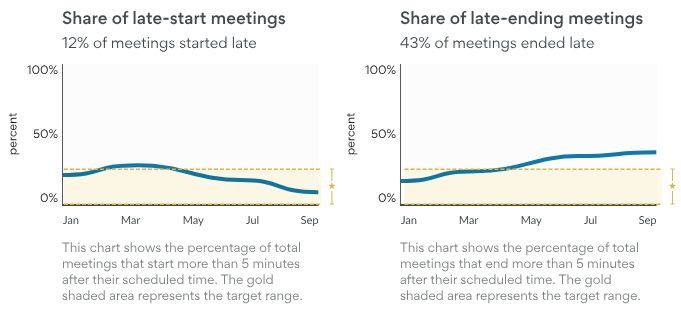
Worklytics evaluates recurring meetings by analyzing attendance, time cost, and outcome alignment. It identifies sessions that continue out of habit rather than necessity and highlights those that no longer contribute to team progress.
Recurring meetings represent a large percentage of organizational meeting time. Optimizing or eliminating low-value sessions frees hours that teams can reinvest into strategic or execution focused activities.
Recurring meetings are often the first place AI is introduced for summaries and automation. Worklytics helps determine which recurring meetings actually need AI involvement and which should be restructured or retired.
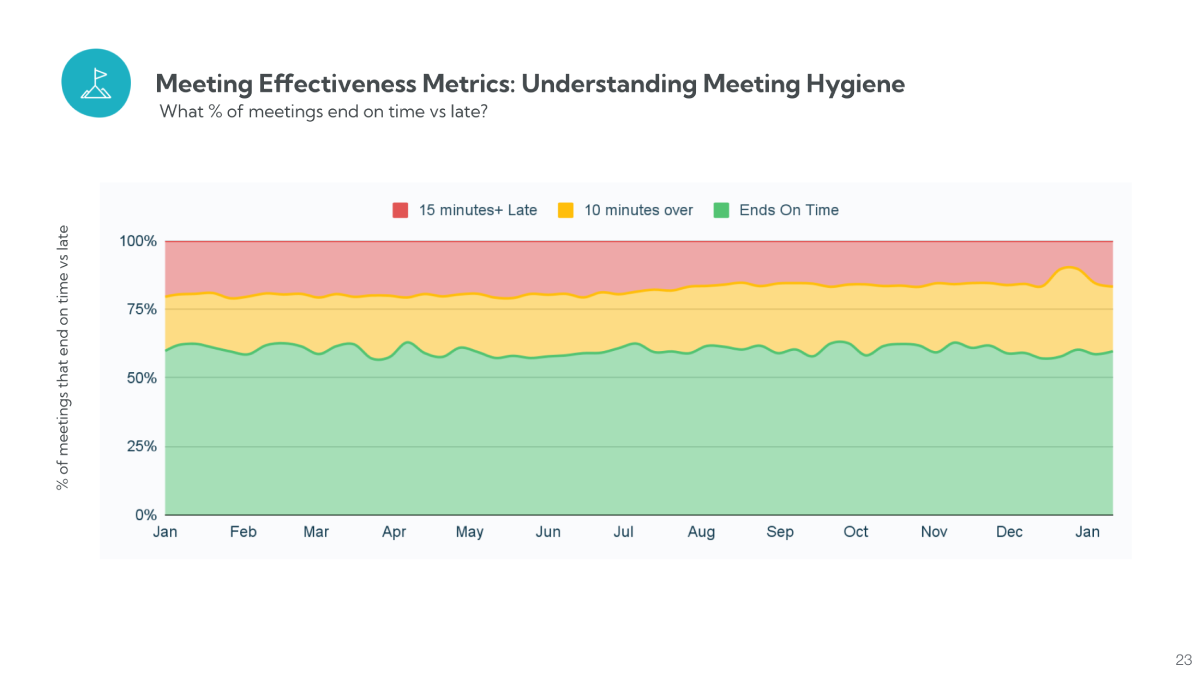
Worklytics tracks collaboration patterns to show where teams depend heavily on synchronous meetings for information exchange. It highlights cross-functional dependencies that slow work, expose misaligned handoffs, or rely on repeated check-ins.
When teams over rely on meetings for coordination, projects slow down, and operational costs increase. Worklytics helps organizations streamline collaboration by identifying where meetings replace better process design.
AI tools can reduce coordination effort, but their value increases significantly when workflows are already efficient. Worklytics provides the insight needed to redesign processes so AI can accelerate execution instead of patching structural gaps.
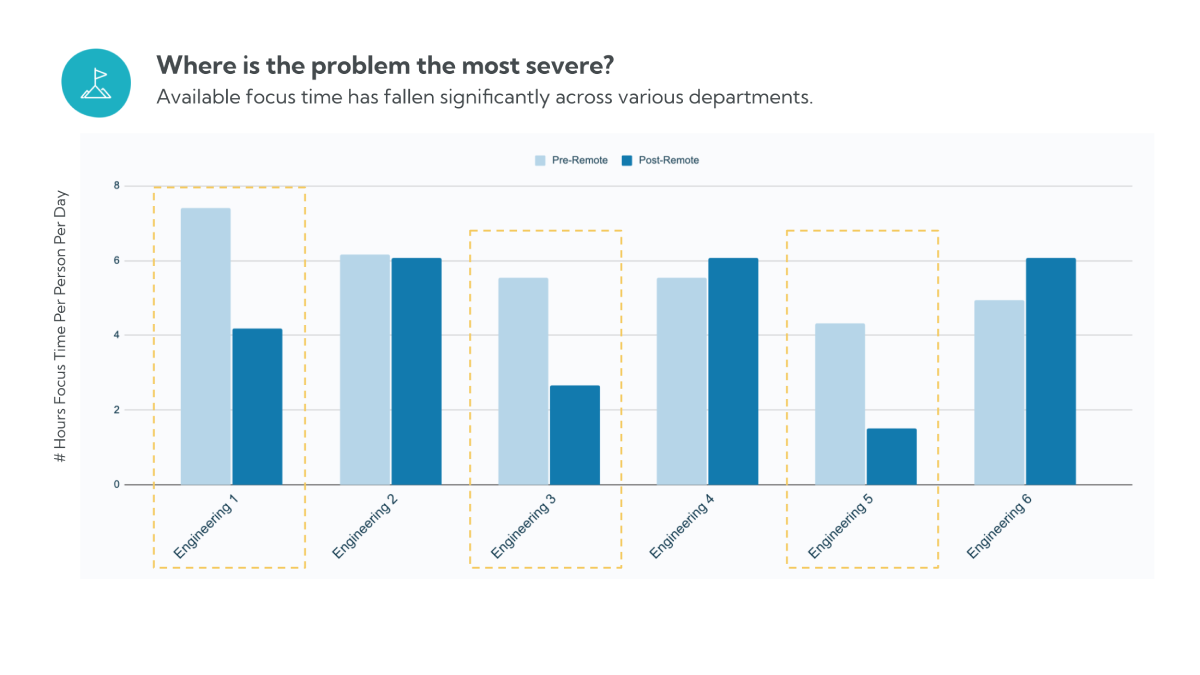
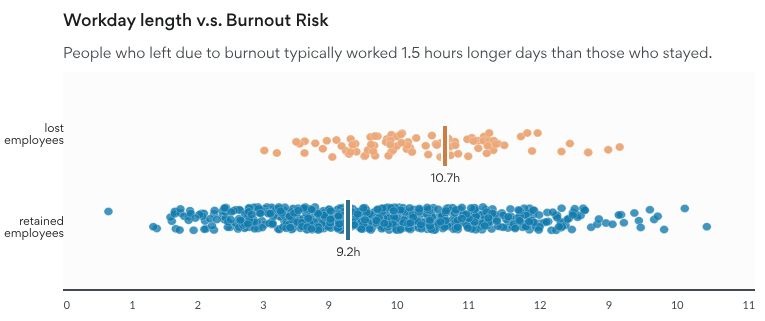
Worklytics identifies individuals and teams showing early signs of overload such as excessive meeting hours, continuous context switching, and minimal uninterrupted work time. It surfaces these signal patterns before productivity declines.
Meeting overload directly reduces output, energy, and engagement. Worklytics gives leaders the visibility needed to intervene, rebalance workloads, and support sustainable performance.
AI enhances productivity only when employees are not already overwhelmed. Worklytics ensures that employees have the capacity to benefit from AI supported workflows instead of compensating for burnout driven inefficiencies.
Worklytics identifies which teams and roles use AI meeting tools and how frequently they rely on them. It shows adoption patterns and highlights groups where usage is inconsistent or low.
Accurate adoption data helps leaders ensure AI tools are used in the meetings where they deliver the most value.w
Organizations that want measurable improvements in meeting quality, collaboration efficiency, and AI adoption need visibility into how work actually happens. Worklytics provides the behavioral insights leaders require to eliminate low value meetings, reduce fragmentation, strengthen decision making, and validate the true impact of AI tools.
If your organization wants to transform meetings into a productive, data driven part of the workflow, Worklytics gives you the clarity to do it with precision.
See how Worklytics can help your teams work smarter, operate faster, and create sustainable improvements in productivity.
Explore Worklytics today and bring measurement, insight, and accountability to the way your organization meets.