
A centralized organizational structure keeps decision-making authority at the top, with executives setting policy and direction that flows down through the hierarchy.
A decentralized structure distributes that authority to business units, regions, or teams closest to the work. The choice is rarely all-or-nothing.
The reason this distinction matters is that decision rights drive behavior. When a regional manager cannot approve a $5,000 customer concession without three layers of sign-off, the company has effectively chosen slower customer response in exchange for tighter cost control. The structure encodes that tradeoff whether leaders intended it or not.
Each model wins on different dimensions, which is why companies oscillate between them rather than settling on one for good. The research breaks down clearly along two lines.
On the decentralization side, research cited by Egon Zehnder found that decentralized companies outperform peers on revenue and performance, attributed to faster local decisions and stronger employee ownership. Gallup’s meta-analysis of 312 studies covering 897,971 employees across 46 countries reinforces this, showing that smaller, empowered teams produce stronger engagement-to-performance links.
On the centralization side, aerospace and defense project research found centralized structures reduce costs and produce uniform outcomes, but at the expense of meeting all customer requirements. The same study found decentralized teams met more customer needs but ran into time delays and cost overruns. Neither pure form solved the underlying tradeoff, which is why the authors recommended a hybrid.
Centralization performs best when the work benefits from scale, uniformity, and tight cost control. The marginal cost of an additional decision-maker outweighs the marginal benefit of local autonomy in a few specific contexts:

The data supports two specific advantages. Response speed during enterprise-wide crises is faster under centralized authority because a single decision propagates through the chain rather than being negotiated across business units. Comparative research shows centralized companies adjusted to economic shifts faster than decentralized peers when the response required uniform action. Brand and policy consistency is also materially higher when one team owns the standard.
Translate these secondary effects into numbers that leaders can act on. Productivity analytics quantify how much time employees spend in approval cycles versus actual work. Manager effectiveness scoring identifies which managers in the chain function as bottlenecks rather than enablers. Meeting effectiveness analysis surfaces whether centralization is creating excess coordination meetings that eat into delivery time.
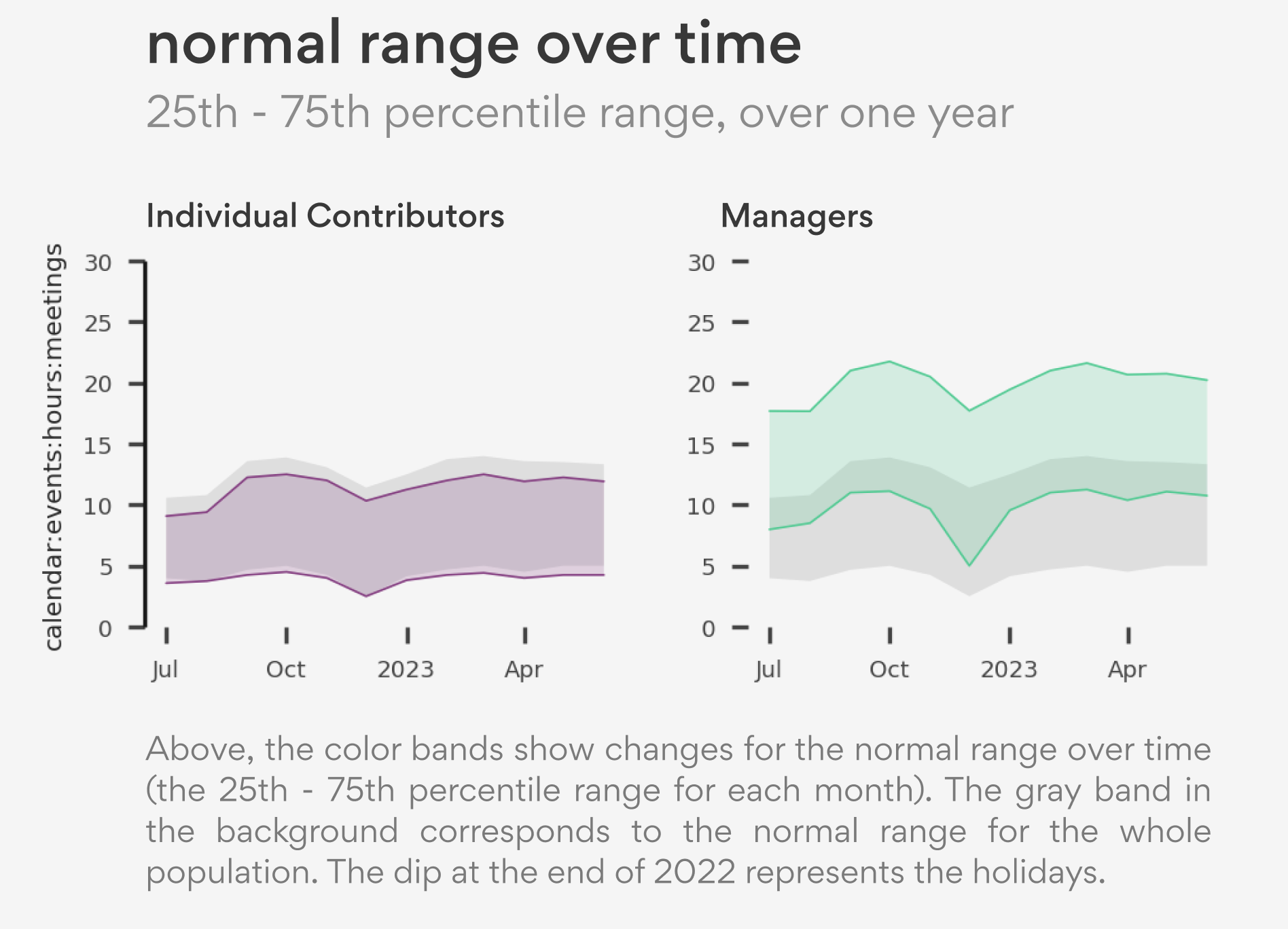
Decentralization wins when the work requires local knowledge, fast iteration, or contextual judgment that cannot be standardized from headquarters. The performance advantage shows up in three measurable areas: time-to-decision drops because fewer approvals are required, innovation rates rise because teams can experiment without enterprise-level review, and employee engagement is consistently higher because autonomy is one of the strongest predictors of intrinsic motivation, a finding that holds across Deloitte’s research on employee engagement and wellbeing.
The contexts where this model produces the largest gains share a common trait, which is that headquarters does not have enough information to make good decisions on the ground:

The risks are real and well-documented. Decentralized organizations duplicate effort across units because no central authority is preventing it. They develop inconsistent customer experiences because each unit makes its own choices. They accumulate technical and process debt because individual teams optimize locally without considering enterprise tradeoffs.
Analyze collaboration metadata across 25-plus tools with Worklytics, the platform identifies which employees are becoming overloaded bridges between disconnected teams, where duplication is happening across business units, and which informal networks are doing the work the formal structure failed to assign. For leaders running decentralized models, this is the difference between empowering teams and losing visibility into what those teams are actually doing.
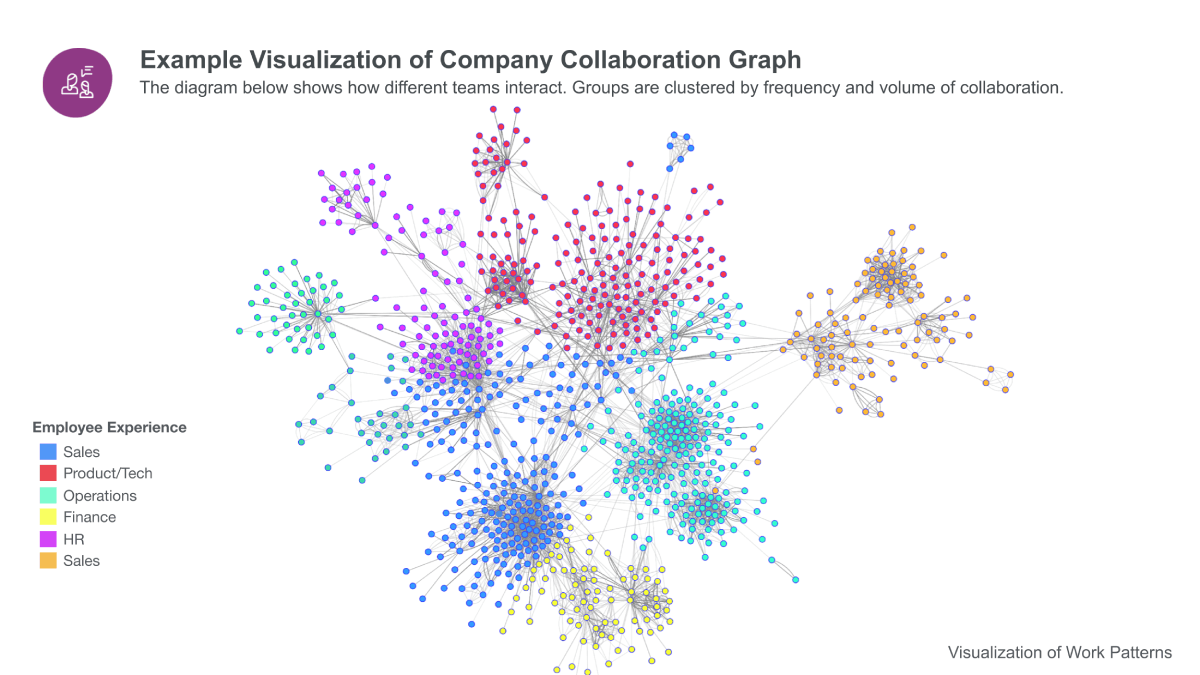
The cleanest finding in the research is that pure centralization and pure decentralization are rare in practice and rarer in high performers. Hybrid decision-making research published in 2025 confirms what practitioners have observed for years: most successful organizations centralize what benefits from scale and decentralize what benefits from speed.
The hybrid model is harder to manage than either pure form because it requires leaders to know which decisions belong where and to enforce the boundary without micromanaging. When the boundary is unclear, hybrid structures degrade into the worst of both: central teams that slow execution without adding standardization, and business units that operate inconsistently without gaining real autonomy. McKinsey’s analysis on operating model design reports a 30 percent gap between strategic potential and delivered performance even in high-performing companies, and shortcomings in operating model design are the primary cause.
This is the strongest argument for continuous measurement. Hybrid models are dynamic, and a design that worked at 500 employees often fails at 5,000 because the coordination demands change. Worklytics benchmarking lets organizations compare their network density and collaboration patterns against similar companies, giving leaders concrete signals about whether their hybrid is functioning or quietly drifting toward dysfunction.
The wrong way to choose between centralized and decentralized is to start with the org chart. The right way is to start with what the strategy requires and work backward to the decisions that need to be made and where they should sit. Before redesigning, leaders should be able to answer four questions with data, not opinion:
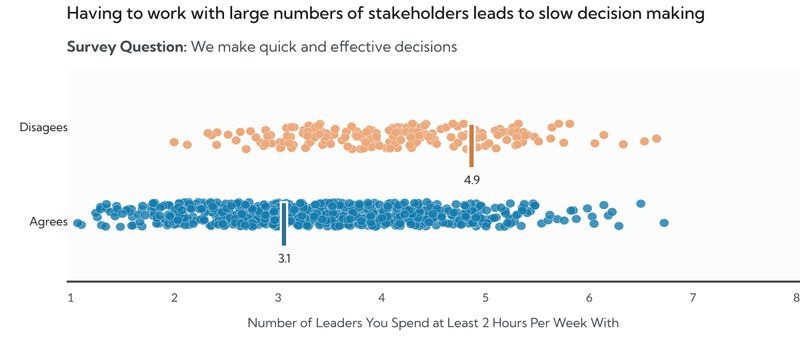
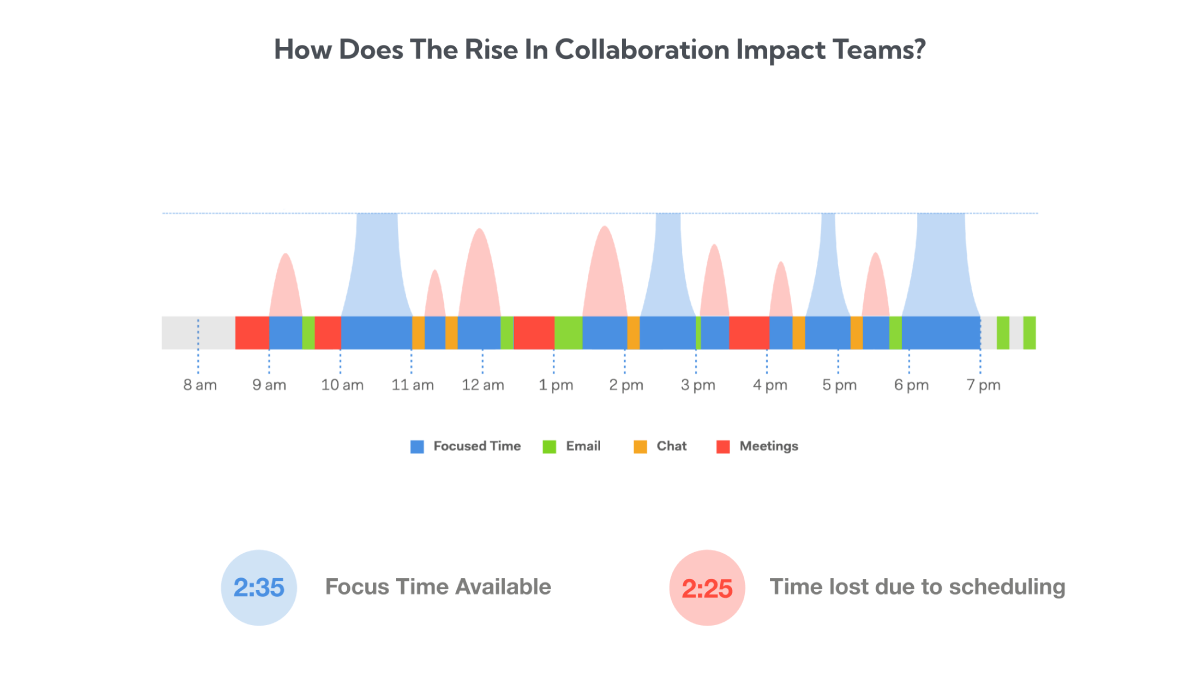

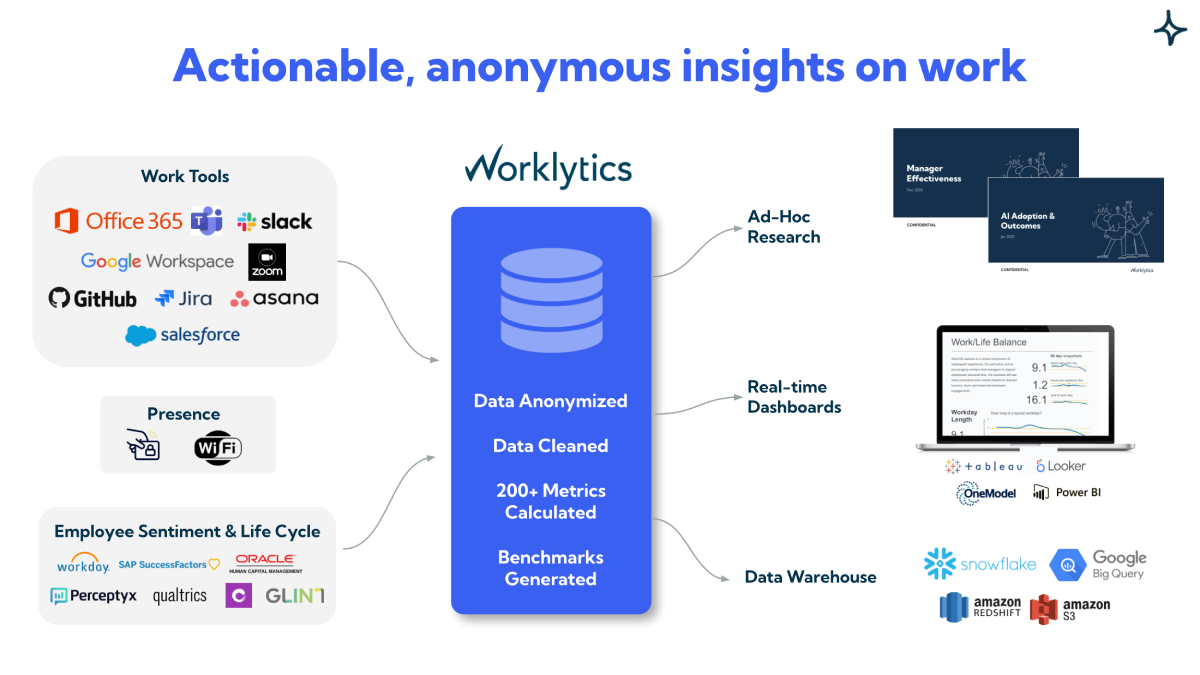
Worklytics is built around answering these questions. Its ONA platform maps collaboration networks from passive metadata across 25-plus tools, so leaders can see who is actually working with whom and how that pattern compares to the formal structure. Productivity, engagement, wellbeing, AI adoption, and meeting effectiveness analytics each contribute a different lens on whether the current structure is producing the outcomes the strategy needs. Benchmarking against similar companies adds external context, so leaders know whether their numbers are normal for their size and industry or signal a real problem.
Restructuring is expensive. It consumes leadership attention, disrupts productivity for six to twelve months, and increases attrition risk during the transition. The cost of getting it wrong often exceeds the cost of staying in a suboptimal structure, which is why the decision should be made on data rather than instinct.
Restructuring is justified when the structure itself is the constraint on performance, not a proxy for other problems. The clearest signals are pattern-based:
Symptoms that look structural but usually are not include interpersonal conflict between leaders, poor performance from a single team, or dissatisfaction with a specific manager. Reorganizing around these typically makes things worse because the underlying problem moves with the people, not the boxes on the chart.
The most reliable signal for restructuring is data showing that the formal structure and the actual collaboration pattern have diverged. When the org chart shows tight cross-functional coordination but network data shows isolated silos, the structure is no longer doing the work it was designed to do. When the org chart shows clear authority lines but data shows decisions cycling through unofficial brokers, the structure is fighting how work actually happens. Worklytics gives leaders that diagnostic clarity before they commit to a restructure, which is exactly when the cost-benefit calculation should be made.
No. The research consistently shows each structure outperforms on different dimensions. Centralization wins on cost, consistency, and uniform execution. Decentralization wins on speed, innovation, and engagement. The right choice depends on what the strategy requires and what the company can execute well.
By being explicit about which decisions sit at the center and which sit with business units, then enforcing the boundary. Hybrid structures fail when the boundary is unclear, because central teams then slow execution without adding standardization while business units operate inconsistently without real autonomy. Continuous measurement of how decisions and collaboration actually flow keeps hybrid structures functional as the company grows.
Most measurable changes take six to twelve months to surface, and full benefits often take eighteen to twenty-four months. The transition period typically shows degraded productivity and elevated attrition risk, which is why the restructure should be justified by clear data before it begins.
Yes, when the data captures actual work patterns rather than self-reported perceptions. Network analysis shows when the formal structure and informal collaboration have diverged. Productivity and engagement metrics show when the structure is producing degraded outcomes. Worklytics combines these signals into a continuous view of how the structure is performing, which is more actionable than annual surveys or anecdotal feedback.
Decentralization tends to raise engagement and autonomy scores, both of which correlate with wellbeing. It can also create coordination overload for employees who become informal bridges between disconnected teams, which correlates with burnout. The percentage of overloaded employees tends to rise in decentralized structures without active monitoring, and measuring collaboration patterns is how leaders catch this before it causes attrition.
AI adoption is shifting decision rights at the margins by automating repetitive judgment calls and surfacing data that used to require central analysis. Companies adopting AI often find their existing structure does not match the new flow of information, which creates pressure to redesign. Measuring AI adoption patterns alongside collaboration data helps leaders see where the structure needs to adjust and where it is still doing useful work.